
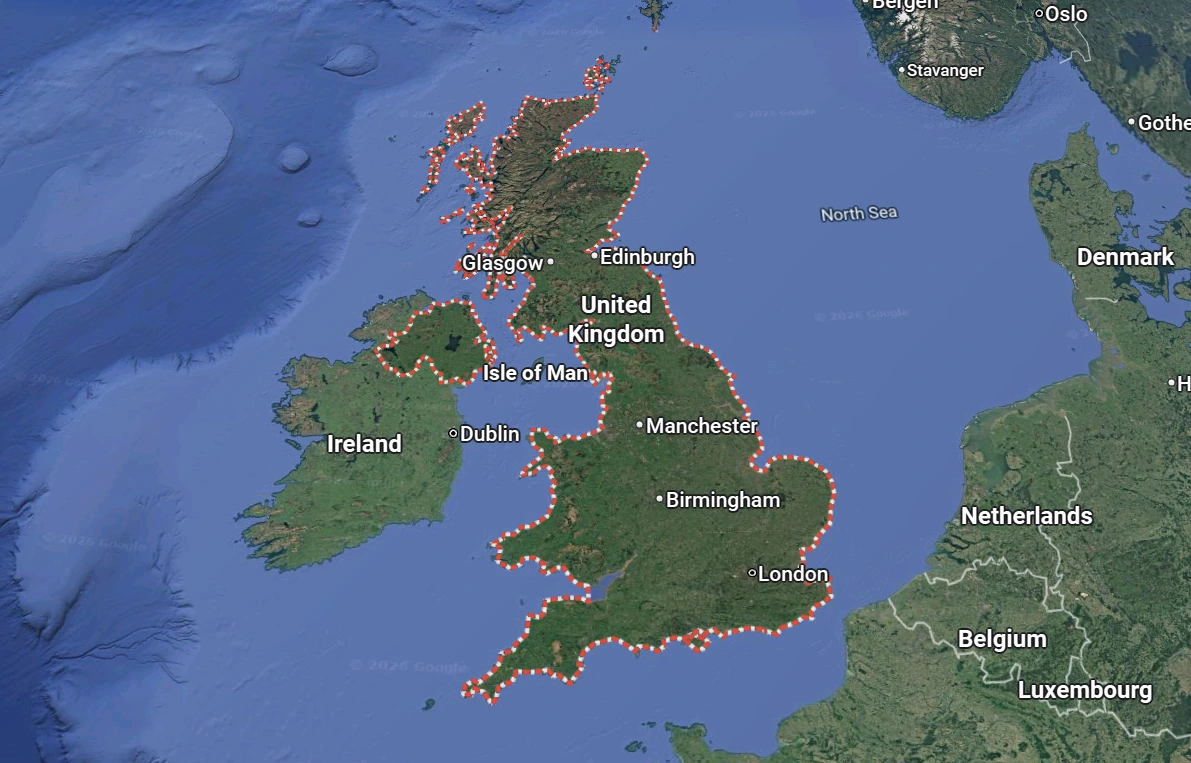
Scottish, Welsh, and Northern Irish leaders are meeting in Cardiff to sign an unprecedented pact pushing for the dissolution of the United Kingdom (UK).
In what represents the most severe systemic challenge to the British state in modern history, the first ministers of Scotland, Wales, and Northern Ireland are converging on Cardiff for an unprecedented tripartite summit.
For the first time since the inception of devolution, all three outlying administrations are led by pro-independence figures: Scotland’s First Minister John Swinney, Wales’s First Minister Rhun ap Iorwerth, and Northern Ireland’s First Minister Michelle O’Neill. Meeting at the St David’s Hotel alongside Sinn Féin President Mary Lou McDonald, the leaders are set to sign a landmark memorandum of understanding demanding an explicit democratic right to hold independence referendums, effectively launching a synchronised campaign to orchestrate the dissolution of the United Kingdom.
A Tectonic Shift in Devolution Politics
The Cardiff summit is the direct fallout of a political earthquake triggered by recent regional elections that severely battered the governing Labour Party in London. Prime Minister Andy Burnham’s administration has found itself caught on the defensive, grappling with the compounding economic pressures and administrative gridlock that plagued its predecessors.
The electoral breakthrough of independence-aligned parties, most notably Plaid Cymru surging to become the largest party in the Welsh Senedd under ap Iorwerth, paired with the enduring dominance of the Scottish National Party (SNP) and Sinn Féin’s executive leadership in Belfast, has shattered the traditional political firewall that once kept nationalist movements siloed.
By coordinating their strategies, the three administrations aim to transform localized separatist ambitions into a unified constitutional front. Rather than negotiating individually with Westminster, where past governments successfully deployed stall tactics and legal blockades, the coalition seeks to exert collective pressure, arguing that the tripartite consensus renders the current unionist status quo entirely untenable.
The Mechanics of the Cardiff Pact
According to details emerging from the memorandum, the pact focuses on several core pillars: mutual economic cooperation, energy sovereignty, alignment on post-Brexit European reintegration strategies, and an explicit challenge to Westminster’s sovereignty over constitutional futures.
While figures like Swinney have framed the meeting in starkly revolutionary terms, speculating aloud that Prime Minister Burnham may go down in history as “the final prime minister of the United Kingdom”—other leaders have adopted a more pragmatic tone. Ap Iorwerth emphasised that the discussions will pivot heavily on fair funding models, resource equity, and regional self-determination, seeking to build broad public buy-in by tying constitutional questions directly to cost-of-living anxieties and public service funding.
The nuance is tactical. By officially convening as party leaders rather than strictly as heads of government, the participants hope to mitigate immediate legal blowback from Whitehall while establishing a durable, institutionalized framework for cross-border nationalist cooperation.
Divergent Paths, Converging Goals
Despite their shared alignment against Westminster, the structural realities facing Scotland, Wales, and Northern Ireland remain vastly different:
- Scotland: The SNP remains locked in a protracted debate over voter fatigue and shifting polling margins, yet Swinney’s administration maintains that any enduring electoral majority for pro-independence parties constitutes an undeniable mandate for a Section 30 referendum transfer. Prime Minister Burnham recently sparked a political firestorm by briefly conceding that a “clear consensus” could justify a new vote before hastily retreating to the official line that no such mandate exists.
- Wales: Historically the most cautious regarding outright separation, Wales has experienced a profound shift under Plaid Cymru. Economic disenfranchisement and disillusionment with centralised British policymaking have pushed Welsh nationalism into the mainstream, turning Cardiff into an energetic hub for constitutional reimagining.
- Northern Ireland: Governed under the delicate architecture of the Good Friday Agreement, the push for a border poll carries distinct legal and sectarian weight. Under current frameworks, a referendum on Irish reunification rests upon the discretion of the Secretary of State if it appears likely that a majority would vote to leave the UK.
International Overtones and Washington’s Shadow
The timing of the Cardiff summit has been further amplified by unexpected international interventions. During a high-profile diplomatic visit to Dublin, US President Donald Trump publicly endorsed the concept of Irish reunification, telling reporters that putting Northern Ireland and the Republic together “is going to happen eventually” and asserting that “it may as well happen now”.While Trump demurred when asked about Scottish independence—noting he would “save that for another day”—his remarks injected a volatile external narrative into an already hyper-sensitive domestic debate.
An Uncertain Horizon for Westminster
For Prime Minister Burnham, the immediate political challenge is formidable. Whitehall’s traditional playbook of ignoring regional independence drives or relying on legal hurdles through the Supreme Court risks fuelling regional grievances and validating the narrative of an inflexible, authoritarian central state.
As the leaders step out of the St David’s Hotel with their signed memorandum, the United Kingdom faces an ideological crossroads. Whether the Cardiff pact translates into a viable mechanism for dissolution or serves as a high-stakes bargaining chip for greater fiscal devolution, the myth of an unbreakable union has entered its most precarious chapter.





[…] Lou McDonald, affixed their signatures to a binding memorandum of understanding. Dubbed the “Cardiff Pact“, the agreement establishes a unified, cross-border strategic front explicitly designed to […]