The tragic death of 87-year-old Maricarmen following her eviction has ignited nationwide protests and reshaped Spanish politics. Discover how Spain’s escalating housing crisis forced Prime Minister Pedro Sánchez to call snap elections for November 2026.
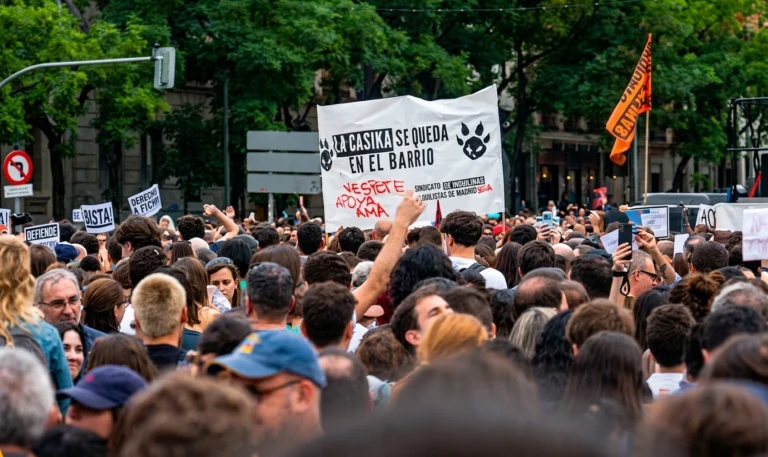
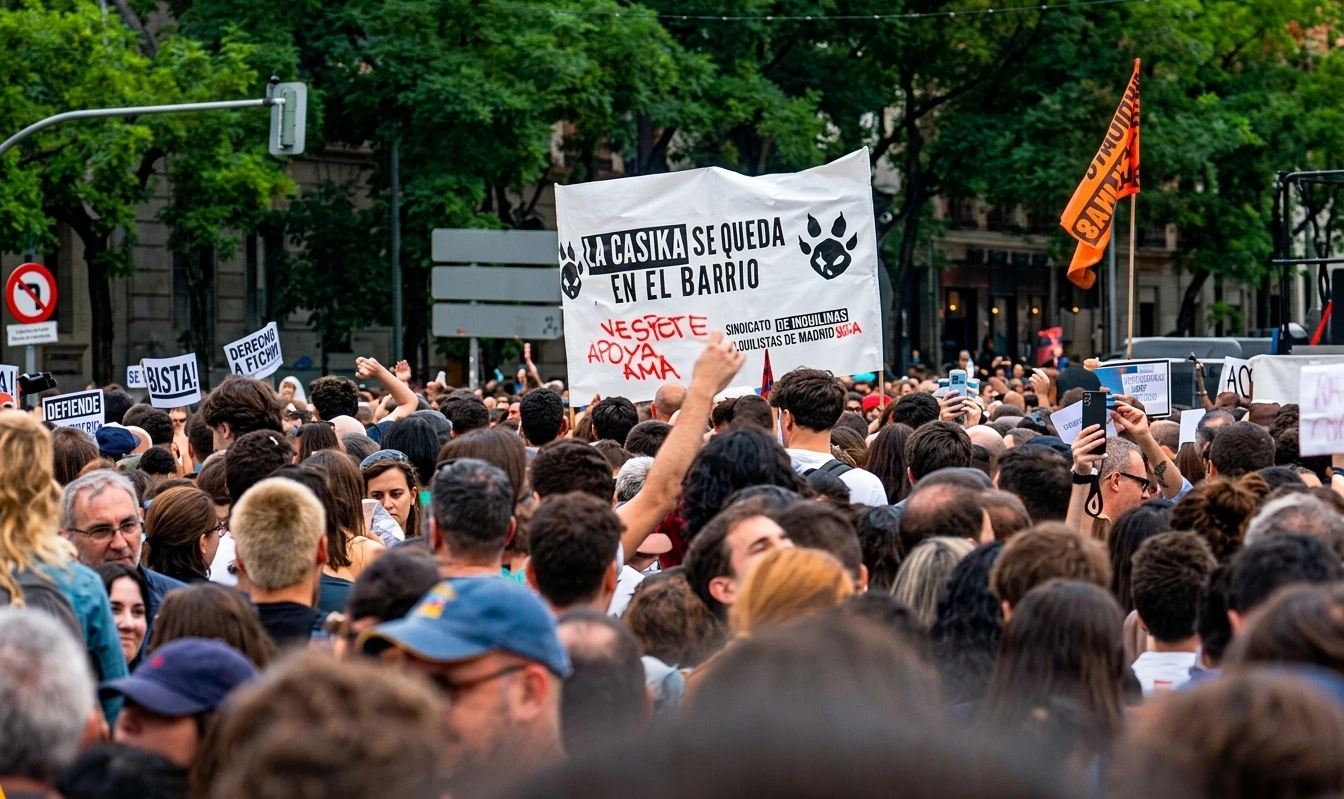
Maricarmen Abascal has passed away. At the age of 87, she passed away not in her desired house, but in the Madrid hospital where she was sent following her eviction from her residence. She resided there for 70 years, but due to exorbitant rent hikes, she could no longer sustain the flat. Subsequent to the eviction, a significant demonstration arose spontaneously, resulting in the establishment of a tent encampment in Madrid’s central Puertà del Sol square; other towns mirrored this action.
The depiction of the delicate woman being transported from her residence on a stretcher on September 23rd epitomised a commodified housing market in which shelter is seen solely as a commercial exchange rather than as a fundamental human need. Her destiny, therefore, ignited a protest movement and radically transformed the political terrain in Spain. The housing crisis may suddenly provide Pedro Sánchez an unforeseen political advantage.
Maricarmen undoubtedly lacked the foresight to predict the series of political occurrences her expulsion would instigate. Merely days following her expulsion, the administration presented two legislative proposals to parliament, encompassing a ban on evictions due to socioeconomic hardship, with further initiatives to mitigate the escalating housing issue. To obtain a legislative majority, the minority administration under Pedro Sánchez needs the support of smaller factions, such as the right-leaning Catalan separatist group Junts pro Catalunya. Nonetheless, in spite of engaging in the discussions on the Maricarmen Decrees, the party unexpectedly opted to oppose them at the last moment, a decision mirrored by the conservative Partido Popular (PP) and the far-right VOX. Consequently, both pieces of legislation were unsuccessful.
Consequently, Sánchez announced early elections on October 5, which he has now scheduled for November 29. The opposition’s calls for early elections, stemming from the absence of a legislative majority, have been a persistent aspect of Sánchez’s administration for some months. Several corruption accusations, especially the enquiries involving former Prime Minister José Luis Rodríguez Zapatero, whom Sánchez supported without reservation, exacerbated these demands. The government’s carefully scrutinised crisis response in Ceuta, where tens of thousands of migrants entered the Spanish exclave by swimming at the end of July, had a significant impact on the administration. Sánchez, meanwhile, has persistently underscored his commitment to fulfilling his term, maintaining a kind yet resolute demeanour, while highlighting his commendable achievements in office. He specifically emphasised robust economic expansion, employment generation, and Spain’s global position throughout his administration as a defence against the escalating wave of right-wing populism worldwide. However, Sánchez seems to see an unexpected political opportunity within the housing issue.
For the Spanish Socialist Workers’ Party (PSOE), the immediate elections could hinge more on galvanising its previous constituents than on persuading new electorates. The fervour regarding affordable housing, ignited by Maricarmen’s eviction, presents the PSOE and its prospective leftist coalition allies with an opportunity to reclaim voters who supported progressive parties in 2023 but have grown disenchanted and may abstain from voting in the upcoming election. The deficit of the PSOE and the parties to its left in relation to the PP and VOX may be attributed more to the impending abstention of disenchanted leftist voters than to a migration of votes toward the right. In 2023, the engagement of non-voters from the progressive faction resulted in the PSOE exceeding all anticipated polling outcomes.
Sánchez’s call for affordable housing has uncovered a matter that could sway the election campaign in his favour, notwithstanding his poor polling figures. This phenomenon is attributable, primarily, to the problem at hand. Surveys indicate that about half of the populace regards the issue of cheap housing as the foremost concern. Certain individuals are already drawing parallels between the present protest movement and the Indignados (the “Outraged”) movement of 2011, which significantly transformed the Spanish political landscape. Certainly, even at that time, there were calls for economical housing for the youth.
The labour unions have endorsed the matter and have initiated a demand for a national strike on November 11, 18 days before the elections, under the banner “Salarios – Vivienda – Precios” (“Wages – Housing – Prices”). Secondly, concentrating on a matter where he presents tangible answers has proven to be an effective tactic in Sánchez’s previous electoral campaigns. Thirdly, Sánchez can clearly identify those responsible for the right-wing parties’ dismissal of the decrees, as they failed to seek a resolution and thus voted against the welfare of a significant portion of the populace. On the other hand, this may result in conservative voters abstaining from the election as a form of protest. It is conjectured that Sánchez has viewed the US midterm elections as a supplementary opportunity for mobilisation. A big loss for the Republicans in early November may perhaps reinvigorate a progressive administration in Spain as well.
In progressive quarters, Sánchez is regarded as capable of orchestrating a remarkable resurgence against Alberto Núñez Feijóo, the fairly uninspiring PP candidate, by utilising his charm and electoral expertise. Nevertheless, the circumstances get more complex when taking into account the PSOE’s essential coalition allies, all of whom align with the left. Initially, surveys reveal that they are experiencing greater difficulties than the PSOE over the disenchantment of their previous electorate. Secondly, the sudden elections have left them very unready. Considering the 2027 election timeline, the Sumar electoral coalition, which amalgamated as many as 20 parties in the 2023 elections, intends to restructure this autumn under the new designation of Frente Amplio (‘Broad Front’) and appoint a principal candidate. The Podemos party, originating from the Indignados movement, continues to deliberate on staffing and electoral strategies.
Pedro Sánchez has emerged as a significant leader for progressive movements in Europe recently. On November 29th, it will be revealed if he and his PSOE, together with other leftist parties, have managed to convert indignation about the housing situation into electoral backing. It is essential for them to convincingly communicate to people who rallied in reaction to Maricarmen’s photos that the journey toward progressive housing policy extends beyond the Puerta del Sol and culminates at the vote box.
Should it be feasible to regain disenchanted voters with tangible solutions to the housing problem, such a scenario may also act as a paradigm for progressive parties throughout other European nations.
The author, Valeska Hesse, is the head of FES in Madrid. The article first appeared on IPG in German.
READ MORE: Europe’s Economy Is Defying the Odds: War, Energy Shock and the Paradox of September 2026