Trump lifted sanctions on Russian diesel on October 10 and announced an “energy ceasefire” on October 11 that Russia never confirmed. EU foreign ministers meet today to respond. Here is the full analytical picture of what is happening and what it means for Europe.
In the space of 72 hours, the geopolitical landscape of the Ukraine war has been redrawn more dramatically than at any point since Russia’s full-scale invasion began in February 2022. On Friday, October 10, Donald Trump announced he had struck a deal with Vladimir Putin to lift sanctions on Russian diesel exports, authorising transactions worth hundreds of millions of dollars through April 2027. On Saturday, he called on Ukraine to replace its president. On Sunday, he declared an “energy ceasefire” between Russia and Ukraine that neither Moscow had confirmed nor Kyiv had been informed of in advance.
Today, Monday October 12, EU foreign ministers are meeting in Luxembourg. On the agenda: what EU foreign policy chief Kaja Kallas has described as “the biggest set of sanctions listings targeting Russia’s war machine since the start of the war.”
Europe is choosing a direction in real time. This article explains what happened, why it happened, what each party wants, and what the choices facing the European Union in the next 72 hours will mean for the continent’s security, its relationship with Washington, and the future of the war in Ukraine.
What Trump Actually Did: The Russian Diesel Deal
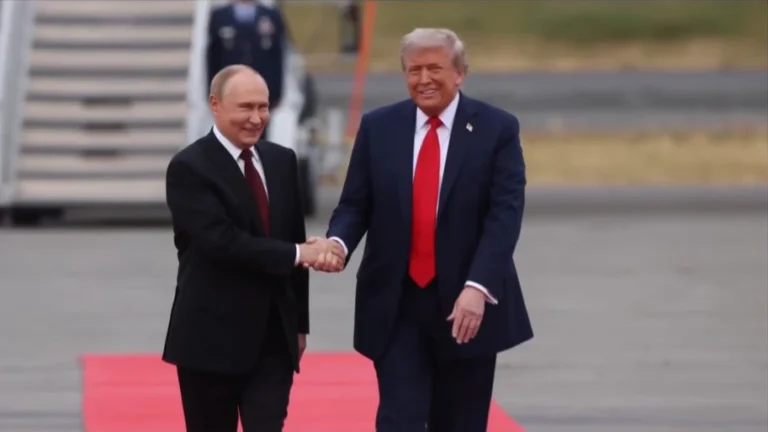
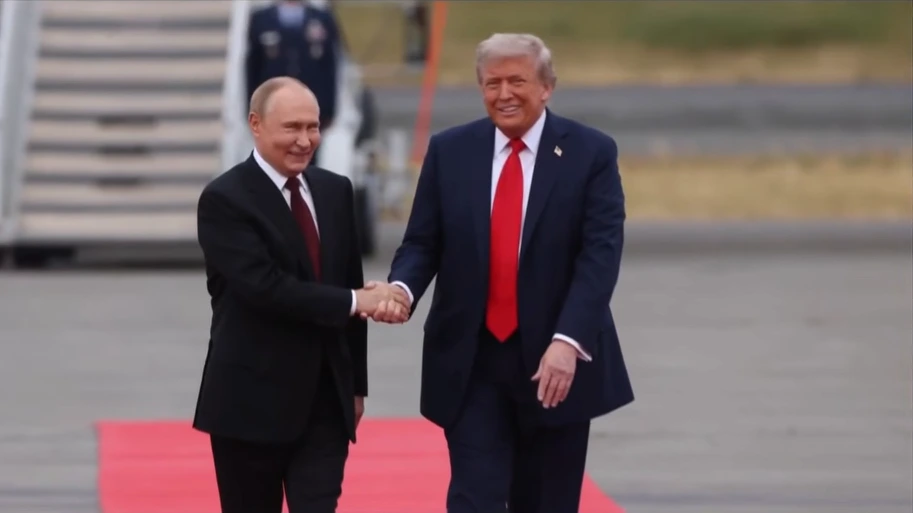
The sequence of events began on Friday, October 9, when Trump held a phone call with Putin. The two leaders announced a deal to ease restrictions on Russian diesel exports. The US Treasury subsequently authorised certain transactions involving Russian diesel until April 7, 2027.
Under the terms disclosed by the White House, Russia agreed to release 300,000 tons of diesel to the American and global marketplace immediately, followed by 500,000 tons in November and another million tons after that. In return, the United States suspended the sanctions that had been preventing Russian diesel from reaching global markets.
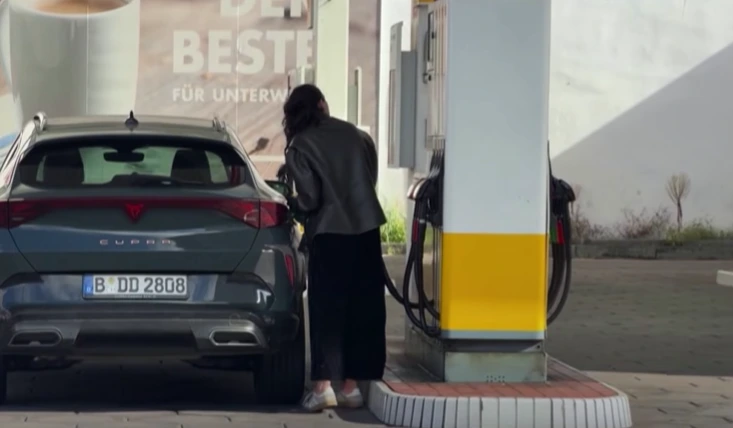
The stated rationale was straightforward: Trump’s war in Iran has driven global diesel prices to record highs, European diesel hit €2.24 per litre last week, and the November midterm elections are approaching. Trump, facing Republican anxiety about fuel costs, sought a rapid supply-side intervention, and the most available source of diesel at scale was Russia.
Trump announced on Friday that he had agreed in a phone call with Vladimir Putin to allow Russia to export millions of tons of diesel through April 2027.
The immediate financial consequence for Russia was significant. Just this easing of sanctions by America could provide Russia with around $10 billion for the war. That figure came from Zelensky himself, who calculated the revenue Russia would earn from the lifted restrictions and directed it straight at Trump’s stated desire to end the conflict: the money being freed up is money that will fund Russian military operations in Ukraine.
The Cascade: Zelensky, Elections and the “New President” Demand
The Ukrainian president’s reaction to the diesel deal was swift and unambiguous. Zelensky denounced Washington’s deal with Moscow, calling it a gift to Putin. He accused Trump of weakness and argued that easing sanctions at this moment, with Russia escalating its strikes on Ukrainian civilian infrastructure, would only extend the war rather than end it.
Trump’s response escalated the crisis to an entirely different level. Trump said Ukraine needs a new president and blamed Ukraine’s leader Volodymyr Zelenskyy for high US diesel prices. The president of Ukraine’s most important military backer suggested replacing Zelensky, sending shockwaves across European capitals.
Zelensky, facing simultaneously a Russian military escalation and an American president calling for his removal, made a remarkable counter-offer. Zelensky promised new Ukrainian elections in exchange for a 60-day ceasefire. He told ABC News: “OK, if they want energy ceasefire, we are open for this. We will stop attacking your diesel. And I think it’s fair, fair deal.” He added that the real cause of the war in Europe is Russia and Russia alone.
That offer, elections in exchange for a ceasefire, placed the political ball squarely in Moscow’s court while signalling to Washington that Zelensky was willing to take political risks to demonstrate his commitment to peace. It also reflected a calculation: if Putin refuses a 60-day ceasefire, the responsibility for the war’s continuation falls unambiguously on Moscow, even in the narrative Trump is constructing.
The “Energy Ceasefire”: A Diplomatic Announcement Without a Deal
On Sunday morning, October 11, Trump posted on Truth Social: “Effective immediately, there is an ENERGY CEASEFIRE in the War between Russia and Ukraine. Both parties have agreed. Do not break it!”
The announcement produced immediate confusion because it described an agreement that had not, in any verifiable sense, been reached.
Trump made a similar announcement a month ago, only for the two sides to continue their aerial attacks on each other’s energy facilities.
Zelensky appeared surprised by the announcement and said he was seeking further details, but added that Ukraine supports the ceasefire, and it is important that Russia support it as well.
Moscow’s response was silence. Russia did not confirm the ceasefire. And within hours of Trump’s post, the strikes continued. Despite Trump’s energy ceasefire announcement, Russian strikes hit power plants in Ukraine. Russia struck Ukrainian power plants hours after the announcement. Ukraine separately continued targeting Russian oil refining facilities using domestically made drones.
Mr Trump, whose war in Iran has been blamed for high diesel prices that are weighing on Republicans’ prospects at next month’s midterm elections, had previously announced an energy ceasefire in Ukraine in mid-September, though neither side ever confirmed such an agreement was reached.
The pattern is now established. Trump announces an energy ceasefire. Russia does not confirm it. Both sides continue striking each other’s energy infrastructure. And Trump’s political objective, to be seen as the peace-maker reducing diesel prices before the midterms, is pursued regardless of whether the underlying reality matches the announcement.
Europe’s Reaction: Unity Behind Zelensky, Defiance Toward Washington
The European response to the diesel deal and the “new president” demand has been one of the most unified displays of transatlantic disagreement since the early weeks of Trump’s second term.
EU foreign policy chief Kaja Kallas wrote on X: “This is not the time to ease pressure on Russia, and Europe won’t.” She added that EU foreign ministers intended to approve the biggest set of sanctions listings targeting Russia’s war machine since the start of the war, scheduled for Monday October 12.
The prime minister of the Czech Republic, Andrej Babiš, described Trump’s diesel concession to Moscow as a blow to Europe and said it was all the more shocking given Trump’s previous criticism of EU countries for importing Russian hydrocarbons. “I understand that he is facing elections, but for Europe this is a massive slap in the face,” Babiš said.
German Chancellor Friedrich Merz said “easing sanctions now, for whatever reason, is wrong”, adding that Europe must ensure Russia does not exploit the war in Iran to weaken Ukraine.
French President Macron stressed the limited and temporary nature of the US waiver while warning Moscow that Europe would maintain its pressure against the country.
UK Prime Minister Andy Burnham said the past 24 hours had been difficult for Ukraine, adding that the UK would continue strengthening sanctions on Russia independently.
The political optics are stark. The United States lifted sanctions on Russia on Friday. The European Union is adding sanctions on Russia on Monday. Washington and Brussels are pulling in opposite directions on the most consequential security question facing the continent.
The Midterm Calculus: Why Trump Did This Now
The timing of the diesel deal, one month before US midterm elections, is not coincidental. It is the central explanatory fact without which nothing else in the sequence makes sense.
Trump’s war in Iran has driven diesel prices to record highs across the United States and Europe simultaneously. American consumers are paying more at the pump than at any point in recent years. Republican candidates in swing districts are fielding increasingly heated questions about fuel costs at every event. And Trump, having started the Iran war that is principally responsible for the supply disruption, needed a visible and rapid supply-side intervention.
Both the wars in Iran and Ukraine have contributed to a global energy crisis, yet Trump places the blame for soaring US diesel prices solely on Zelenskyy.
That blame-shifting is politically essential for the midterms. If Trump acknowledges that his own Iran war is the primary driver of the diesel crisis, he owns the problem. If he can construct a narrative in which Zelenskyy’s refusal to make peace is causing diesel prices to hurt American families, he deflects responsibility. The “new president” demand and the diesel deal are two elements of the same political story being written for a domestic American audience with six weeks until election day.
The European dimension of this calculation is being weighed very differently in Washington than in Brussels. For Trump, European objections to the Russian diesel deal are the complaints of allies who contribute insufficiently to their own defence and have no standing to lecture him about his energy policy. For Kallas, Macron, Merz, and Burnham, the deal funds the Russian military that is killing Ukrainians and threatening the European security order.
The EU Sanctions Meeting Today: What Is on the Table
EU foreign ministers are meeting this morning in Luxembourg in what Kallas has described as a landmark session. The sanctions package being discussed is reportedly the most extensive since Russia’s 2022 invasion.
Among the expected measures are new individual listings targeting figures in Russia’s military-industrial complex, tightened restrictions on the shadow fleet of tankers that has been allowing Russia to circumvent oil price caps, new financial sector restrictions aimed at institutions facilitating Russian war financing, and potentially accelerated timelines for existing energy transition measures.
The timing relative to Trump’s diesel deal is deliberate. Europe is not simply adding to its existing sanctions programme. It is making a statement about the direction it is choosing at precisely the moment that Washington has chosen a different direction. The size of Monday’s package matters politically as much as it does economically — it needs to be large enough to signal genuine resolve rather than just routine maintenance of an existing programme.
The meeting also carries implications for the broader EU-US relationship. European governments have been navigating a deeply uncomfortable position since Trump’s return to the White House: dependent on American military capability for their own security while increasingly at odds with American foreign policy choices. The diesel deal has made that tension more visible in a way that will be difficult to smooth over before the midterms.
What Russia Wants: Reading the Silence
Moscow’s silence on the energy ceasefire announcement speaks more clearly than any confirmation would. Russia has continued striking Ukrainian power plants since Trump’s Sunday post. It has not issued a statement confirming the ceasefire. And it has not publicly welcomed the energy ceasefire in the way that it has welcomed other Trump announcements perceived as favourable to Russian interests.
The Russian calculus is likely the following. The diesel deal provides immediate and concrete financial benefit — $10 billion in additional war revenues, by Zelensky’s calculation — without requiring any commitment or concession. An energy ceasefire that Russia confirms would obligate it to stop striking Ukrainian power infrastructure, which has been one of the most militarily effective tools in its winter strategy. Silence allows Russia to continue those strikes while the US absorbs the political benefit of Trump’s ceasefire announcement.
Putin’s strategic objective in the current phase of the war is to outlast Western support for Ukraine, to fracture the transatlantic coalition, and to maintain military pressure that forces Zelensky into a negotiating position on Russian terms. The diesel deal and the “new president” demand, whatever their domestic political logic for Trump, advance all three of Putin’s objectives simultaneously.
Zelensky’s Election Offer: Courage or Trap?
Zelensky’s offer to hold elections in exchange for a 60-day ceasefire is one of the most politically audacious moves he has made since the full-scale invasion began. It deserves serious analytical attention.
Ukrainian law prohibits elections during martial law. Zelensky cannot simply announce elections without a constitutional and legal framework that currently does not exist. His offer is therefore conditional on multiple things: a genuine ceasefire, the lifting of martial law, the creation of an electoral framework, and sufficient security conditions for a credible vote to be conducted across a country still partially under Russian occupation.
The political risk Zelensky is running is significant. By offering elections, he gives Trump something he can point to as evidence that Ukraine is willing to make concessions. He signals to the American public that Zelensky is not the obstacle to peace. And he puts the 60-day ceasefire requirement, which Russia must agree to and honour, at the centre of the negotiation, making Moscow’s rejection of it the story rather than Washington’s pressure on Kyiv.
The risk is that the offer is taken at face value by audiences who do not understand the constitutional complexity, and that a failure to hold elections during an ongoing war becomes another point of criticism directed at Zelensky.
What This Means for European Energy and the Fuel Crisis
The immediate question many Europeans are asking is whether the Russian diesel deal will actually lower fuel prices. The answer is: possibly, modestly, and temporarily.
The volumes involved. 300,000 tons immediately, scaling to 1.8 million tons by the end of the arrangement, represent a meaningful but not transformative addition to global diesel supply. Brent crude oil prices fell slightly on news of the deal, but the underlying supply disruption caused by the Iran war and the ongoing reduction of Gulf state refinery output remains in place. The diesel released under the Trump-Putin arrangement supplements rather than replaces the supply that has been removed from markets by the Middle East conflicts.
European fuel prices may see marginal relief in the short term, particularly given Germany’s October tax cuts and similar measures in other member states announced last week. But the structural drivers of the fuel crisis are not resolved by a single bilateral sanction waiver. The Strait of Hormuz remains contested. Iranian supply remains constrained. And the European energy market has learned from 2022 that dependence on Russian hydrocarbons carries political costs that pure price calculations cannot capture.
Three Scenarios for What Comes Next
The genuine energy ceasefire scenario. Russia, quietly and without formal announcement, reduces its strikes on Ukrainian power infrastructure through the winter. Ukraine reciprocally reduces drone strikes on Russian refineries. Diesel prices ease modestly as Iranian ceasefire talks progress in The Hague. Trump presents himself to American voters as the leader who stopped the energy crisis before the midterms. Europe’s new sanctions package proceeds regardless, maintaining pressure on Russia’s war economy. The war continues at lower intensity through the winter. This is the scenario Trump is publicly betting on. Its probability depends entirely on Putin’s strategic judgement, and the continued strikes on Ukrainian power plants following Sunday’s announcement do not make it look likely.
The fracture scenario. Russia continues striking Ukrainian power plants through the winter. Ukraine continues hitting Russian refineries. The energy ceasefire proves to be a third phantom announcement in a row. Trump’s midterm calculation fails as diesel prices remain elevated. Europe and the United States find themselves on opposite sides of the Russia sanctions question for the remainder of Trump’s term, with the EU expanding pressure while Washington maintains the diesel waiver. The transatlantic relationship on Ukraine enters its most difficult phase since the invasion began. This is the scenario that Monday’s EU sanctions meeting is designed to prevent from becoming permanent.
The escalation scenario. Russia interprets the diesel deal and the “new president” demand as evidence that Trump’s commitment to Ukraine is weakening and presses its military advantage through the winter. Ukrainian power infrastructure sustains severe damage. Zelensky’s domestic political position weakens under the combination of Russian military pressure, American diplomatic pressure, and cold temperatures from reduced electricity generation. The EU, facing both continued Russian military aggression and a fractured transatlantic alliance, is forced to make decisions about its own military support for Ukraine that it does not yet have the capacity to fully execute.
The Bottom Line
Europe is navigating the most turbulent week in its Ukraine policy since the war began. A US president facing domestic electoral pressure has lifted sanctions on Russia, demanded the replacement of a democratically elected allied leader, and announced a ceasefire that has not been confirmed by the party it most needs to comply.
The EU’s response, the biggest sanctions package since 2022, European leaders unanimously backing Zelensky, and Kallas’s explicit statement that Europe will not ease pressure on Russia regardless of what Washington does, represents the clearest assertion of European strategic autonomy in the Ukraine context to date.
Whether that autonomy is backed by sufficient economic and military capacity to matter is the harder question. Europe has been supporting Ukraine with significant financial and military resources since 2022. But it has done so within a framework of American leadership. The diesel deal has exposed what happens when that framework is removed: Europe must either step into the vacuum or watch the strategic architecture of the last four years begin to unravel.
The foreign ministers meeting in Luxembourg today know the stakes. The size and ambition of the sanctions package they approve before lunchtime will say more about Europe’s actual strategic intentions than any number of diplomatic statements from the weekend.
Sources: Euronews, October 12, 2026; NBC News, October 11, 2026; RTÉ, October 11, 2026; The Hill, October 11, 2026; Radio Free Europe/Radio Liberty, October 11, 2026; TVP World, October 11, 2026; Euronews, October 10, 2026; Al Jazeera; Bloomberg, October 11, 2026; Axios, October 11, 2026; CNN, October 11, 2026.
Related Articles:
- Europe’s Fuel Crisis Explained: Why Diesel Hit €2.24 a Litre and What Happens Next
- EU-US Trade Deal Explained: How the New 15% Tariff Affects You in 2026
- The Mecca Pact: What the Muslim NATO Is and Why Bangladesh’s Decision Matters
- Europe’s Economy Is Defying the Odds: War, Energy Shock and the PMI Paradox