

The EU-US trade deal faces a critical June 16 Parliament vote. Here’s what the 15% tariff ceiling means for European cars, jobs, prices, and the July 4 deadline.
After months of political drama, two pauses, tariff threats, and a deal first struck at a golf resort in Scotland, the European Union and the United States are finally in the final stretch of sealing one of the most consequential trade agreements in decades. With a European Parliament vote scheduled for June 16 and a hard deadline of July 4 set by US President Donald Trump, the clock is ticking.
But what does this deal actually mean for ordinary Europeans? Will your car get more expensive? Will European workers lose their jobs? And what happens if the Parliament says no?
What Is the EU-US Trade Deal and Why Does It Exist?
The EU and the United States share the largest bilateral trade and investment relationship on the planet. Every day, more than €4.2 billion worth of goods and services cross the Atlantic, and total EU-US investments between firms on both sides exceeded €5.3 trillion in 2022 alone. This relationship had never been formalised through a comprehensive tariff agreement until now.
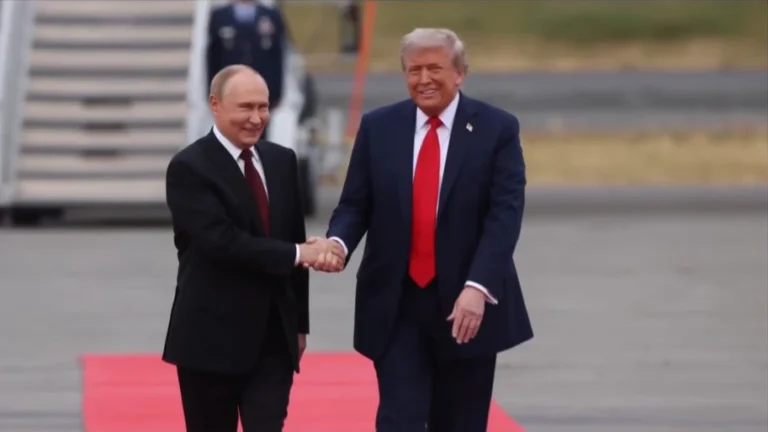
The deal came about because of an escalating trade war triggered by the Trump administration in 2025. Washington threatened to impose sweeping 30% tariffs on most European goods unless the EU agreed to lower its own trade barriers. After months of negotiation, EU Commission President Ursula von der Leyen and President Trump announced a preliminary agreement on July 27, 2025, at Trump’s Turnberry golf resort in Scotland.
That original agreement set the framework. Now, in June 2026, the European Parliament is preparing to formally ratify it, and the stakes could not be higher.
The Core of the Deal: What Was Actually Agreed?
At its heart, the EU-US trade deal is an exchange of concessions between two major economic blocs. Here is what each side agreed to:
What the US Gets
The European Union agreed to eliminate tariffs on all US industrial goods including machinery, electronics, and chemicals. Additionally, the EU agreed to ease import duties on certain US agricultural and seafood products. The EU had already applied zero or very low tariffs on approximately 67% of US industrial goods, so this extends that treatment to the rest.
The EU also committed to procuring substantial volumes of US liquefied natural gas, oil, and nuclear energy products, a move designed to help replace Russian energy supplies that have been cut since the Ukraine war began.
What the EU Gets
In return, the United States agreed to cap tariffs on most European exports at 15%, a single, all-inclusive ceiling that applies across the board to sectors including cars, semiconductors, pharmaceuticals, and lumber. Crucially, the 15% is a hard ceiling with no stacking, meaning additional duties cannot be piled on top.
Certain sectors received even better treatment. Aerospace products, including aircraft and aircraft parts, returned to the previous zero-tariff arrangement. The same applied to generic pharmaceuticals, cork, and a handful of other goods where the US and EU had previously agreed on duty-free trade.
The July 4 Deadline: Why the Pressure?
The original deal was reached in July 2025, but the European Parliament paused ratification twice, first in January 2026 after Trump threatened to seize Greenland and again in February following a US Supreme Court ruling that cast doubt on the legal basis for the tariffs. These delays strained relations between Brussels and Washington.
In response, Trump set a new hard deadline: July 4, 2026 the 250th anniversary of American Independence. He warned that if the EU had not formally implemented the deal by that date, he would raise tariffs on European automobiles from 15% to 25%. Given that the car industry is one of Europe’s most important economic pillars supporting millions of jobs in Germany, France, Italy, and across the continent, this threat carries enormous weight.
The European Parliament’s trade committee gave preliminary approval to the deal in early June 2026, with the full Parliament plenary vote now set for June 16. EU member states are then expected to give their final assent shortly after. If all goes to plan, the deal will take effect by late June — just in time for the July 4 deadline.
What Do European Industries Win and Lose?
The deal’s impact varies significantly by sector.
Cars and Automotive
The EU automotive industry was among the hardest hit during the trade tensions of 2025, facing potential 27.5% US tariffs on European vehicles. The 15% ceiling is a major relief compared to that scenario. Volkswagen, BMW, Mercedes-Benz, Stellantis, and Renault all have significant exposure to the US market. However, some industry groups have noted that even 15% is costly compared to the near-zero tariffs that existed before Trump’s trade war began.
The risk remains: if the Parliament fails to meet the July 4 deadline, tariffs on European cars jump to 25% overnight.
Aerospace
This is a clear win for Europe. Airbus and the broader European aerospace supply chain benefit from the return to zero tariffs on aircraft and parts, restoring a regime that had been disrupted during the trade tensions. US and EU aerospace industries on both sides of the Atlantic welcomed this outcome.
Pharmaceuticals
European generic pharmaceutical manufacturers receive the zero-tariff treatment. However, some larger pharma firms noted that a 15% tariff still applies to certain branded medicines, which could affect pricing in the US market for European drug exports.
Steel and Aluminium
This remains the most contentious part of the deal. Steel and aluminium are not covered by the 15% ceiling. Instead, the US currently applies a 50% tariff on European steel and aluminium imports, a separate arrangement that has angered European producers.
The deal does include a safety net: if the US has not reduced its steel and aluminium derivative tariffs to at or below 15% by December 31, 2026, the European Commission has the right to suspend trade concessions on targeted US products. This is a significant defensive clause that European lawmakers fought hard to include.
Agriculture and Food
EU agricultural sensitivities were carefully protected throughout the negotiation. The deal opens some preferential market access for US seafood and certain non-sensitive agricultural goods, but core European farming sectors, including beef, dairy, and wines and spirits — remain largely shielded. Wine and spirits groups have continued to push for full tariff exemptions, which may be addressed in future negotiations.
What Does This Mean for Everyday Europeans?
For most European consumers, the direct impact of this deal is expected to be limited in the short term.
The 15% tariff is paid by American importers, not European exporters. This means it primarily affects how expensive European products become in the United States, not how much Europeans pay for goods at home. The EU did not place counter-tariffs on American products, so prices for US goods in European stores are not expected to rise as a result of this agreement.
However, there are indirect effects. If European exporters, particularly carmakers, find it harder or more expensive to sell in the US, some of that financial pressure can trickle back into the European economy through reduced profits, slower investment, or, in worst-case scenarios, job losses.
On the positive side, the EU’s elimination of tariffs on US industrial goods is expected to save EU importers and consumers around €5 billion in duties each year. For businesses that rely on American machinery, electronics, and chemicals, this is a meaningful reduction in costs.
The Political Divide: Who Supports It and Who Opposes It?
The deal has not been universally welcomed inside the European Parliament.
A vocal faction of MEPs, particularly from the Socialists and Greens, has argued that the deal is too lopsided in favour of the United States. Their core complaint is that the EU is giving up more than it gets: eliminating tariffs on US industrial goods entirely, while accepting a 15% tariff on most of its own exports. Some MEPs pointed to the US decision, taken weeks after the original Turnberry agreement, to extend 50% steel and aluminium tariffs to hundreds of additional EU products as evidence that Washington cannot be trusted to honour the spirit of the deal.
The European People’s Party, the largest group in Parliament, has largely backed the agreement. Lead negotiator Željana Zovko said Europe had “avoided a damaging escalation of transatlantic trade tensions and protected European companies, investments and millions of jobs on both sides of the Atlantic”.
The trade committee ultimately approved the deal by a margin of 31 votes in favour to 6 against, with 3 abstentions, a comfortable majority, but not a unanimous endorsement.
The Safeguards: What Protections Did the EU Secure?
European lawmakers successfully pushed for several important safeguards before giving their approval:
Sunset clause: The regulations implementing the deal will automatically expire at the end of 2029 unless further action is taken by the EU. This prevents the deal from becoming permanent without a fresh democratic mandate.
Steel and aluminium trigger: The European Commission can suspend tariff preferences on US goods if Washington continues to apply tariffs above 15% on EU steel and aluminium derivative products after December 31, 2026.
Anti-Coercion protections: MEPs secured provisions linked to the EU’s Anti-Coercion Instrument — one of Brussels’ strongest market defence tools, which can be activated if the US applies economic pressure through tariff threats in the future.
Monitoring mandate: The Commission is required to begin reporting to lawmakers on trade volume changes within six months of the regulation entering into force.
What Happens If the Parliament Votes No?
A rejection by the full Parliament on June 16 would be a serious political and economic shock. Trump has made clear that a failure to implement the deal by July 4 would trigger a 25% tariff on European cars, a move that would devastate Germany’s automotive industry and likely send ripples through the broader European economy.
Beyond cars, the broader failure of the deal could reignite the full trade war scenario, potentially pushing US tariffs on all European goods back up toward the 30% level threatened in 2025.
Most analysts, however, consider a full rejection unlikely. The deal has the backing of the EU’s largest parliamentary group and the European Commission, and the costs of a breakdown are clear for all sides to see.
What Comes Next?
Even if the June 16 vote passes as expected, this is not the end of the story. The current deal covers tariffs but leaves a large number of issues unresolved:
- Non-tariff barriers: Regulatory differences between the EU and US — on food standards, digital rules, and product certifications — remain a major friction point and a future area of negotiation.
- Steel and aluminium: The December 2026 deadline for the US to bring its steel and aluminium tariffs below 15% will be a key test of Washington’s commitment.
- Agricultural trade: Wine, spirits, beef, and dairy sectors are all pushing for further market access in both directions.
- Digital trade: Differences over data privacy, platform regulation, and digital taxation remain unresolved.
Von der Leyen described the current deal as “a platform for further progress”, signalling that Brussels sees this as a foundation to build on, not a finished house.
The Bottom Line
The EU-US trade deal of 2025-2026 is an imperfect compromise reached under pressure. Europeans gave up more in tariff reductions than they received. Steel and aluminium remain an unresolved flashpoint. And the deal expires in 2029, meaning this conversation will have to happen again.
But the alternative, a full-blown transatlantic trade war with 30-50% tariffs on both sides, would have been far more damaging for European workers, businesses, and consumers. The €1.6 trillion annual EU-US trade relationship is simply too important to let collapse.
With the Parliament vote on June 16 approaching and the July 4 deadline looming, the coming weeks will determine whether this hard-won agreement finally crosses the finish line – and whether the world’s most important trading partnership enters a new era of stability or slides back into conflict.
Follow Europeans24 for continuing coverage of the EU-US trade deal, European Parliament votes, and the latest on tariffs affecting businesses and consumers across the continent.
READ MORE: Europe’s Economy Is Defying the Odds: War, Energy Shock and the Paradox of September 2026







[…] EU-US Trade Deal Explained: How the New 15% Tariff Affects You in 2026 […]
[…] EU-US Trade Deal Explained: How the New 15% Tariff Affects You in 2026 […]
[…] EU-US Trade Deal Explained: How the New 15% Tariff Affects You in 2026 […]
[…] EU-US Trade Deal Explained: How the New 15% Tariff Affects You in 2026 […]