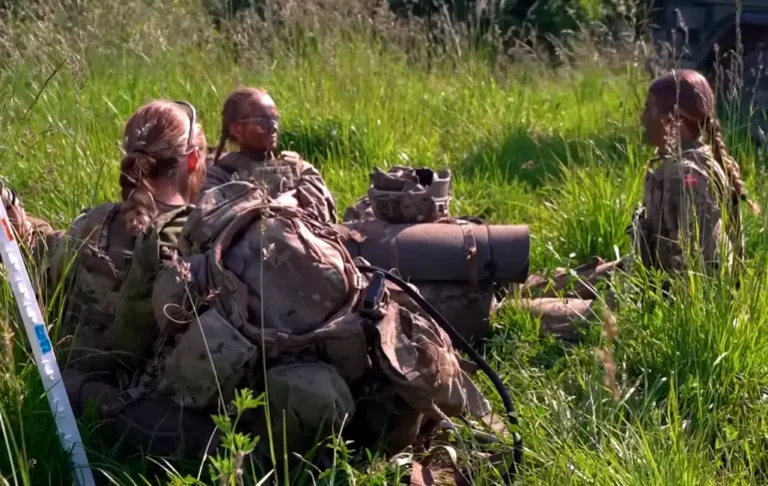
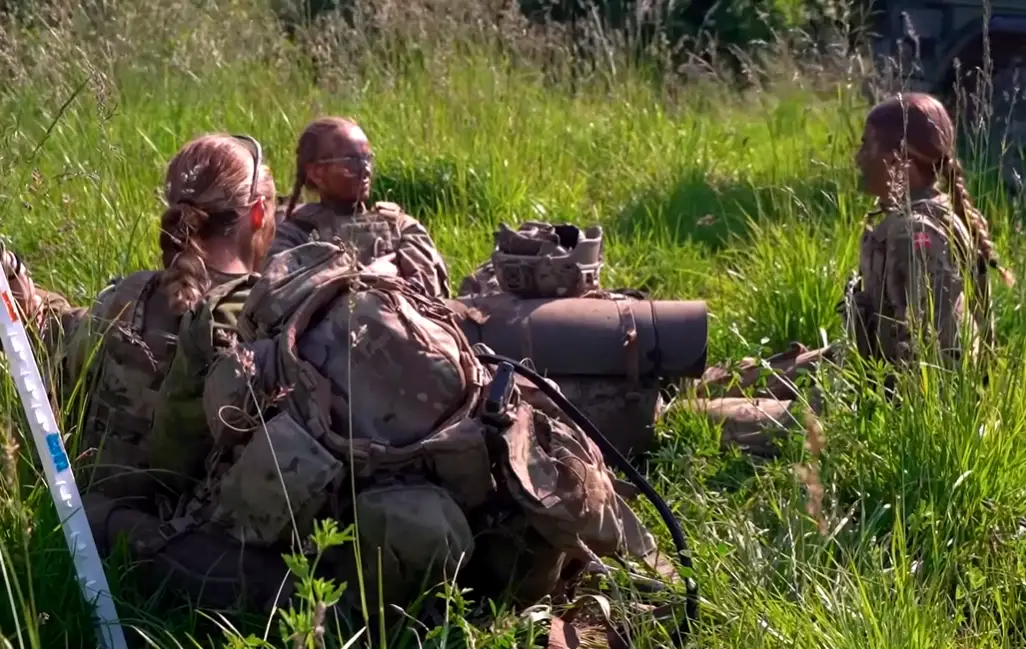
Denmark began conscripting women on August 3, 2026, joining Norway and Sweden in Europe’s most significant military shift in decades. Here is why Europe is drafting women, who does what, and why the demographics make this inevitable.
On August 3, 2026, around 1,600 young Danish people walked through the gates of military barracks across Denmark to begin eleven months of compulsory military service. Among them, for the first time in Danish history, were women drafted on exactly the same terms as their male counterparts. It was a moment that would have seemed improbable in Denmark just a decade ago, when the country was still running a four-month mandatory service exclusively for men and filling its professional ranks with volunteers.
That moment, quiet and unremarkable at the individual level, marks one of the most significant shifts in European security policy in a generation. And Denmark is far from alone in making it.
What Denmark Has Actually Done
Denmark said in 2024 it would extend conscription to include women for the first time and increase standard service time to 11 months from four, while the number of conscripts is set to increase to 7,500 annually by 2033 from 5,000.
The structure of the new system is straightforward. All women turning 18 after the start date are entered into a gender-neutral draft lottery alongside men. The reform extends service from four to 11 months, comprising five months of basic training and six months of operational duty.
The operational implications are immediate and pointed. The new intake arrives as Denmark prepares to deploy conscripts to Greenland for the first time later this month, with a company of more than 100 soldiers set to serve for one month, taking over operational tasks from professional troops. The deployment carries added political weight as US President Donald Trump has repeatedly sought to annex the semi-autonomous Danish territory, citing national security, a demand firmly rejected by the governments of Greenland and Denmark.
Danish Prime Minister Mette Frederiksen has been explicit about the philosophy behind the reform. “We do not rearm because we want war. We are rearming because we want to avoid it,” she said, adding that the government wants “full gender equality between the sexes.”
That framing, equality through shared obligation rather than shared privilege alone, has been echoed by the young women now entering service. “We’re nothing special because we’re women. When we put our uniform on, we are all soldiers; there’s no gender divide,” said Isabella, one of the new conscripts, who described the whole world as being “such an unstable place” that recruiting women and increasing numbers “is mandatory, or else we wouldn’t be able to prepare ourselves for the future.”
The Map of Europe’s Military Gender Shift
Denmark is not pioneering this change. It is joining a movement that has been building across Northern Europe for over a decade.
Europe’s move toward female conscription began in the Nordics. Norway made military service mandatory for women in 2015, and Sweden followed in 2017 after reviving conscription in response to Russia’s actions in Crimea.
Norway’s decision in 2013 to legislate conscription for both sexes was historically significant. Norway was the first NATO country to have both male and female conscripts, joining a tiny group of countries around the world, including Israel. The system is deliberately selective, with only a fraction of eligible Norwegians called up each year, making military service something of a competitive assignment rather than a universal obligation.
Sweden’s conscription was abolished in 2010 and reinstated in 2018. The service lasts from 6 to 15 months. The number of recruits in 2024 reached approximately 8,000, a significant increase from 4,000 in 2017. Initially, the percentage of women was 15 percent and this has gradually increased in subsequent years, reaching 24 percent in 2023.
The Netherlands added women to its conscription law in 2020, although the system is not currently enforced. Baltic countries are now considering similar steps. Latvia’s defence minister supports introducing female conscription by 2028, arguing that countries bordering Russia must strengthen their defence.
Beyond compulsory service, women serve voluntarily across militaries in Austria, Estonia, Finland, Greece, Latvia, Lithuania, Switzerland, Ukraine, Belarus, and Russia. Women are also eligible for combat roles in countries including France, Poland, Spain, and the United Kingdom.
In October 2025, Croatia’s lawmakers voted to reinstate mandatory military service starting in 2026, raising the count of EU countries with a compulsory draft to nine, though Croatia and Serbia have kept women exempt from compulsory service.
In 2026, Belgium is to introduce a 12-month voluntary military service for men and women, aiming to reach 1,000 volunteers by 2028. Germany has adapted a volunteer-first model, and in 2026, a survey will be conducted among 18-year-olds to assess their skills and interest in joining the German army. Poland has launched voluntary military training programmes with a target of 100,000 trained volunteers annually by 2027.
Why Now? The Three Drivers Behind the Shift
The expansion of female conscription across Europe is not primarily a gender equality project, though the language of equality has been consistently invoked to justify it. It is the product of three converging pressures that have fundamentally changed Europe’s security calculus.
The Russian Factor
The single most important trigger has been the war in Ukraine. Before 2022, most European countries had spent three decades shrinking their armed forces under the assumption that large-scale conventional war in Europe was essentially impossible. The post-Cold War dividend had been spent down to the bone, with professional armies replacing conscript forces across most of the continent.
Russia’s full-scale invasion of Ukraine on February 24, 2022, destroyed that assumption. The conflict has demonstrated with brutal clarity that even in the age of drones, precision missiles, and AI-assisted targeting, conventional warfare still requires enormous quantities of trained personnel. Soldiers on the ground, drone operators, air defence teams, engineers, medics, intelligence officers, and logistics specialists cannot be replaced by technology. Ukrainian officials say more than 70,000 women serve in their armed forces, with around 5,000 on the front line. That reality has not gone unnoticed in European capitals.
Despite the heavy losses Russia has suffered in the Ukraine war, European militaries view it as a potential direct threat within the next two to five years. At the same time, Washington has made it clear that it expects its European allies to assume a greater share of the responsibility for their own defence. President Trump’s demand that NATO members raise defence spending to 5 percent of GDP has sharpened the pressure considerably.
Defence spending by European Union member states increased 37 percent in 2024 compared to 2021. That spending increase must be matched with people.
The Demographic Reality
Europe’s ageing population is the second driver, and in the long run it may be the most structurally significant. Birth rates across most of Europe have been falling for decades. Countries like Germany, Italy, Spain, Portugal, and Greece have some of the lowest birth rates in the world. The result is a progressively smaller cohort of young people reaching the age of military eligibility each year.
Experts say shrinking youth populations will reduce the number of eligible male recruits by the 2040s. Researchers warn that current systems may soon be unsustainable, while Estonia conscripts about 40 percent of eligible young men already.
If a country wants to maintain or expand the size of its military while the pool of young men is shrinking, the arithmetic is straightforward: the only way to sustain numbers is to include women. As Denmark’s Defence Minister Troels Lund Poulsen put it plainly, “A broader basis for recruiting that includes all genders is needed. This will give access to more competences and better task solving. Quite simply, a more versatile and more complete defence.”
The Equality Argument
The third driver is the principle of equal citizenship. If military service is framed as a responsibility of belonging to a national community, there is no principled reason why that responsibility should fall exclusively on men. Norway, the first NATO country to legislate gender-neutral conscription, made this argument explicitly in 2013, and the countries that have followed have broadly adopted the same framing.
Both men and women must now participate in an annual ballot in Denmark, with names drawn if there are not enough volunteers for the army. The mechanism is designed not to draft every young Danish woman but to establish the principle of equal obligation while meeting force requirements through the same selection process applied to men.
The Practical Challenges That Remain
The expansion of female conscription raises a set of practical questions that proponents have not always answered adequately.
Military infrastructure across most of Europe was designed around male recruits. Accommodation, uniforms, equipment, and facilities have historically been built to male specifications, and adapting them for gender-mixed cohorts carries real costs. Physical fitness standards are the most contested specific issue: should standards differ by gender to reflect physiological differences, or should they reflect the actual requirements of each military role regardless of the gender of the person filling it?
The issue of sexual harassment and discrimination within military environments is the most sensitive. Research consistently shows elevated rates of sexual harassment in mixed-gender military settings, and the expansion of female conscription brings more women into environments that have not always protected them. How armed forces across Europe handle this challenge will be as important as how they handle the logistics of mixed accommodation and physical standards.
Public support for female conscription varies considerably across countries. In Scandinavia, where gender equality norms are among the most deeply embedded in any society on earth, conscription for women fits naturally within the broader social contract. In countries with more traditional gender role expectations, the political path to compulsory female service would be considerably more contested.
What a Continent in a Hurry Looks Like
The speed of the change is what makes this moment so historically significant. In the 1990s and 2000s, most European countries phased out mandatory conscription, opting for professional armies only. But recent geopolitical developments in Eastern Europe, marked by the return of high-intensity warfare on the EU’s doorstep and Russia’s hybrid warfare tactics against the bloc, have prompted a reassessment.
The women walking through Denmark’s barracks gates on August 3, 2026, are the visible face of a recalculation that has been building since 2014 and accelerated dramatically since 2022. They are also the practical implementation of a mathematical reality: a continent that spent three decades drawing down its military capacity, that is simultaneously ageing, and that now faces its most serious security environment since the Cold War, can no longer afford to recruit from only half its population.
Danish Prime Minister Mette Frederiksen’s words from 2024 have not aged: “We do not rearm because we want war. We are rearming because we want to avoid it.” The young women of Denmark’s class of 2026 are the proof of that commitment made concrete.
Related Articles:
- Bayraktar Kızılelma Explained: Turkey’s Unmanned Fighter Jet and the New Age of Drone Warfare
- The Mecca Pact: What the Muslim NATO Is, What It Could Become, and Why Bangladesh’s Decision Matters
- Malaysia Acquires ANKA-S Drones: What It Means for the South China Sea