
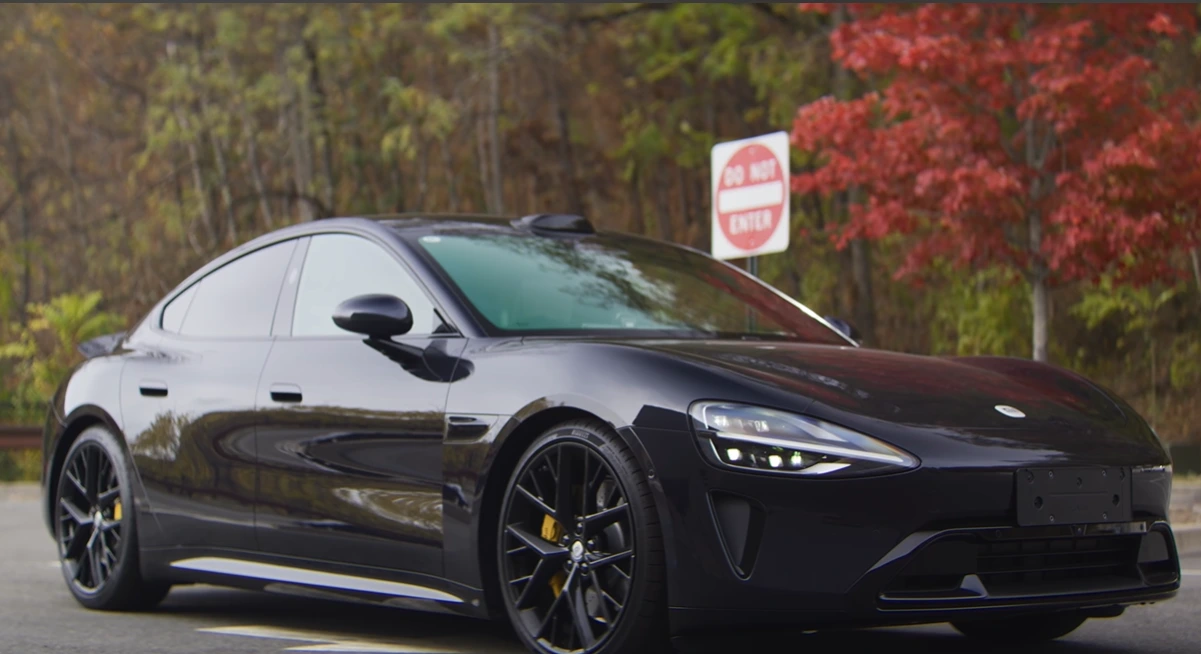
The EU replaced its 35% Chinese EV tariffs with a minimum price floor in January 2026. Here is a complete analytical breakdown of what that deal means, who wins and loses, the rare earths counter-weapon, and what Europeans should expect next.
When the European Union imposed definitive tariffs of up to 35.3 percent on Chinese electric vehicles in October 2024, it felt like a line in the sand. Brussels had concluded, after an eight-month investigation, that Chinese EV manufacturers were receiving massive state subsidies that allowed them to undercut European rivals on price, take market share, and threaten jobs in one of the continent’s most important industrial sectors. The tariffs, stacked on top of the existing 10 percent standard duty, pushed total levies on some Chinese brands to nearly 50 percent. China filed a complaint at the World Trade Organisation. Retaliation followed swiftly, with Beijing imposing anti-dumping duties on European pork and extending its anti-subsidy investigation into European dairy products and brandy.
Then, on January 12, 2026, something unexpected happened. The European Commission quietly published a guidance document introducing a price undertaking framework: a mechanism that would allow Chinese EV manufacturers to avoid the tariffs entirely by committing to sell their cars in Europe above a minimum price floor rather than paying import duties on every vehicle.
The headline tariffs remain on paper. But in practice, the EU-China electric vehicle trade war has entered a new and far more complicated phase, one that is less about protecting European carmakers and more about managing a geopolitical relationship that neither side can afford to break, while simultaneously trying to secure the rare earth materials that both sides know will determine who controls the clean energy economy for the next fifty years.
How the Tariffs Were Built and Why They Were Already Insufficient
The European Commission’s October 2024 tariff decision was the culmination of a process that began in September 2023, when Commission President Ursula von der Leyen announced an anti-subsidy investigation into Chinese EVs. The investigation documented a straightforward pattern: Chinese EV manufacturers, heavily subsidised through state-directed financing, land allocations, grid access, and battery supply chain advantages, were able to price their vehicles far below what European production economics could sustain.
Of the total EU’s EV imports in 2023, 54 percent came from China. The market share figures told an uncomfortable story: BYD, SAIC, NIO, Xpeng, and a constellation of smaller brands were filling European showrooms and online sales channels with vehicles that undercut Volkswagen, Renault, and Stellantis by margins ranging from 20 to 40 percent.
The resulting tariff structure was graduated by manufacturer, reflecting the degree of subsidy each had received. In addition to the EU’s standard 10 percent car import duty, EVs made in China were subject to the following tariff rates: Tesla 7.8 percent, BYD 17 percent, Geely 18.8 percent, cooperating companies including XPeng and NIO 20.7 percent, and state-run SAIC and all other firms 35.3 percent.
The problem was structural. Duties in the 40 to 50 percent range would probably be necessary to make the European market unattractive to Chinese manufacturers operating at their current scale and cost advantage, according to analysis from the Rhodium Group. The tariffs as imposed were meaningful but not prohibitive. And they carried costs that fell squarely on European consumers, businesses, and carmakers with significant China-based production.
Mercedes-Benz CEO Ola Källenius and BMW CEO Oliver Zipse both called on Berlin to veto the tariffs, warning that they would provoke a trade conflict from which no one would gain. Germany and Hungary voted against the tariffs, while 12 member states including Spain and Sweden, abstained. The political coalition behind the tariff was thinner than Brussels publicly acknowledged.
The January 2026 Pivot: From Tariffs to Price Floors
On January 12, 2026, a seismic shift in trade policy sent shockwaves through the global automotive industry. The European Commission published a guidance document formally introducing the price undertaking framework for Chinese EV imports.
The mechanism works as follows. The Commission issued a guidance document allowing carmakers to submit price undertakings, including the minimum import price, sales channels, cross-compensation, and future investments in the EU. Each car model would be evaluated on a case-by-case basis. Any Chinese manufacturer that committed to selling above the agreed minimum price floor would be exempt from paying the tariff duties. Those that did not commit would continue to face tariffs of up to 35.3 percent plus the base 10 percent duty.
Beijing, which had approached the World Trade Organization over the duties in November 2024, welcomed the shift. China’s commerce ministry described the strategy to set price floors as “more practical, targeted and consistent with WTO rules”.
By allowing Chinese manufacturers like BYD, SAIC, and Geely to commit to a minimum price floor instead of facing the blunt force of 35.5 percent import tariffs, the EU effectively hit the reset button on the global EV market.
The immediate question everyone asked was, ‘What is the minimum price?’ China had reportedly offered, during earlier pre-tariff negotiations in 2024, to set a minimum price floor of €30,000 on any EVs sold in the EU, well below the average price of a European-made EV in the region. That earlier offer was rejected by Brussels as insufficient. The 2026 framework sets model-specific thresholds calibrated to close the subsidy gap rather than simply establish an arbitrary floor, a considerably more complex but also more defensible approach.
Who Wins and Who Loses from the Price Undertaking Framework
The framework reshapes the competitive landscape in ways that benefit some actors enormously and disadvantage others in ways that were not immediately obvious when the announcement was made.
Chinese EV manufacturers emerge as the clearest initial winners. By committing to minimum prices, they avoid the most severe tariffs while retaining access to the European market. The EU’s softer stance offers relief not only to Chinese carmakers like BYD, Xpeng, and NIO, but also for the likes of German brands BMW and Volkswagen, which have a large production capacity in China. For BYD in particular, which has been building a factory in Hungary and partnering with distributors across major European markets, the price floor framework is far preferable to tariffs that would have required dramatic price increases or a strategic retreat from Europe.
German and European carmakers with China exposure benefit from reduced retaliatory risk. Volkswagen made the first “meaningful offer” on a price undertaking in December 2025, suggesting that European manufacturers producing in China were actively engaged in shaping a framework that protected their Chinese production from its own bloc’s trade measures. A Volkswagen built in Shanghai faces the same Chinese EV tariff as a BYD built in Shenzhen, and the company has been a vocal opponent of the punitive tariff approach precisely because it would hurt its own China-manufactured models.
European consumers face a more complex outcome. This approach could have significant drawbacks, including higher costs for European consumers. Exporters would be obliged to maintain prices above a threshold, allowing them to retain larger profit margins. EU prices could be set artificially high, as the price threshold will be based on import prices going back three years, when EV prices were much higher. The Bruegel think tank warned that the framework could raise EV prices for European consumers rather than lowering them, directly contradicting the EU’s stated goal of making electric mobility affordable.
European EV manufacturers lose the competitive shelter that tariffs provided. A price floor that allows Chinese manufacturers to remain in the European market, even at slightly higher prices, maintains competitive pressure on Renault, Stellantis, Volkswagen, and BMW at precisely the moment those companies are trying to ramp up their own EV production and reach cost competitiveness.
The Rare Earths Dimension: China’s Asymmetric Weapon
The EV tariff dispute cannot be understood in isolation from a second, even more structurally consequential conflict running in parallel: China’s weaponisation of rare earth and critical mineral export controls.
As of mid-September 2026, the EU Chamber of Commerce in China indicated that less than a quarter of the more than 140 rare earths export licence applications it monitors had been approved so far. China’s new additions of five new rare-earth elements and of refining technology to the export controls lists, and the requirement of compliance by foreign rare-earth producers, signal that Beijing will likely intensify the use of this leverage.
Gallium’s main hardware role is in gallium arsenide and gallium nitride compound semiconductors. Rare earths are critical inputs into semiconductor manufacturing equipment, servers, mainframe computers, networking gear, and AI data centres. Neodymium and dysprosium-based permanent magnets drive the actuators in hard disk drives, the motors in cooling fans, and the coils in speakers.
The asymmetry is stark. Europe can impose tariffs on Chinese EVs. China can restrict the rare earth and critical mineral exports that European car manufacturers, battery producers, defence contractors, and semiconductor fabs depend on to make their products. The two weapons are not equivalent. Tariffs raise prices for consumers and create diplomatic friction. Rare earth export controls can physically halt production lines.
The European Commission’s REsourceEU plan aims to accelerate the bloc’s Critical Raw Materials Act, passed in 2023. The EU wants to speed up the development of its own supply chains so as not to rely on a single country for more than 65 percent of its demand. Recycling rare earth waste could meet 20 percent of the EU’s permanent magnet needs, which total 20,000 metric tons per year. From September 2026, new EU rules classify waste lithium-ion batteries and black mass as hazardous, preventing exports to non-OECD countries and creating a domestic recycling loop. But these are medium-term responses to an immediate vulnerability.
China separately placed initial anti-dumping duties of up to 62.4 percent on pork imports from the EU and extended its anti-subsidy investigation into European dairy to February 2026. These measures target sectors where European exporters are highly dependent on Chinese market access, and their timing alongside the EV dispute is not coincidental. Beijing is constructing a portfolio of retaliatory tools that can be deployed in graduated escalation as trade tensions evolve.
The Chinese EV Strategy Is Adapting Around European Barriers
One of the most significant and underappreciated dimensions of the EU-China EV dispute is how rapidly Chinese manufacturers are adapting their market strategies to work around whatever barriers Brussels erects.
In the 2021 to 2023 period, countries in the Middle East and North Africa received less than 2 percent of China’s global FDI in EVs, but this had risen to 25 percent by 2024. The leap corresponds with the tightening of tariffs and trade measures in Europe and the US, which are forcing Chinese companies to redirect their focus to other markets. Morocco has emerged as an important focus for Chinese investment. Chinese battery-maker Gotion High Tech signed agreements with the Moroccan government to build a gigafactory near the north-western city of Kenitra.
That Moroccan factory is not simply a response to a lost European market opportunity. It is the construction of a production base inside Europe’s extended neighbourhood that could eventually supply European markets with batteries and components manufactured in a country with preferential EU trade access through its association agreement, circumventing both tariffs and the rare earth dependency simultaneously.
BYD’s Hungary factory follows the same logic applied directly inside EU borders. A BYD vehicle assembled in Hungary with Chinese-supplied components is a European-manufactured vehicle for tariff purposes, regardless of where the value was created. The EU’s tariff framework targeted imports from China. It did not and cannot prevent Chinese companies from becoming European manufacturers.
Slapping a 100 percent tariff on Chinese electric cars buys Western automakers a few years of artificial shelter, but tariffs cannot fix a 30 percent productivity and battery technology deficit. You cannot build a permanent wall around obsolete technology, as one chief automotive economist put it bluntly. The structural challenge facing European carmakers is not simply that Chinese EVs are cheap because of subsidies. It is that Chinese EV manufacturers, led by BYD, have developed battery technology, manufacturing processes, and software integration that is, in several important respects, ahead of what European carmakers currently offer.
The Broader Trade War Spreading Beyond EVs
In 2026, Europe will confront the fallout from Chinese overcapacity across sectors. While EVs remain the flashpoint, political focus will broaden to wind components, solar, and mature node semiconductors.
The same pattern that produced the EV dispute is visible across the green technology supply chain. Chinese manufacturers of solar panels, wind turbine components, and the chips used in less advanced applications have scaled production at a pace that European competitors cannot match. The subsidy dynamics are identical to those documented in the EV investigation, and the European Commission is under growing pressure from affected industries to extend the trade defence instruments that proved so contentious in the EV case to these other sectors.
EU-China tensions are rising as Europe’s fragmented political will collides with China’s surging industrial capacity. That fragmentation remains the EU’s greatest structural weakness in any confrontation with Beijing. Member states that export heavily to China, most prominently Germany, consistently resist measures that risk provoking Chinese retaliation. Member states with less China exposure, including France and the smaller eastern European economies, are more willing to use trade defence instruments assertively. Brussels must find a position that holds a coalition of 27 governments with divergent economic interests, against a counterpart that negotiates with a single voice.
What This Means for European Consumers and Car Buyers in 2026
For Europeans considering an EV purchase, the trade policy landscape in September 2026 is considerably more confusing than it was two years ago.
The tariffs that were supposed to make Chinese EVs more expensive have been partially replaced by a price floor framework that may instead prevent them from becoming cheaper. BYD’s vehicles in European showrooms sit at price points that reflect a minimum floor rather than a market-clearing price, meaning European consumers are not benefiting from the full cost advantage of Chinese manufacturing even as Chinese manufacturers maintain European market presence.
At the same time, European carmakers are under intense pressure to accelerate their EV programmes and reduce costs. Volkswagen, Renault, and Stellantis have all announced restructuring measures, workforce reductions, and factory consolidations driven in significant part by the need to compete with Chinese manufacturing economics. The short-term effect of the trade dispute on European consumers has been to maintain artificially elevated EV prices from both Chinese and European manufacturers, the opposite of what efficient competition would produce.
The long-term stakes are higher still. European manufacturing of EVs, batteries, and the components of the clean energy economy will define the continent’s industrial employment base for decades. Whether European companies can develop the manufacturing scale and technological capability to compete with Chinese producers without permanent trade protection is the defining industrial policy question of the 2020s.
The Three Scenarios for What Comes Next
The negotiated accommodation scenario sees the price undertaking framework produce workable agreements with major Chinese manufacturers by early 2027. Chinese EV imports enter Europe at prices above the floor, European manufacturers use the resulting breathing space to accelerate investment and reduce costs, and the rare earth tension is managed through a combination of supply diversification, recycling, and diplomatic engagement. This is the scenario that both Brussels and Beijing publicly describe as their preference. It is also fragile, dependent on sustained political will in both capitals and on Chinese manufacturers finding the European market attractive enough at higher price points to sustain their commitments.
The escalation scenario sees rare earth export restrictions tighten through the autumn, production disruptions begin to bite at European manufacturers, and political pressure in Paris and Rome builds for more aggressive trade defence measures across solar, wind, and semiconductor sectors. China responds with further food and agricultural product restrictions, Germany faces a stark choice between its China export dependence and its EU solidarity obligations, and the fragile political coalition behind European trade policy fractures. This scenario is the one that business leaders in Frankfurt and Munich are quietly most worried about.
The adaptation scenario is the one that Chinese manufacturers are already building toward regardless of what Brussels does. Chinese companies embed themselves in European manufacturing through Hungarian, Moroccan, and other third-country production, progressively acquiring the EU-origin status that makes tariff frameworks irrelevant. European manufacturers either find their own niches of genuine competitive advantage or consolidate through mergers into fewer but more capable companies. The market restructures around the new competitive reality, with trade policy serving as a transitional mechanism rather than a permanent shelter.
The evidence from September 2026 suggests that elements of all three scenarios are unfolding simultaneously, which is precisely what makes this one of the most analytically complex and practically consequential trade disputes of the current decade.
The Bottom Line
The EU-China electric vehicle dispute is not simply a trade argument about subsidies and tariffs. It is the first major confrontation of the clean energy economy era, and its outcome will shape European industrial policy, consumer EV adoption, rare earth supply security, and the continent’s relationship with its largest trading partner for a generation.
If Europe does not navigate this dispute effectively, it will not be Russia that becomes the biggest winner of the years ahead. It will be China in the electrified economy of the future. That framing, blunt and deliberately provocative, captures something real about the stakes. The EU’s January 2026 pivot from tariffs to price floors was a pragmatic recognition that trade barriers alone cannot solve a structural competitiveness challenge. But the rare earth dependencies, the technology gaps, and the political fragmentation within the EU itself mean that the pragmatic accommodation reached this year is a pause in a longer contest rather than a resolution of it.
Europe wanted to protect its car industry. It may instead be accelerating the transformation of that industry into something it does not yet fully recognise.
Sources: European Commission trade policy documents; Bruegel Institute analysis; Rest of World; TorqueNews; ECFR; Merics; S&P Global PMI data; Reuters; Newsquawk; EY Geostrategic Analysis September 2026; Lazard Top Geopolitical Trends 2026; China Rare Earth Export Controls analysis, Tech Insider September 2026.
Related Articles:






[…] The EU-China EV Trade War 2026 Explained: Tariffs, Price Floors and Rare Earths […]
[…] The EU-China EV Trade War 2026 Explained: Tariffs, Price Floors, Rare Earths and What It Means for E… […]