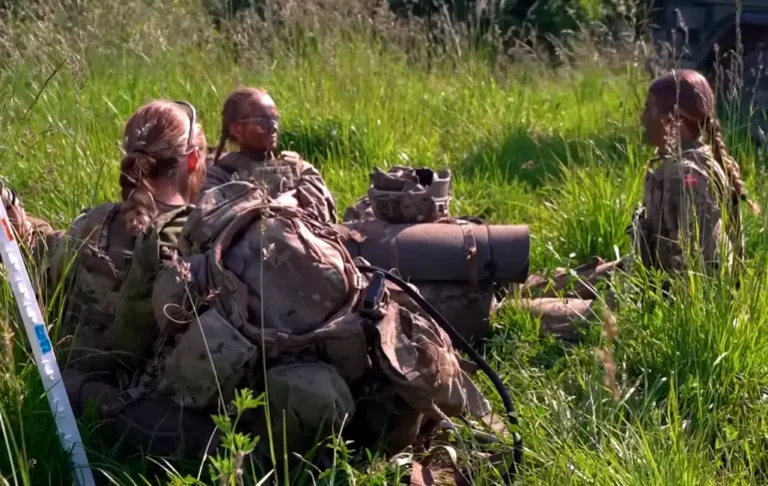

Discover Nurgül Yeşilçay’s acting legacy and her highly anticipated return as a car mechanic-turned-lottery winner in the new 2026 series “Ömür Usta” on NOW.
There are stars whose mere appearance on a new series poster is enough to resurrect previous storylines and iconic characters in the minds of fans. Nurgül Yeşilçay stands out among Turkish drama actors who have effectively transcended the screen and reached global audiences. Every return of hers brings a bit of the Turkish drama memories that have accompanied the audience for years, and every new role seems like an opportunity to meet an actress the public is familiar with but yet expects something fresh from her.
Nurgül Yeşilçay’s leading part in the series “Ömür Usta” (Teacher Ömür) is set to premiere on NOW during the 2026-2027 season. The film, produced by “Ay Yapım” business, is directed by Hilal Saral and written by Çağla Kızılalma. Nurgül plays a poor lady whose life changes dramatically after gaining cash.
However, the narrative that ought to be told does not begin with “Teacher Omur”. Nurgul’s comeback is the result of a long artistic career that has made her one of the most prominent stars of Turkish drama and cinema, as well as an actress who understands how to approach human emotions simply and honestly, from love, jealousy, and heartbreak to motherhood, fear, and resilience, and from the woman looking for a new beginning to the character forced to confront an entire society.
Perhaps this is one of the secrets of her unique interaction with the Arab audience: she does not always offer the perfect lady who is separated from reality, but rather a woman who the spectator can recognise in himself or in the experiences of others around him.
With “Teacher Omur,” Nurgul encounters a new character who returns her to an artistic field in which she has always excelled: a woman who fights life’s brutality but refuses to let it take away her optimism.
Nurgül Yeşilçay’s journey from childhood to stage
Nurgül Yeşilçay was born on March 26, 1976. Sources link her birthplace to Afyonkarahisar, while others indicate she spent her formative years and schooling in İzmir . There, she completed her secondary education before pursuing theater studies at Anadolu University in Eskişehir, graduating from the theater department in 2001.
For Nurgül, studying theater wasn’t just about getting a degree; it was the school that honed her talent and gave her the tools she later needed in front of the camera. Acting, for Nurgül, began with understanding the character and their emotions before it became about fame, lights, and cameras.
During her university years, one of her early opportunities came with the series “Second Spring” (İkinci Bahar), through which she attracted attention, before the station came that would greatly change her relationship with the Turkish public.
In 2002, Nurgül appeared in the television series “Asmalı Konak” (Palace of Love) as Bahar Karadağ, thus entering one of the most memorable Turkish dramas. This role significantly boosted her fame before she reprised the same character in the 2003 sequel film “Asmalı Konak: Hayat” (Palace of Love: Life).
And so, within a few years, the girl who started her journey from the stage moved on to become one of the faces whose names and roles the public began to remember.
But Nurgul did not treat her early success as a station to be repeated but rather began to move between television and cinema and to look for more diverse characters, which would later become one of the most important secrets of her continued presence in the Turkish art scene.
From “The Palace of Love” to “Love and Punishment”… When Nurgul became a familiar face to the world
“The Palace of Love” was more than just a successful work in Nurgul’s career; it was one of the moments that cemented her name with the Turkish public and opened new doors for her in television and cinema.
But artistic recognition also came from cinema. In 2005, Nurgül won the Best Actress award at the 12th Adana Golden Film Festival for her role in the film “The Borrowed Bride” (Eğreti Gelin) directed by Atıf Yılmaz. She continued her cinematic career and garnered acclaim, with one of her most notable roles being in “Adem’in Trenleri” (Adem’s Trains), for which she won the Best Actress award at the Sadri Alışık Awards in 2007, along with other awards related to her film work. In 2008, she won the Best Actress award at the Antalya Golden Film Festival for the film “Conscience” (Vicdan).

This cinematic career is important for understanding Nurgul today because she did not build her position on the success of the series alone but also established her name as an actress capable of taking on more complex roles in front of the camera.
But for Arab audiences, another milestone cemented her name in their memories. In 2010, Nurgül starred in the series “Love and Punishment” (Aşk ve Ceza) as Yasemin, alongside Murat Yıldırım and Feride Çetin. The story revolves around a woman whose life falls apart just days before her wedding after discovering her fiancé’s infidelity. She decides to leave her previous life behind, only to find herself unexpectedly drawn into a new and complicated love story. The series aired in 2010 and 2011 and was later broadcast in over 43 countries outside of Turkey.
This is precisely where part of the secret of the connection between Nurgül and the Arab audience lies. Yasmin was not an idealised romantic heroine living a love story detached from reality; she was a woman who suffered, raged, lost, and tried to rebuild her life. These raw emotions were able to easily transcend borders, language, and culture.
Therefore, for many Arab viewers, Nurgul is no longer just a Turkish name in a successful series, but has become a face that viewers can believe when they see her crying, loving, losing, or starting over.
from “Hatam” to “Sultana Kosem”
Nurgül could have held onto the success she achieved in romantic dramas and replicated the image that audiences loved, but she chose a more challenging path. In the series “Paramparça” (Broken Pieces), she portrayed Gülseren, entering a harsher social world where family secrets, class differences, and human emotions intertwine. This character was unlike any of the women audiences had known her for in her previous roles.
Then came a more different experience with the series “Sultan Kosem” (Muhteşem Yüzyıl: Kösem), where Nurgül portrayed Sultan Kosem at an advanced stage of her life, after Beren Saat had played the character at an earlier stage.
Here, Nurgul is no longer an ordinary woman trying to protect her family or looking for a new beginning but rather a historical woman standing at the heart of a world full of power, conflicts, and conspiracies.
The transition was significant, but this experience confirmed once again that Nurgul does not need to repeat the character that the audience loved in order to maintain her position.
In contemporary characters, much is relied upon in small details, looks, and everyday emotions, whereas Kosem’s character needed a more powerful and imposing presence and a performance befitting a woman who had become highly influential.
For the Arab audience, this experience was a renewed confirmation that the actress they knew in love stories could take them with her to a completely different time.
Why did Nurgul Yeşilçay stay connected to the Arab audience?
A character in a series might be successful, then the series ends and the character fades from memory. Similarly, an actress might achieve success in a project, but the audience finds no reason to continue watching her after the story concludes.
Nurgul belongs to the other type. From the beginning, the secret of her presence was not based on beauty or romantic heroism alone, but on something simpler and more difficult at the same time: for the viewer to believe her.
When she cries, the crying doesn’t feel like just part of the scene. When she loves, the audience senses that the character is risking something real. And when she’s wronged, she doesn’t need long speeches to get the audience to take her side.
This ability to access feelings before words is perhaps one of the most important reasons for its continued popularity.
The Arab viewer didn’t need to experience the same circumstances as Nurgul’s characters to empathize with them. It was enough to see a woman lose love, a mother fear for her children, or a character suddenly find herself facing a world much bigger than herself.
The emotions that Nurgul played were always understandable, even when the story was Turkish.
The diversity of characters she portrayed also helped her avoid being typecast. She wasn’t always the weak woman waiting to be rescued, nor was she always the strong, unbreakable heroine.
In many of her roles, the two qualities came together: a woman who can be afraid but does not give up and who can love but knows how to defend herself.
This is precisely what gives her presence a special appeal to Arab women; the characters she presents often do not come from an ideal world but rather from a life full of family problems, deferred dreams, difficult choices, and responsibilities.
As a result, the audience might perceive something in the character that is similar to her own life, a woman she knows, or perhaps a period she went through once.
“Teacher Omur”… a new character takes Nurgul back to the audience’s chosen terrain
Nurgul’s return in “Teacher Umur” comes through a character who seems different in her details but is very close to the human area in which she has always excelled.
Nurgül portrays Ömür, a woman forced to face life alone after her husband disappears. She tries to raise her three children and support her family by working as a car mechanic. Information released about the project indicates that Ömür’s husband goes out one day to buy bread and never returns, leaving her solely responsible for the entire family.
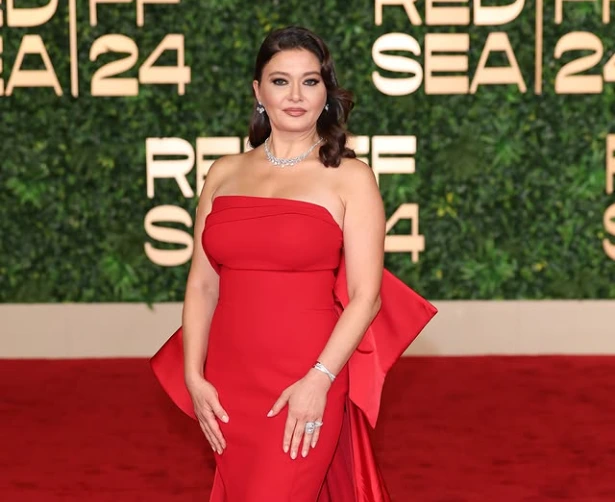
But Omur’s life will not remain the same. After years of facing poverty, work, and pressure, her life is suddenly turned upside down when she wins the lottery jackpot, moving from a world of need to a world of wealth, and from trying to secure her family’s needs to facing a new society governed by completely different rules.
And here begins the paradox that gives the series a large part of its appeal: Omur finally gets the money she needed, but in return she enters a new world of conflicts.
Wealth does not erase the past, nor does it make others deal with it in the same way. Rather, it places it in front of characters belonging to a different social class, most notably “Nevra”, played by Gonca Vuslatiri, and “Tunc”, played by Bulent Inal.
At the heart of these confrontations comes the story of Mete, the son of Omur, and Ipek, the daughter of Tunç and Nevra, adding a new familial and emotional dimension to the social conflict.
Other characters also enter the story, including “Muzayen”, Omur’s mother played by Zerrin Sumer, and a number of family members and the social circle whose balance will change with the new wealth.
Why does “Master Omur” sound appropriate for Nurgul Yesilcay?
Nurgul’s parallels to her new identity extend beyond the tale. This time, she depicts a lady who is neither a superhero nor a woman enjoying a flawless life. She is a lady who works hard, is tired easily, accepts responsibility, and finds herself in situations beyond her control.
Nurgül is familiar with this region; she has spent a substantial portion of her career playing people whose lives are difficult and whose emotions are difficult to detect or articulate. Her ladies frequently contain inside them a mix of dread and strength, vulnerability and pride.
As a result, while “Omur” is a new character, he is not unfamiliar with Nurgul’s artistic universe.
It is worth noting that the first advertisement for the series presented her in a different light than the traditional star; she appeared with natural features and work clothes, in the image of a woman who struggles and bears responsibility, which piqued the audience’s interest and propelled her and the series’ names into the spotlight.
According to Turkish media, the project had delays in the preparatory phase before beginning filming, with a September release on NOW TV.
The work is an adaptation of the popular Brazilian series Fina Estampa, but the Turkish version places the plot in its own environment and introduces new characters.
Nurgül Yeşilçay is a celebrity who returns, carrying with her the memories of her followers

Every time Nurgül Yeşilçay returns to the screen, the story doesn’t begin with the first episode. There are always old stories that precede it, characters that are still stuck in the viewers’ memories, and scenes that may have been many years ago but have not lost their ability to evoke the same feeling.
This is precisely what makes her return in “Teacher Ömür” different; the audience awaiting Nurgül today is not the same audience that first saw her more than twenty years ago. Some knew her from “The Palace of Love”, others were captivated by her in “Love and Punishment”, some followed her transformations in “Broken Pieces”, and others saw her as the powerful sultana in “Kösem Sultan. ” And there is a new generation that may discover her through her upcoming work.
Despite the differences in these characters and stories, one thing remained constant: Nurgul’s ability to make the character seem as if she had a life off-screen.
Perhaps this explains why the crowd is so enthusiastic about her new work.
Just hearing her name makes him wonder what it’ll be like this time.
In “Teacher Omur,” the question appears more interesting because Nurgul’s character contains all of the elements that can touch the audience: a woman facing poverty, a mother fighting for her children, and a person who finds herself in a different world after an unexpected fortune, only to discover that money can change the place but cannot easily change people’s views or erase the past.
As a result, Nurgul’s reappearance appears to be more than simply another addition to an already crowded drama season.
It is the comeback of an actress who knows how to make social stories touch the heart without losing their simplicity and who understands that the audience remembers the character not because she was always the strongest, but because they saw something genuine in her.
This explains the strong reaction to the announcement of “Teacher Omur”; viewers not only saw a woman who works and struggles for her family, but they also saw Nurgul in a space that reminded them of many of the characters they admired in her: a woman who suffers but perseveres, who is afraid but does not give up, and who seeks a better life even when the path to it appears to be blocked.
After more than two decades in the spotlight, Nurgul Yeşilçay no longer has to establish her star status.
Perhaps the true problem now is to have the viewers adore “Omor” as much as the women you displayed before her.
The answer will come not from the advertising itself, nor from the names of the stars who will appear with her, but from the moment Omor sits in front of the camera for the first time and tells her narrative.
But one thing is clear: Nurgul will not return to the screen alone.
She returns, carrying with her the memories of an entire Arab audience who knew her thru love tales, accompanied her throughout heartache, witnessed her alter her skin from one work to the next, and then found themselves waiting for her once again.
Perhaps the most beautiful definition of genuine celebrity is that time passes, roles change, and tales change, but there is still an audience that believes the return of an old star means the return of a piece of their own memories.
Thus, before “Teacher Umur” begins her narrative on film, Nurgül Yeşilçay has already begun another story: the story of a new lady the audience is eager to meet and an old celebrity whose name may still evoke memories.
Nurgul is returned. Let’s see what she does to us this time.
[READ MORE: Turkish Actress Ece Irtem from Kizilcik Serbeti Dies of Heart Attack at 35]
[Famous Turkish actor Can Yaman arrested in Istanbul for drug use]