At least 132 people are dead and over 570 injured following a powerful 7.4-magnitude earthquake in western Colombia.
A powerful 7.4-magnitude earthquake struck western Colombia, leaving a trail of catastrophic destruction across the country’s picturesque coffee-growing region and Pacific coast. Government officials confirmed that the death toll has climbed to at least 132 people, with over 700 others sustaining injuries as emergency crews race against time to pull survivors from the rubble.
The violent tremor struck at 7:34 a.m. local time on Monday, originating near the town of San José del Palmar in the remote department of Chocó at a depth of roughly 96 kilometers. Despite its intermediate depth, the shockwaves radiated hundreds of kilometers, violently shaking major urban centers and sending panicked residents surging into the streets as far away as Bogotá, as well as neighboring Ecuador, Panama, and Venezuela.
Epicentre of Destruction in the Coffee Zone
While the geological epicenter registered in Chocó, the heaviest loss of life and structural collapses were concentrated in the country’s heartland. Pereira, located roughly 55 kilometers from the epicenter in the Risaralda department, bore the brunt of the catastrophe, accounting for at least 60 recorded fatalities.
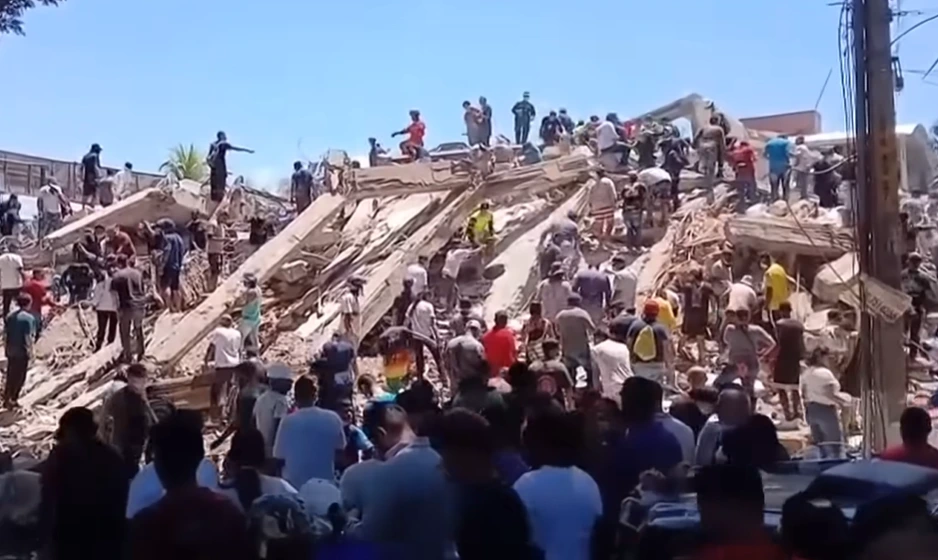
Across the disaster zone, more than 1,500 residential and commercial properties have suffered severe structural damage or total collapse. Pancaked multi-story buildings, shattered facades, and buckled roadways paralyzed movement in five heavily impacted departmental capitals—Pereira, Cali, Quibdo, Manizales, and Armenia which remain under critical red alerts.Additionally, infrastructure damage forced the temporary suspension of commercial flight operations at six regional airports.
Desperate Race Against Time
In cities like Cali and Pereira, harrowing scenes unfolded as ordinary citizens and volunteer rescue brigades formed human chains, clawing through heaps of masonry and fractured concrete with bare hands, buckets, and basic tools.
“We are trying to get everyone out alive,” said Andres Felipe Mejia, a local volunteer joining a makeshift recovery crew in Cali.“One of the rescuers asked anyone trapped to whistle, and someone whistled back. They pulled out a man and a baby, but the wife is still in there.”
Emergency services and municipal workers continue to sift through dozens of collapsed structures. Authorities caution that the death toll is expected to rise further as rescue teams penetrate deeper into isolated pockets cut off by landslides and compromised communication networks.
National Disaster Declared
Faced with the profound scale of the disaster, newly inaugurated Colombian President Abelardo de la Espriella acted swiftly, declaring a state of national disaster to fast-track emergency funding, mobilize military logistics, and coordinate nationwide rescue frameworks. A Unified Command Post has been established to direct relief supplies, medical personnel, and heavy machinery to the hardest-hit zones.
International partners and neighboring nations have expressed deep solidarity, placing specialized urban search and rescue units on standby as Colombia confronts one of its most severe natural disasters in recent memory. For now, the nation remains locked in a tense, unified vigil—hoping against hope that more survivors will be pulled from the ruins.