
Australia has detected its first suspected case of H5N1 bird flu in a migratory bird in Western Australia, ending its status as the only continent never to record the virus. Confirmation is expected Saturday.
Australia, the last continent on Earth to have remained entirely free of the H5N1 strain of avian influenza, announced on Friday that it has detected its first suspected case of the virus, in a dead migratory bird found in a remote part of Western Australia. If confirmed, the detection marks the end of a biosecurity record that scientists and wildlife experts had warned for years was running out of time, and the beginning of what conservationists fear could be a devastating chapter for some of the country’s most vulnerable native species.
What Has Happened So Far
Australia’s Agriculture Minister Julie Collins held a snap press conference in Tasmania on Friday afternoon to confirm the first suspected detection of the virus on mainland Australia. She said the case is believed to have been discovered in a migratory bird in the state’s remote south, with the bird found sick in an isolated area before it died.
“The initial testing at the Western Australian laboratory has returned a suspected positive result for avian influenza,” Ms Collins said. She said the WA Department of Primary Industries and Regional Development was investigating, and samples had been sent to CSIRO’s Australian Centre for Disease Preparedness. “We cannot confirm yet whether it is the strain of concern that is circulating at this stage, known as the ‘H5 strain’ bird flu,” she said.
Collins said the testing is expected to be completed overnight or early Saturday and that she would fly to Canberra urgently for further briefings across the weekend. She said a second sick migratory bird was also being tested for the H5 strain.
Collins struck a measured but sombre tone in addressing the development, saying that if the infection is confirmed, “this will be sobering but not unexpected, given the spread globally.” She declined to confirm the specific species of the infected bird and convened a meeting of state and territory governments on Friday afternoon to coordinate the response to the potential outbreak.
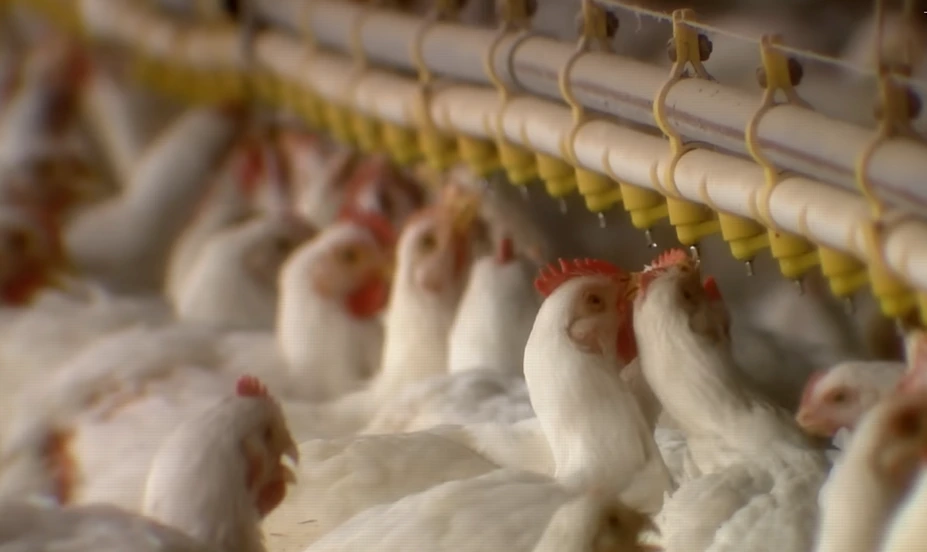
While Ms Collins said there was no evidence of infection in poultry, she urged Australians to be cautious.
Why This Has Been Called Inevitable
The detection had been considered all but inevitable by health and wildlife officials, given the virus’s relentless global spread in recent years. Migratory birds travelling from the northern hemisphere, including those returning from breeding grounds in Alaska and Siberia, have increasingly been identified carrying the H5 strain, making Australia’s eventual exposure a matter of when rather than if.
Off the migration routes of big birds such as geese that spread infection, Australia had been the only continent free of the highly contagious virus. The continent was the last to detect it even after Antarctica.
That geographic protection had been gradually eroding for some time. The Australian Antarctic Program has been monitoring the virus’s spread closer to the mainland, with the team submitting findings about mortality levels and the virus’s likely pathway to Heard Island, an Australian external territory located in the Southern Ocean about 4,000km southwest of mainland Australia, to a scientific journal.
Samples from nine vertebrate species tested at CSIRO’s Australian Centre for Disease Preparedness, with six species testing positive for the viral strain that has been spreading globally, Influenza A H5N1 clade 2.3.4.4b. These included southern elephant seal, king penguin, gentoo penguin, Antarctic fur seal, and South Georgia diving petrel.
The toll on Heard Island has been catastrophic. More than 13,000 baby seals on Heard Island have been killed by the strain since it was first detected on the remote sub-Antarctic island in October. Scientists who visited Heard Island estimated 76 percent of the total southern elephant seal pup population had died from the disease.
Conservationists Sound the Alarm
The reaction from Australia’s conservation community has been one of grave concern. Invasive Species Council policy director Dr Carol Booth said if the suspected case is proved positive overnight it would be the “realisation of our worst dreams.” “We desperately hope this is not the realisation of our worst dreams,” she said. “The recently reported mass deaths of elephant seals on Heard Island were a harbinger of the potential catastrophe for Australian wildlife.”
Booth said a mainland detection would be a critical test of Australia’s preparedness and response systems. “Even if this is a false alarm, it warns against any complacency. Australia needs to be ready at any time with clear response plans,” she said.
According to wildlife researchers, the H5 strain poses a severe and potentially catastrophic threat to wildlife in the Southern Ocean and across Australia because of the dense breeding habits of many native species. Elephant seals and albatross are considered at particular risk given their low reproductive rates and late maturation, meaning population losses cannot be quickly recovered.
What Scientists Are Saying
The Science Media Centre gathered reaction from Australian experts following the announcement. One expert noted that the report of a suspected H5 avian influenza detection in a migratory bird in Western Australia is something that warrants close attention, but is not entirely unexpected given the extent of global spread of the virus and its previous detection in many other countries.
The same expert noted that if confirmed, the case would represent a major biosecurity threshold: the likely arrival of highly pathogenic H5 avian influenza on mainland Australia after years of global spread.
Experts explained that H5N1 is first and foremost a bird-adapted influenza A virus. In birds, especially poultry, seabirds, and dense wild-bird colonies, highly pathogenic H5 viruses can spread rapidly and cause severe disease, neurological signs, and sudden death. Infected birds shed the virus through respiratory secretions and faeces, contaminating water, soil, feathers, carcasses, and shared environments.
How This Differs From Australia’s Previous Bird Flu Outbreaks
It is important to understand that Australia has dealt with avian influenza outbreaks before, but never one involving this particular and far more dangerous strain.
More than 1.8 million birds were culled nationwide during a previous outbreak, decimating the national layer hen flock and causing an Australia-wide retail shortage of eggs, in an effort to contain the spread of the virus while strict quarantine zones and trade restrictions were put in place. Australia was officially declared free from high pathogenicity avian influenza in poultry last July, with the World Organisation for Animal Health publishing Australia’s self-declared HPAI-free status following agreement by the National Management Group that a February 2025 H7N8 outbreak in Victoria had been eradicated.
That earlier event involved an H7N8 strain detected at a commercial poultry egg farm near Sydney, different from the H7N3 and H7N9 strains detected separately in Victoria, and distinct from the H5N1 strain that has infected billions of wild and farmed animals globally and raised fears of human transmission.
The H5 strain currently suspected in Western Australia belongs to an entirely different and far more concerning category. The H5 strain represents a far more dangerous threat, and its arrival marks a significant escalation in the biosecurity risk facing the country’s native species.
What Happens Next
Confirmation of the case is expected within hours of this article’s publication. Confirmation of the potential WA case is expected on Saturday. If it is confirmed, it will end Australia’s run as the last continent in the world without a confirmed case of H5.
Australia’s standard biosecurity response to confirmed high pathogenicity avian influenza outbreaks involves immediate quarantine zones around the detection site, culling of affected and at-risk bird populations, disinfection protocols, and movement restrictions on poultry and wild bird products in the surrounding region.
Given the previous H7 outbreak required the culling of more than 1.8 million birds nationally, a confirmed H5 detection, particularly one involving wild migratory birds rather than a contained commercial farm, presents a far more complex containment challenge. Wild birds cannot be quarantined or culled at scale in the way that a single poultry farm can.
For Australia’s unique and often endangered native bird and mammal species, many of which exist nowhere else on Earth, the stakes of containment are enormous. The devastation already inflicted on seal and seabird colonies at Heard Island offers a grim preview of what unchecked spread on the mainland could mean for species such as the orange-bellied parrot, various albatross populations, and other vulnerable wildlife that breed in dense colonies.
Authorities have urged members of the public who encounter sick or dead birds to avoid contact, keep pets away from carcasses, and report sightings to relevant state biosecurity hotlines rather than attempting to handle the animals themselves.
Europeans24 will update this article once CSIRO’s Australian Centre for Disease Preparedness confirms or rules out the H5 strain, expected this weekend.









+ There are no comments
Add yours