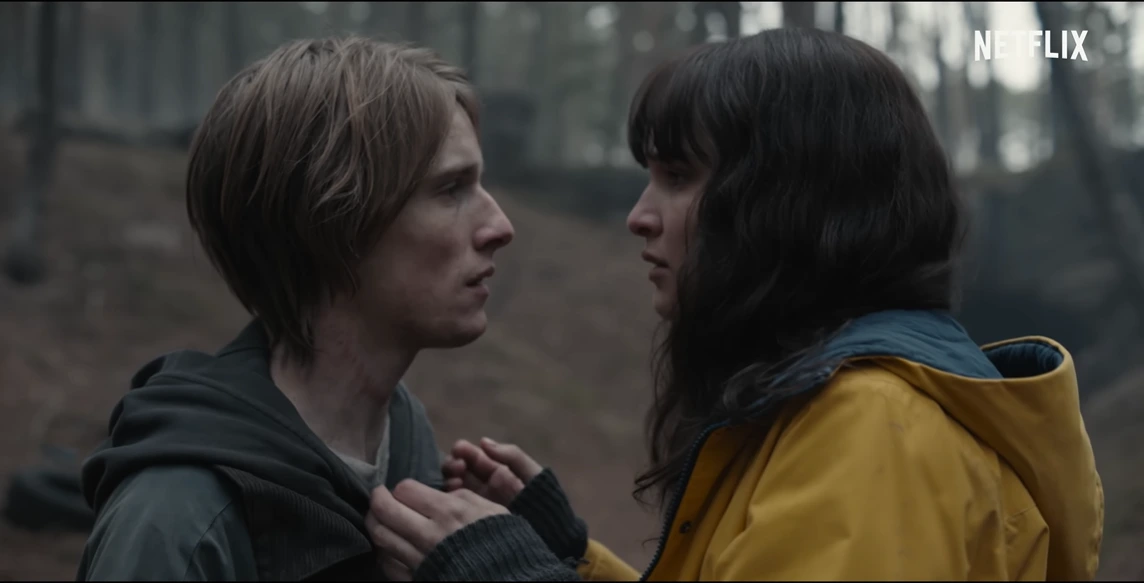
The New York Times published its 100 Best TV Shows of the 21st Century. Dark, Netflix’s German masterpiece and arguably the greatest sci-fi series ever made, did not make the cut. Here is why that omission is a scandal and what it reveals about English-language media’s blind spots.
The New York Times published its list of the 100 Best TV Shows of the 21st Century this week, compiled through votes from more than 500 actors, showrunners, writers, and television industry insiders. Breaking Bad sits at number one. The Wire is second. Mad Men third. Succession fourth. Fleabag fifth.
It is, by almost any reasonable measure, a defensible list of excellent television. It is also a list that tells you a great deal about who was asked to compile it, what cultural assumptions shaped their choices, and what the editors at one of the world’s most influential media organisations consider worthy of serious attention.
Dark, Netflix’s German-language science fiction masterpiece and the most structurally ambitious television series of the 21st century, is not on it.
That omission is not an oversight. It is a statement. And it is worth taking seriously.
What the List Looks Like and What It Reveals
Scanning the 100 entries, a pattern emerges immediately. The overwhelming majority of shows are American. Of the ten shows that occupy the top ten positions, every single one is either American or British. Breaking Bad, The Wire, Mad Men, Succession, Game of Thrones, Veep, 30 Rock, Curb Your Enthusiasm, and Atlanta are all American productions. Fleabag at number five is British.
Of the 16 Netflix shows that made the list, virtually every one is in English. Squid Game appears at number 72, making it the most prominent non-English language entry. The Queen’s Gambit, Beef, Stranger Things, Ozark, and House of Cards also appear. But Squid Game’s placement at 72, despite being arguably the most culturally impactful television event of the past decade with over 111 million household viewers in its first month, speaks to a reluctance to let non-English content compete on equal terms at the top of these rankings.
The Times reached out to more than 1,000 people, and about 500 or so ended up participating, according to canon editor Gilbert Cruz. The methodology is important. Cruz noted that many of those who write for the Times or the Times Book Review were among those consulted. The result is a list shaped significantly by the existing networks and taste communities of a specific American cultural institution. That is not a neutral methodology. It is a methodology that systematically privileges the shows that American and British industry professionals have already validated, discussed, and written about in English-language media.
What Dark Actually Is
For readers who have not watched it, Dark requires a proper introduction, because no summary does it justice without also conveying what an extraordinary formal achievement it represents.
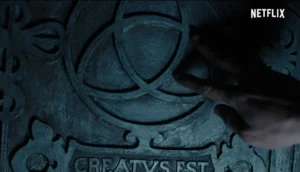
Created by Baran bo Odar and Jantje Friese, Dark premiered on Netflix in December 2017 as the platform’s first German-language original series. Over three seasons and 26 episodes, it tells the story of four interconnected families in the small German town of Winden, whose lives are disrupted by the disappearance of children and the discovery of a cave system that functions as a time tunnel.
That description makes it sound like a supernatural thriller in the vein of Stranger Things, which was the comparison Netflix leaned on in its early marketing. The comparison is almost offensively inadequate. Dark does not use its time travel premise as a backdrop for coming-of-age nostalgia and adventure. It uses it to construct one of the most intricate, emotionally devastating, and thematically rich narratives in the history of the medium.
By the end of its three seasons, Dark has depicted time travel across multiple centuries, introduced a parallel world with its own timeline and family trees, explored the philosophical implications of determinism versus free will across dozens of characters who are simultaneously their own ancestors and descendants, and arrived at a conclusion so formally perfect that rewatching the first episode of the series after the finale is a genuinely overwhelming experience. Things you watched as a mystery in 2017 are revealed, in retrospect, to have been answers all along.
Dark has received critical acclaim for its performances, casting, direction, writing, tone, visuals, themes, musical score, and the ambition and complexity of its narrative structure. In 2021, the BBC ranked the series as the 58th greatest TV series of the 21st century.
The BBC found room for it. The New York Times did not.
The Numbers That Should Have Made This Impossible to Ignore
The NYT list is ostensibly based on artistic merit assessed by television professionals. But if commercial impact and cultural reach were factors, the case for Dark becomes even stronger.
Netflix saw Dark, a German show, have 90 percent of its viewers outside of the country, and it ranked in the Top 10 in multiple countries. A German-language show set in a small German village attracted a global audience of overwhelming scale, with viewers in Brazil, Bangladesh, South Korea, France, and the United States watching it in subtitles, voluntarily, episode after episode. That is not a niche achievement. It is proof that the language barrier the English-language television industry treats as near-insurmountable is, for a sufficiently extraordinary piece of work, essentially irrelevant.
Netflix Chief Product Officer Greg Peters said that great stories can come from anywhere and they can travel everywhere, pointing specifically to Dark as evidence for this thesis. The platform that made Dark used it as the cornerstone of its argument for international content. Netflix orders more German originals after Dark’s success, with the show’s performance directly motivating the platform’s expansion into international programming that eventually produced Money Heist, Lupin, and Squid Game.
Without Dark, the pipeline of international television that has since produced some of the most-watched content in the world may not have been built in the way it was. Dark is not just a great show. It is a historically significant show that changed what the streaming era believed was possible in non-English television.
The Double Standard That Cannot Be Explained Away
The NYT list includes Chernobyl at number 19, an HBO miniseries set in the Soviet Union, featuring characters who are nominally speaking Russian but are actually performing in English with light Central European accents. Chernobyl is a superb piece of television. But it is an English-language production made by American and British producers for an English-speaking audience, with an English-speaking cast and crew.
The framing of Chernobyl as an international story about a Soviet tragedy does not change the fundamental fact that it is an Anglo-American production made for an Anglo-American audience, assessed entirely within the cultural frameworks of Anglo-American prestige television. It sits on the list at number 19. Dark, an actual German-language production made by German creators for a global audience who watched it in the original language, is absent entirely.
That juxtaposition is the clearest possible illustration of the double standard at work. The NYT list celebrates English-language content about non-English-speaking worlds. It does not celebrate non-English-language content on equal terms. Chernobyl gets to represent international drama. Dark does not get to represent anything, because it was never invited into the room where the counting happened.
Squid Game’s presence at number 72 will be cited as evidence that the list is not solely Anglo-American in its orientation. It is, but its placement is revealing nonetheless. The most-watched television programme in Netflix’s history, a show that generated more cultural conversation in the autumn of 2021 than virtually any other piece of entertainment that year, lands at 72. Curb Your Enthusiasm is at number 9. The Office (US) is at number 11. Neither approaches Squid Game’s global reach or cultural impact.
Why This Matters for European Television
This is not simply a complaint about one German show being excluded from one American newspaper’s list. It is about what lists like this one do to the cultural conversation around television globally.
When the New York Times publishes a definitive ranking of the 100 best television shows of the 21st century and structures it overwhelmingly around American and British productions, it does not merely reflect existing taste. It shapes future taste. It tells readers around the world which shows are worth discussing seriously. It tells streaming platforms which type of content will receive the cultural prestige that makes international awards campaigns viable. It tells creators in Germany, France, Spain, South Korea, and Bangladesh what kind of storytelling the most influential English-language cultural institutions consider worthy of serious attention.
The BBC’s 2021 list, compiled by 206 television experts from 43 countries, found Dark at number 58. A genuinely international panel, drawing on taste communities that extend beyond New York and Los Angeles, assessed the same global television landscape and reached a different conclusion. The difference in methodology produced a different kind of list, one that better reflects the actual diversity of outstanding television being made in the 21st century.
European television in particular has produced extraordinary work in the past decade that the Anglo-American prestige conversation has largely ignored. Dark sits at the apex of that tradition, but below it are dozens of French, Scandinavian, Spanish, Italian, and German productions of genuine artistic distinction that never receive the critical infrastructure, the award nominations, or the list placements that would bring them to a global English-speaking audience. The NYT list does nothing to change that dynamic. It reinforces it.
The Case That Cannot Be Dismissed
Dark is the greatest science fiction television series ever produced. That is a claim worth defending properly, not merely asserting.
Science fiction as a genre is defined by its willingness to use speculative premises to explore philosophical, emotional, and social truths that realist storytelling cannot reach. The best science fiction, from Philip K. Dick to Ursula K. Le Guin, from 2001 to Arrival, uses its genre conventions not as entertainment scaffolding but as the necessary structure for ideas that require them.
Dark uses time travel not for adventure but for determinism. It asks what it means to make a choice in a universe where every choice has already been made, where cause and effect have collapsed into a loop that neither character nor viewer can exit through the first two seasons. It then, in its third season, introduces the concept of an origin, a moment before the loop, a place where free will might still be possible, and structures its entire final season around the agonising question of whether the characters can find and reach it.
No English-language science fiction series has attempted anything of this structural ambition. The closest comparisons are Lost, which raised similar questions about fate and free will but resolved them unsatisfyingly, and Westworld, which pursued comparable philosophical territory but lost narrative coherence in its later seasons. Dark does not lose its thread. Every detail placed in the first episode is resolved by the last. The loop closes.
It achieves this while maintaining genuine emotional investment in its characters, who are not abstractions of a philosophical argument but people in pain whose relationships the show earns across time and across multiple versions of themselves. The scene in which Jonas meets his mother as a young woman, not knowing who she is to him, is one of the most quietly devastating scenes in television history. It requires three seasons of viewing to fully understand and feel. Very few television series have created the conditions for that kind of emotional experience.
A Final Word
The New York Times list will be discussed, debated, and referenced for years. It will shape streaming algorithms, critical conversations, and the cultural legacy of 21st-century television. Breaking Bad will consolidate its reputation as the defining drama of its era. The Wire will continue to be the show that serious television critics reference as a gold standard. These are not wrong choices. They are excellent shows.
But the conversation around what 21st-century television achieved will be incomplete, and knowingly incomplete, as long as Dark is treated as a show that did not merit inclusion alongside them. A German-language series that 90 percent of its global audience watched in subtitles, that the BBC placed in its own canon, that directly changed what Netflix believed was possible in international content, and that constructed the most formally ambitious narrative in science fiction television history, deserved a place on that list.
The fact that it is absent tells you less about Dark than it tells you about who was in the room when the votes were cast.
Related Articles: