
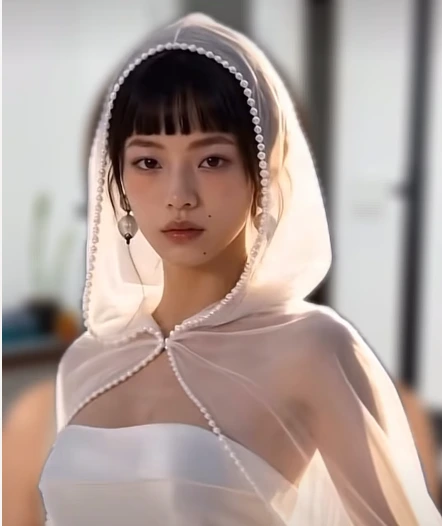
Fang Taozi is an AI-generated actress who starred in a viral Chinese short drama, amassed 400,000 followers, landed brand deals worth $38,200 per video, and has sparked a crisis of confidence among human performers.
She shares breakfast videos. She posts workout clips. She documents her daily routine, interacts with fans, and has just signed advertising deals worth up to 258,000 yuan per sponsored post. She is also entirely fictional. Fang Taozi does not exist. She is a fully AI-generated actress, and she has just become one of the most watched performers in China.
An AI-generated actress has amassed 400,000 followers on a leading social media platform in China within just two months, with a miniseries she stars in garnering an astonishing 250 million views. The success of Fang Taozi has triggered intense debate about whether artificial intelligence has crossed a threshold from novelty to genuine competitive threat for human performers.
The Drama That Started It All
Fang Taozi stars in the hit AI short drama series The Girl Who Was Fired, which has posted lifestyle vlogs, launched social media accounts, shared her breakfasts, workouts and pets, landed brand deals and built a fanbase. Since the drama debuted on short video platform Douyin on June 12, it has accumulated 200 million views.
The production cost of each episode is only more than 10,000 yuan, but it has achieved 220 million views. After going viral, Fang Taozi started posting lifestyle vlogs on Douyin, following the trending topics on the platform, and quickly gained more than 417,000 followers. Netizens exclaimed that they cannot tell whether she is a real person or an AI.
The story itself is deliberately relatable. The drama features Fang, a protagonist from a small town who moves to the bustling metropolis of Shangnan to chase her modelling dreams. The series chronicles her growth as she navigates a series of workplace challenges. Audiences love Fang because her relatable personality and flaws mirror those of a real person.
That combination of an emotionally resonant story and a protagonist whose AI-generated expressions, gestures, and daily vlogs are indistinguishable from those of a human creator has produced something the Chinese entertainment industry was not fully prepared for: a non-human celebrity with real cultural traction.
A Commercial Operation, Not Just a Gimmick
What has elevated the Fang Taozi story from curiosity to genuine industry concern is the speed with which her online presence has been monetised.
Fang Taozi has begun promoting products online, with reported advertising rates reaching as high as 258,000 yuan, approximately $38,200, per video, drawing both support from fans and doubts from others who question the credibility of products promoted by a non-human character. In a recent bonus clip, Fang recommended a brand of coloured contact lenses, saying they remained comfortable after a full day’s wear.
A sponsored minute of her time is now priced above what most million-follower and even ten-million-follower human influencers charge. This is what it looks like when AI-generated content, virtual influencers, and synthetic media stop being a novelty and start competing directly with real creators for real advertising dollars.
Fang is not alone. Combined with the male lead Zhou Yiheng’s account, the two AI characters have surpassed 500,000 total followers, with derivative topics topping Weibo’s trending list. This marks a shift in AI celebrity operational logic from plot clips to the creation of companionable virtual idols.
An Industry Transformed Almost Overnight
The scale of the shift in Chinese short drama production is extraordinary. In the first quarter of 2026, AI short dramas accounted for over 95 percent of productions, averaging over 1,300 new additions daily. AI micro-short dramas achieved in less than a year the output ramp-up that took live-action short dramas three to four years to complete.
Major Chinese broadcasters are now fully invested in the format. Anhui TV premiered the fully AI-generated intangible cultural heritage drama Peach Blossom Pond, and iQiyi launched China’s first AIGC online feature film, signalling AI film and television content’s move from small screens to mainstream broadcasting.
Human Performers Are Paying Attention
The success raises a question that has become increasingly urgent for the entertainment industry: Does Fang Taozi represent the first generation of AI celebrities? If celebrity status is measured by public attention, emotional connection, and commercial value, Fang appears to meet many of the criteria.
The core conflict lies in the fact that some fear being replaced by AI, while others proactively let AI embody them. Portrait rights disputes have already begun emerging at the Beijing Internet Court.
Fans interact with Fang as if she were a real celebrity, creating fan edits, discussing fictional relationships and building a community around her imagined life. That level of parasocial engagement, which forms the commercial bedrock of influencer culture, was previously assumed to require a real human at its centre.
The question now being asked across studios, agencies, and talent management firms in Beijing and Shanghai is not whether AI can produce watchable entertainment. It demonstrably can, at a fraction of the cost, and audiences are watching in their hundreds of millions. The question is whether human performers offer something irreplaceable and how quickly the industry will be forced to answer it.
What This Means for Europe
China’s entertainment AI boom is arriving in Europe in stages. Virtual influencers have already appeared on European social media platforms, and several European brands have experimented with AI-generated spokespeople for campaigns. The EU AI Act, which classifies AI-generated media as requiring transparency disclosures, will shape how this technology is deployed in European markets.
But the commercial template being built in China, cheap production, mass distribution, emotionally resonant AI characters, and real advertising revenue extracted from audiences who may not always realise they are watching a machine, is not uniquely Chinese. The infrastructure that made Fang Taozi possible is available to content creators and studios worldwide. Europe is watching.
Related Articles:




[…] Fang Taozi: China’s AI Actress Has 250 Million Views and Real Advertising Deals in 2026 […]
[…] China’s AI Actress Fang Taozi Has 250 Million Views and Real Advertising Deals […]