
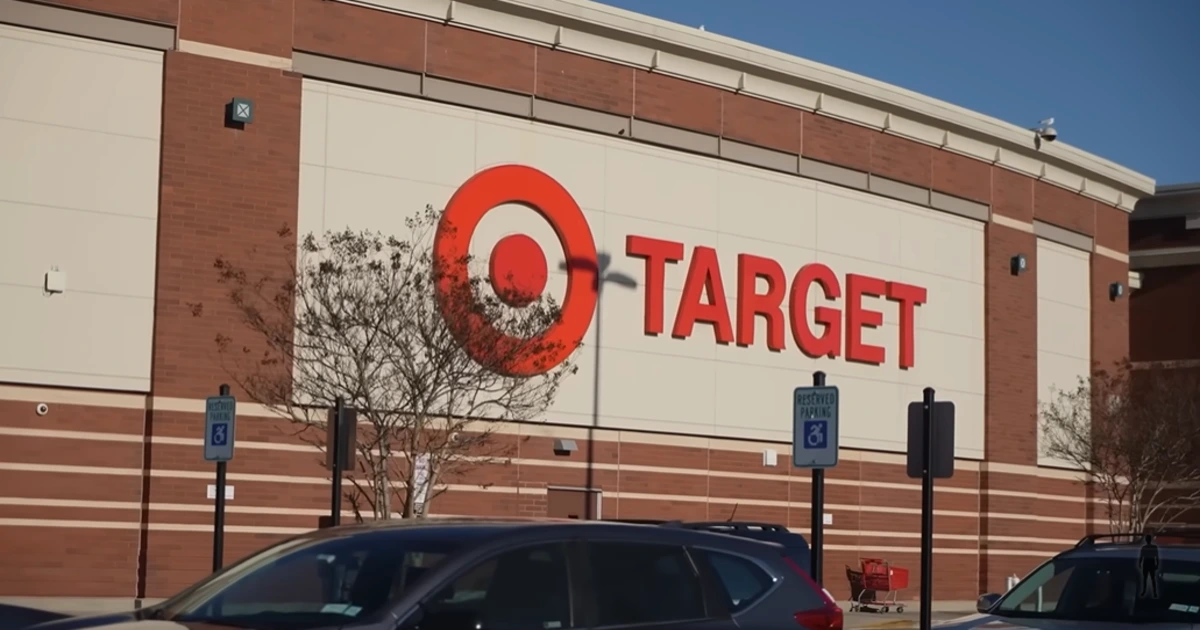
A comprehensive research evaluation of Target Corporation (NYSE: TGT) covering its business model, financial performance, new CEO strategy, dividend record, tariff exposure, analyst ratings, and stock outlook for 2026 and beyond.
Target Corporation is one of the most recognisable names in American retail. With over 2,000 stores across the United States, more than $104 billion in annual net sales, and a dividend growth streak now stretching across 56 consecutive years, it sits among the most analysed and discussed stocks on the New York Stock Exchange. Yet 2026 finds Target at a genuine inflection point: a new chief executive officer steering a company through a multi-year sales decline, a tariff environment that adds direct cost pressure to a business built around imported discretionary goods, and a stock that has lost more than a third of its value over the past five years even as the broader American equity market has climbed.
Is Target a value opportunity at current levels or a value trap in the making? This research evaluation examines every dimension of the company to help answer that question.
Company Overview: What Target Actually Is
Target Corporation, headquartered in Minneapolis, Minnesota, operates as one of the largest general merchandise retailers in the United States. Founded in 1902 as the Dayton Dry Goods Company and rebranded as Target in 1962, the company has grown into a retail institution that occupies a deliberate middle position in the American consumer landscape: above the pure discount operators like Dollar General and Dollar Tree on quality and presentation, but below the full-service department store experience on price.
Target’s stores typically run between 130,000 and 170,000 square feet and are designed to be destinations rather than necessity stops. The company sells across six core merchandise categories: Apparel and Accessories; Beauty and Household Essentials; Food and Beverage; Hardlines (including electronics, toys, and sporting goods); Home Furnishings and Décor; and Other (including services and gift cards). Within these categories, Target has developed a distinctive private label strategy, building brands such as Good and Gather in food, All in Motion in activewear, Threshold in home furnishings, and Cat and Jack in children’s clothing that generate strong margins and genuine customer loyalty.
Beyond its physical stores, Target operates a growing digital business that increasingly distinguishes it from traditional brick-and-mortar retail. Its same-day services platform, which includes order pickup, Drive Up curbside collection, and same-day home delivery powered by Shipt and Target Circle 360, has become one of the company’s most important competitive differentiators. These services utilise existing store inventory and staff rather than separate fulfilment infrastructure, meaning they generate the cost efficiencies of physical retail while delivering the convenience of e-commerce.
As of the most recent quarter, digital comparable sales grew 8.9% year over year, led by more than 27% growth in same-day delivery powered by Target Circle 360. That digital acceleration is one of the clearest positive signals in an otherwise mixed financial picture.
Target’s broader ecosystem also includes Roundel, its retail media advertising network that sells targeted advertising to brands seeking to reach Target’s customer base; Target Circle, its loyalty programme with tens of millions of members; and Target Plus, its third-party marketplace platform. Non-merchandise sales grew nearly 25 percent in Q1 2026, reflecting strong growth in Roundel ad revenue, Target Circle 360 membership revenue, and the Target+ marketplace.
Leadership: A New Chief Executive at a Critical Moment
One of the most significant corporate developments at Target in the past 12 months has been a leadership transition at the top. Brian Cornell, who had served as Target’s chief executive since 2014, stepped down in August 2025 after more than a decade leading the company. The board unanimously decided to appoint Michael Fiddelke as Target’s next CEO.
Fiddelke is an internal appointment. He joined Target in 2013 and served most recently as Chief Operating Officer, with previous roles spanning finance, merchandising, and store operations. His appointment signals that the board wanted continuity of institutional knowledge rather than an external change agent, which suggests confidence in the existing strategy’s direction even as they sought new energy in its execution.
Fiddelke said after the Q1 2026 results: “First quarter financial results were stronger than expected, providing encouraging early signs that our clarified strategy is resonating with our guests and driving broad-based growth across our business. While we’re pleased with our Q1 performance, our focus remains on building consistent, long-term growth, and we recognize there is much more work in front of us.”
The phrase “clarified strategy” is significant. It acknowledges implicitly that the preceding period involved some strategic murkiness, and it positions Fiddelke as the executive who will sharpen and execute rather than reinvent. His track record in operations suggests a focus on execution discipline, cost control, and the continued build-out of the digital services platform that is becoming Target’s most important growth engine.
Financial Performance: A Company Under Pressure
Full-Year 2025: A Year of Decline
Target’s full-year fiscal 2025 results, covering the twelve months ended February 1, 2026, confirmed what had been a difficult period for the company.
Full-year net sales decreased 1.7 percent to $104.8 billion from $106.6 billion last year, reflecting a 2.6 percent decrease in comparable sales partially offset by sales from new stores and growth in non-merchandise sales.
Fiscal 2025 saw a change in comparable sales of negative 2.6 percent, a change in net sales of negative 1.7 percent, and a change in Adjusted EPS of negative 14.5 percent. After-tax return on invested capital was 13.8 percent, with $459 million given to communities and $3.7 billion of capital invested in the business.
In raw earnings terms, fiscal 2025 net earnings were $3,705 million and diluted EPS was $8.13, down from $8.86 in fiscal 2024 and well below the $14.10 peak recorded in fiscal 2021.
The five-year trajectory from that 2021 peak tells the fuller story of Target’s performance challenge. The five-year compound annual growth rate for net sales is 2.3 percent, but for operating income it is negative 1.2 percent, and for diluted EPS it is negative 4.8 percent. A company that has grown its top line modestly over five years but contracted its earnings meaningfully is exhibiting the hallmarks of margin compression, a pattern driven by rising costs, shifting consumer behaviour, and competitive pressure.
Quarter by Quarter: 2025’s Trajectory
The quarterly progression through fiscal 2025 showed gradual deterioration. Q1 2025 reported adjusted EPS of $1.30, compared with $2.03 in Q1 2024. Q2 2025 GAAP and Adjusted EPS was $2.05, compared with $2.57 in Q2 2024. Q3 2025 reported adjusted EPS of $1.78, compared with $1.85 in Q3 2024.
The fourth quarter of 2025 offered marginal stability. Fourth-quarter 2025 net sales of $30.5 billion were 1.5 percent lower than Q4 2024. Fourth-quarter comparable sales decreased 2.5 percent, reflecting a comparable store sales decline of 3.9 percent and a comparable digital sales increase of 1.9 percent.
Q1 2026: Encouraging Signs of Stabilisation
The most recent quarterly results, released on May 20, 2026, marked a potential turning point. Target reported first quarter 2026 GAAP and Adjusted EPS of $1.71, compared with prior-year GAAP EPS of $2.27 and Adjusted EPS of $1.30. On a like-for-like adjusted basis, that represents 32 percent year-over-year growth in EPS, a significant beat driven by better-than-expected sales trends and margin management.
Comparable traffic grew 4.4 percent compared with Q1 2025. Net sales in all six core merchandising categories were higher than a year ago. That breadth across all six categories is meaningful: a company recovering from a prolonged consumer spending headwind does not typically see simultaneous improvement across every merchandise division unless the underlying consumer relationship is genuinely strengthening.
However, the picture is complicated by tariff costs excluded from guidance. Operating income fell 22.89% year over year in Q1 despite the revenue beat, as higher product costs and team compensation investments squeezed profit.
The Tariff Problem
One of the most significant external threats to Target’s financial model in 2026 is the tariff environment created by the Trump administration’s trade policy. Target’s business model is built on a supply chain that draws heavily on Chinese manufacturing for discretionary merchandise including apparel, home furnishings, electronics, and toys. When the US applies significant tariffs on Chinese imports, Target faces an immediate cost increase on a large portion of its inventory.
Tariffs have only added more pressure, forcing retailers to either absorb costs or pass them on. Unlike Walmart, which has more bargaining power with suppliers and a larger grocery mix that is less exposed to tariffs, and unlike Costco, which operates on a membership model with more insulated purchasing behaviour, Target sits in a particularly vulnerable position. Target is especially vulnerable to tariff pressures given that it sells many consumer discretionary products and relies heavily on imported goods.
Management has so far excluded incremental tariff costs from its full-year guidance, creating an unusual uncertainty around the earnings outlook that has made analysts cautious. Risk: tariff escalation could re-pressure margins management already excluded from guidance. If the US-China tariff situation worsens further, Target’s margin improvement trajectory could be derailed before it has the chance to establish itself.
Target has been diversifying its supplier base away from Chinese manufacturing for several years, and this strategic shift is now accelerating. The company has been expanding sourcing relationships in Vietnam, India, and other countries, but supply chain transitions of this scale take years and carry their own cost and quality risks in the transition period.
The Competitive Landscape: Caught in the Middle
Target’s strategic positioning between premium and discount retail has historically been one of its strengths: the concept of cheap chic, or expect more and pay less, attracted a demographic that wanted quality at a good price. That positioning is now under strain from both ends of the competitive spectrum.
At the lower end, budget retailers and wholesale clubs like Costco are stealing market share from more middling retailers like Target due to the pressure consumers are feeling right now. American consumers under inflationary pressure are increasingly choosing between trading down to dollar stores and club warehouse memberships and trading up to premium experience retailers. The middle, where Target lives, is the most contested and most price-sensitive ground in retail.
At the digital end, Amazon continues to set the standard for e-commerce convenience and price. Target’s response, building fulfilment into its store network through same-day services, is genuinely differentiated, but it requires continued capital investment to maintain the quality advantage over Amazon’s increasingly rapid delivery network.
Walmart, Target’s most direct comparable, has outperformed Target on both sales momentum and stock performance over the past three years. Walmart’s scale advantages in groceries, its international business, and its own growing media and advertising network have created a more resilient revenue mix that Target has been working to replicate but has not yet matched.
The Dividend: 56 Years of Consecutive Growth
If Target’s operational and stock performance has been a source of concern for investors, its dividend track record is a source of genuine distinction. The company raised its quarterly dividend by 1.8% to $1.14 per share, extending its dividend growth streak to 54 years and maintaining its Dividend King status.
More recently, a further increase was declared. The next dividend amount is $1.16 per share, representing a 1.8 percent increase, with a next pay date of September 1, 2026 and an ex-dividend date of August 12, 2026. Target has now achieved 56 years of consecutive dividend increases.
Only a small number of American companies have maintained such a consistent record of dividend growth across multiple economic cycles, recessions, and industry disruptions. The Dividend King designation, awarded only to companies with 50 or more consecutive years of dividend growth, places Target in a very exclusive group that includes Procter and Gamble, Johnson and Johnson, and Coca-Cola. Target’s dividend safety is rated A+, with a 3.48 percent forward dividend yield.
For income-focused investors in particular, that yield at current price levels is meaningful. The roughly 3.7 percent dividend yield still adds to the stock’s appeal, especially with the company’s dividend growth streak nearing 55 straight years by fiscal 2027.
The risk to the dividend is real but limited. Target’s current payout ratio is elevated relative to its earnings trajectory, meaning the company is paying out a higher proportion of earnings as dividends than it has historically. If earnings continue to compress, the dividend growth rate would likely slow before it would be cut outright. The company’s balance sheet remains investment grade, and management has signalled no desire to break the dividend growth streak given its importance to the company’s identity with long-term shareholders.
Full-Year 2026 Guidance: Cautiously Optimistic
The company has the following expectations for 2026: net sales growth in a range around 2 percent compared with 2025, reflecting a small increase in comparable sales with new store and non-merchandise sales contributing more than one percentage point of growth. The company expects to grow net sales in every quarter of the year. Full-year 2026 operating income margin rate approximately 20 basis points higher than the 4.6 percent Adjusted operating income margin rate in 2025. GAAP and Adjusted EPS of $7.50 to $8.50.
Q2 2026 analyst expectations stand at $2.21 per share, up from $2.05 a year ago, pointing to 7.80 percent growth. The next quarter is projected at $1.88, up 5.62 percent year over year. For fiscal 2027, the estimate stands at $8.35, which would mark 10.30 percent growth.
That forward trajectory, if it materialises, would represent a meaningful earnings recovery from the trough of fiscal 2025. But the guidance carries important caveats. It excludes incremental tariff impacts beyond the levels in effect at the time guidance was issued, and it assumes consumer spending remains broadly stable. Both assumptions are subject to significant macro uncertainty.
Stock Performance and Valuation
Target’s stock performance over the past five years has been sobering for long-term holders. Target shareholders have taken their lumps over the short term, with a one-year year-over-year return of negative 7 percent and a five-year return of negative 38 percent. The stock swung from a September 2025 low of $81.83 to approximately $126 by mid-2026, representing a significant recovery from the trough but still well below the all-time highs the stock reached in 2021 when pandemic-driven consumer spending inflated earnings across the retail sector.
The valuation picture is mixed. At $126.15 on forward EPS of $8.51, TGT trades at roughly 15x forward earnings. That is cheap for a defensive retailer printing high single-digit comp growth and 25 percent non-merchandise revenue expansion. Historically, Target has traded at 17x to 20x forward earnings during periods of operational momentum. A rerating toward historical multiples would represent meaningful upside from current levels.
On a technical basis, the stock has shown some positive momentum. TGT moved above its 50-day moving average on June 9, 2026, indicating a change from a downward trend to an upward trend, and the MACD for TGT turned positive on June 10, 2026. However, more recent technical signals have been mixed, with the RSI moving out of overbought territory in late June, suggesting some near-term consolidation is likely before any sustained upward move.
For the trailing twelve months through Q1 2026, after-tax return on invested capital was 12.4 percent, compared with 15.1 percent for the trailing twelve months through Q1 2025. ROIC compression of this magnitude is a warning signal, indicating that the capital Target is deploying in its business is generating lower returns than it was a year ago. A recovery in ROIC toward the 15 percent level will be an important indicator that the business is genuinely inflecting rather than bouncing from a cyclically depressed base.
Analyst Consensus: Hold, With Selective Bulls
The Wall Street analyst community is broadly cautious on Target without being outright negative. The 35 analysts covering TGT rate the stock a consensus Hold, and the average price target is $133.16.
According to 27 analysts as of June 18, 2026, Target has a Hold consensus rating, with a price target of $125.26.
Within that broad consensus, there are selective bulls making more constructive arguments. In May 2026, Citi’s Paul Lejuez kept a Hold rating on TGT stock but raised his price target to $133 from $117, showing more confidence in near-term execution. Argus was more upbeat, lifting its target to $150 from $145 and keeping a Buy rating. The firm pointed to confidence in the new management team and the roughly 3.7 percent dividend yield.
Evercore ISI bumped up its price target on Target from $120 to $125 in April 2026, while keeping an In Line rating. Guggenheim also turned more bullish, raising their price target by $10 while reiterating a Buy rating.
The bear case is represented by institutions concerned about the structural competitive challenges. The ratings tape reads 2 Strong Buys, 9 Buys, 23 Holds, and 3 Strong Sells. Only 30 percent of analysts are bullish. The consensus price target is $129.50, barely above today’s quote.
Technical forecasters present a wide range of views. The base case from 24/7 Wall St. sits at $136.32 for 8.06 percent upside, with a bull case of $142.63 and a bear case of $117.52. At the more optimistic end, the bull case for Target reaching $175 by 2027 would require EPS landing at the top of the guidance range, comparable sales remaining positive for three more consecutive quarters, and non-merchandise revenue continuing to compound above 20 percent annually, ambitious but not impossible conditions given Q1 2026’s trajectory.
SWOT Analysis
Strengths
Target’s store network of more than 2,000 locations is both a physical asset and a fulfilment infrastructure that its digital-only competitors cannot replicate. The same-day services platform, utilising store inventory and staff, provides a genuinely differentiated delivery proposition at a cost structure that Amazon struggles to match at the local level. The Dividend King status and 56-year dividend growth streak represent a quality signal that attracts and retains long-term income investors regardless of short-term earnings volatility.
Target’s owned and exclusive brands, developed over years of design investment, create genuine loyalty and margin advantages that distinguish it from pure commodity retailers. The Roundel advertising network is a high-margin, fast-growing business that is becoming a meaningful contributor to profitability and is structurally resilient to tariff pressure.
Weaknesses
Target’s heavy reliance on discretionary merchandise categories, which are the first to be cut when consumers tighten budgets, makes it structurally more cyclical than food-led retailers. Its supply chain dependence on Chinese manufacturing creates both tariff exposure and the cost and risk of ongoing diversification. The company sits in the most competitive segment of retail, squeezed between discount operators and premium experience retailers, making it difficult to grow without either accepting lower margins or risking volume loss. Earnings per share are still more than 40 percent below the fiscal 2021 peak, and there is no clear near-term catalyst to close that gap rapidly.
Opportunities
The digital services and non-merchandise revenue streams, growing at 25 percent and above, represent genuine structural growth opportunities that are less capital-intensive than physical store expansion and higher-margin than traditional merchandise sales. Roundel’s advertising business benefits from the growing shift of brand advertising budgets toward retail media networks, a sector in which Target is competitively positioned. New store openings in underserved markets and small-format urban locations provide growth optionality that does not require same-store sales recovery to generate incremental revenue. A resolution or reduction in US-China tariff tensions would represent a significant and immediate tailwind to margins that is not currently reflected in guidance.
Threats
The tariff environment is the most immediate and quantifiable threat. If the current tariff regime is maintained or worsened, Target faces margin pressure that its guidance explicitly does not account for. Competitive pressure from Walmart, Costco, and Amazon continues to intensify at all three corners of Target’s market. Consumer discretionary spending is vulnerable to any deterioration in employment or real income growth, and the University of Michigan consumer sentiment index at 53.3, deep in pessimistic territory, suggests the consumer environment remains fragile. Leadership transition risk, while manageable given Fiddelke’s internal experience, introduces an element of uncertainty at a time when consistent execution is the most critical requirement.
Capital Allocation and Investment in the Business
Target invested $3.7 billion of capital in the business in fiscal 2025. That capital allocation covered store remodels, new store openings, technology infrastructure for digital services, and supply chain improvements. Target has historically maintained a balanced capital allocation approach: investing in growth, paying and growing the dividend, and returning excess capital to shareholders through buybacks.
Buyback activity has been reduced during the period of earnings pressure, reflecting management’s prudent decision to prioritise the balance sheet and dividend over share repurchases when cash generation is constrained. As earnings recover, buybacks are likely to become a more active component of capital return.
Target’s balance sheet maintains investment-grade credit ratings, which gives it access to debt markets at reasonable terms and provides financial flexibility during periods of operational stress. Its debt load is manageable relative to operating cash generation, and the company has not indicated any concerns about its ability to service its obligations.
The Long View: Is Target a Buy, Hold, or Sell?
The honest answer, which reflects the consensus analyst view, is that Target is a Hold for most investors at current price levels, with the investment case hinging heavily on which scenario unfolds over the next 12 to 24 months.
For investors with a long time horizon and tolerance for near-term volatility, the combination of a 15x forward earnings valuation, a 3.5 percent dividend yield growing for 56 consecutive years, genuine digital momentum, and a management team with a clear recovery roadmap presents a reasonable risk-reward profile. Target is a survivor with a long track record of success. Even though discounters are in right now and mid-scale big box has fallen out of fashion, the current forward dividend of about 4 percent may make it an attractive enough investment to push interest and prices upward again.
For investors seeking near-term catalysts and momentum, the picture is less compelling. The stock trades close to its consensus price target, meaning there is limited upside priced in even in the base case scenario. The tariff uncertainty is real and unresolved. And the competitive dynamics that have pressured same-store sales for two consecutive years have not fundamentally changed.
The Q1 2026 results, with all six merchandise categories growing simultaneously and digital same-day delivery accelerating strongly, provide the most compelling evidence yet that Target’s recovery is genuine and not merely a cyclical bounce. The next quarterly earnings release, expected August 19, 2026, will be a critical test of whether that momentum has sustained into Q2.
At $126.15 on forward EPS of $8.51, TGT trades at roughly 15x forward earnings, cheap for a defensive retailer printing high single-digit comp growth and 25 percent non-merchandise revenue expansion. Shares sit 2 percent below the 52-week high of $131.85 and well above the $81.83 low. Over the past decade, the stock has returned 151.14 percent, proving the franchise can compound when execution lines up.
Target’s story in 2026 is ultimately a story about whether a great retail franchise, under pressure from multiple simultaneous headwinds, can execute a sustainable recovery while preserving the financial discipline that has made its dividend one of the most reliable in American business. The early evidence under Michael Fiddelke’s leadership is encouraging. The risks are real. And the stock, at current prices, appears to price in neither the best case nor the worst case with particular conviction, leaving the outcome genuinely open.
DISCLAIMER: This article is for informational and research purposes only and does not constitute investment advice. Past performance is not a guarantee of future results. Always conduct your own research and consult a qualified financial adviser before making investment decisions.
Related Articles: