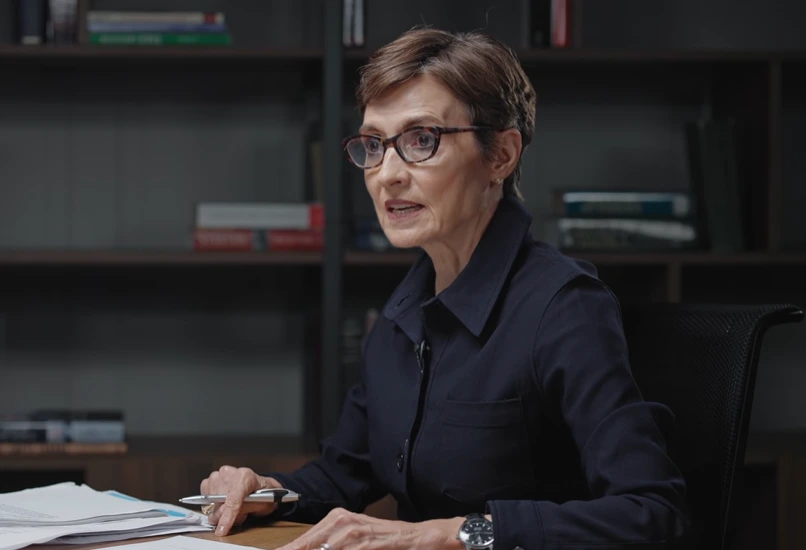
The US Supreme Court has declined to halt an $800-a-day contempt fine against former Fox News reporter Catherine Herridge, who refuses to name the confidential source behind her 2017 story about an FBI investigation of Chinese American scientist Yanping Chen.
The United States Supreme Court on Thursday dealt a significant blow to press freedom advocates, declining to intervene in the case of Catherine Herridge, a veteran investigative journalist who now faces mounting daily fines of $800 for refusing to reveal the confidential source behind a 2017 Fox News story about an FBI investigation. The decision leaves Herridge, one of the most prominent national security reporters in American journalism, accumulating penalties with no clear end in sight unless she complies with a court order she has described as a fundamental violation of journalistic principle.
Only Justice Brett Kavanaugh noted his dissent from the court’s refusal, making the decision effectively 8-1 against Herridge’s emergency appeal.
How the Case Began
The dispute traces back to 2017, when Herridge, then working as Fox News’ chief intelligence correspondent, reported on an FBI investigation into Yanping Chen, the founder of the University of Management and Technology in Virginia. The investigation centred on statements Chen had made on immigration forms related to her work connected to a Chinese astronaut program. The six-year probe never resulted in any charges being filed against Chen.
In 2018, Chen sued the FBI and the Justice Department, alleging that government officials had violated the Privacy Act by disclosing confidential investigative materials to reporters, including Herridge, in order to damage her reputation. The materials at issue included snippets of an FBI document summarising an interview conducted during the investigation, personal photographs, and information taken from her immigration and naturalisation forms and an internal FBI PowerPoint presentation.
Chen said her personal and professional lives were upended by the wave of negative media attention following the leak, leading to hate mail and death threats. Her lawsuit sought to identify the government official or officials who had disclosed her private information.
The Court Orders and Herridge’s Refusal
As part of Chen’s lawsuit, her lawyers sought to compel Herridge to identify her confidential sources. US District Judge Christopher Cooper ruled that Chen’s need to know, for the purposes of her Privacy Act lawsuit, outweighed Herridge’s journalistic privilege to protect source confidentiality. He ordered Herridge to answer questions in a deposition about the identity of her source or sources.
Herridge refused, citing her fundamental obligation as a journalist to protect sources who speak to her in confidence. Judge Cooper held her in civil contempt of court in February 2024 and set the $800 daily fine as the penalty for non-compliance. The fine was designed to accumulate indefinitely until Herridge either reveals her sources or the legal situation changes.
The DC Circuit Court of Appeals upheld the contempt ruling on September 30, 2025. Herridge then sought emergency relief from the Supreme Court. Chief Justice John Roberts issued a short-term stay of the fines on June 26, 2026, pausing the clock while the court considered the appeal. On Thursday, July 2, the full court declined to grant the stay, effectively restarting the fines with no further avenue for immediate relief available to Herridge.
The Broader Stakes for Press Freedom
The case has been closely watched by media organisations, press freedom advocates, and First Amendment lawyers across the United States and internationally because it strikes at one of the most fundamental principles of investigative journalism: the ability to protect confidential sources.
The logic behind source protection is straightforward. Whistleblowers, government officials, law enforcement sources, and corporate insiders who speak to journalists about matters of public interest routinely do so only on the guarantee that their identity will not be disclosed. If journalists can be compelled by courts to reveal those identities, sources will stop talking, and the kind of accountability journalism that uncovers government wrongdoing, corporate fraud, and abuse of power will be significantly weakened.
Washington DC law contains shield protections for journalists, as do many other US states, designed specifically to strengthen journalistic privilege in these situations. The federal courts in Herridge’s case have concluded, however, that those protections do not override the competing need of a civil plaintiff to obtain evidence necessary for her lawsuit to proceed. That conclusion is precisely what press freedom advocates have contested throughout the case.
Fox News, Herridge’s former employer, expressed strong support for her position. A spokesperson said the network stood by Herridge and was “deeply disappointed” by the Supreme Court’s decision, adding that protecting the confidentiality of journalistic sourcing and the integrity of news-gathering is “fundamental to a free and functioning democracy.” CBS News, where Herridge worked from 2019 until she was laid off in February 2024 as part of Paramount’s budget cuts, returned confidential files belonging to Herridge in late February 2024 amid pressure from the House Judiciary Committee and the SAG-AFTRA union.
Herridge has since been working as an independent journalist through the newsletter platform Beehiiv.
Who Is Catherine Herridge?
Herridge, a Canadian-born journalist who earned a bachelor’s degree from Harvard College and a master’s in journalism from Columbia University, is one of the most experienced national security reporters in American broadcast journalism. She joined Fox News at its inception in 1996 and spent more than two decades there as chief intelligence correspondent before moving to CBS News in 2019.
In 2011 she authored The Next Wave: On the Hunt for Al-Qaeda’s American Recruits. She received the Tex McCrary Award for Journalism from the Congressional Medal of Honor Society for her enterprise reporting at Fox News.
Herridge is also known for a remarkable act of personal courage unrelated to journalism. In June 2006, she donated a portion of her liver to her infant son, who had been diagnosed with biliary atresia, a serious liver condition.
What Comes Next
Herridge’s attorneys did not immediately respond to requests for comment following Thursday’s Supreme Court ruling. The practical question now is whether Herridge will eventually comply with the court order rather than continue to accumulate fines indefinitely, or whether new legal avenues will emerge to challenge the contempt order at a deeper level.
The case does not yet resolve the underlying legal question of whether Herridge must ultimately reveal her sources. Thursday’s ruling concerned only the stay of the daily fines, not the final merits of whether her journalistic privilege should prevail over Chen’s discovery rights. That question remains open, and the case is likely to continue generating significant legal and media industry attention as it moves toward a more definitive resolution.
For European observers, the case raises questions that are not uniquely American. Press freedom and the protection of journalistic sources are issues that European courts and legislatures have also wrestled with in recent years, and the US Supreme Court’s reluctance to intervene on behalf of a journalist facing compelled source disclosure will be noted carefully by media law practitioners on both sides of the Atlantic.
Related Articles:
- Active-Duty Air Force Major Arrested on Capitol Steps After Calling for Trump’s Impeachment