On October 27, Finland’s president and Norway’s prime minister held a 90-minute call with Vladimir Putin. Denmark and Sweden objected, Italy asked who speaks for Europe, and Ukraine said it was the right approach.
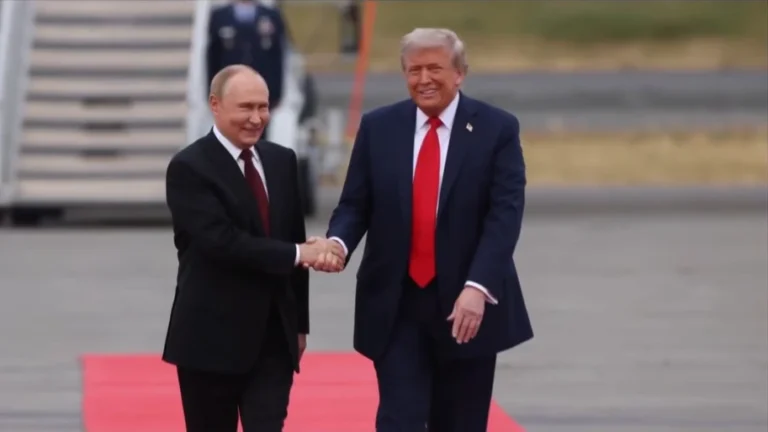
On Tuesday morning, October 27, two men in Helsinki picked up a phone and called the most isolated leader in the Western world. For about ninety minutes, Finnish President Alexander Stubb and Norwegian Prime Minister Jonas Gahr Støre spoke with Vladimir Putin. Within hours, their closest neighbours were publicly saying they wished it had never happened.
It was, in some ways, a very small event. No agreement was reached. The Kremlin reported that Putin repeated his reasons for invading Ukraine. Norway’s prime minister said the call showed big differences in views. Yet the reaction from Copenhagen, Stockholm, Rome and Tallinn tells us something important. Europe has spent more than four years arguing about how to stand up to Russia. Now it is arguing about who gets to talk to Russia, and that is a harder and more uncomfortable question.
This is the story of that call, the people behind it, and the question it has forced into the open.
What Happened, and in What Order
To understand the call, you have to go back one week.
On October 20, Stubb and Støre hosted talks in Oslo with Ukrainian President Volodymyr Zelensky and US special envoy Steve Witkoff. According to Stubb, the idea for a call with Putin was born in that room. Witkoff then travelled to St Petersburg to meet Putin himself before returning to Oslo and flying home. The Kremlin said afterwards that Russia was ready to resume US-mediated negotiations with Ukraine in November.
Then came October 27. Stubb and Støre made the call from Helsinki, where Nordic leaders had gathered for a session of the Nordic Council. Their offices said it was a follow-up to Oslo and that they had consulted with Ukraine. Finland’s president said afterwards that ending the war requires direct discussions. Støre said they had stressed the importance of de-escalation.
The Kremlin’s account was less gentle. Putin, according to Moscow, reminded the two leaders of what he calls the root causes of the war. A source close to the Kremlin told Reuters that Putin said Russia would not give up its goal of taking all of the Donbas region, and that the two Europeans replied that any peace would have to be just. The three leaders also touched on security in the Baltic Sea, which many read as a reference to Europe’s pressure on Russia’s shadow fleet of oil tankers. Moscow added that they agreed to keep in direct contact by phone.
Immediately afterwards, Stubb and Støre called Zelensky to brief him. Ukraine’s foreign minister, Andrii Sybiha, confirmed the call had been coordinated with Kyiv and described it as the right approach.
It was the first time a leader from one of Ukraine’s European allies had spoken to Putin since French President Emmanuel Macron called the Kremlin in July 2025, more than a year earlier.
The Human Backdrop: Kyiv Under Fire
It is easy to talk about this as a diplomatic puzzle. It helps to remember what was happening at the same moment.
Overnight on October 26 and 27, Russia launched 16 ballistic missiles and more than 280 drones at Ukraine, according to the Rio Times Europe Intelligence Brief. Rescue workers in Kyiv were clearing rubble and damaged roads that Tuesday. Firefighters pulled a dog out of the ruins. A United Nations inquiry dated October 26 had just described Russia’s repeated attacks on Ukrainian energy infrastructure as a war crime, with winter only weeks away.
Zelensky has said he is prepared to freeze the front lines in order to hold peace talks. People in Ukraine are tired in a way that is hard for outsiders to measure. When Finnish and Norwegian leaders say they want the killing to stop, they are speaking to a real hunger for it. The question is not whether peace is desirable. It is who should be at the table when the terms are written, and on whose behalf.
Why Finland and Norway?
There is a reason these two countries felt able to make this call.
Finland shares a border of more than 1,300 kilometres with Russia and joined NATO in 2023 after Russia’s full invasion. It is a country of 5.5 million people that, according to Bloomberg, has more artillery than France and Germany combined and can call on up to 280,000 troops in wartime. Stubb has built a reputation as one of Europe’s firmest voices on Russia. In an interview last year he said the only thing Putin understands is power and warned that any sign of weakness would be punished.
That is what makes this episode interesting. The leader who said “be hard” is the same one who picked up the phone. For Stubb and Støre, the two things do not contradict each other. Their argument is simple: you can support Ukraine fully and still speak to the man who started the war, especially when Washington is already doing exactly that. Støre said Europe should talk with Russia to complement the messages sent by the US administration, which takes a different view of the war.
There is also the matter of timing. Europe has been quietly debating who might serve as its channel to Putin. UNITED24 Media reported days before the call that European governments were considering appointing a representative, with Stubb’s name among those discussed. Seen in that light, the call looks less like a freelance stunt and more like a test of whether Europe can speak to Moscow with a voice that Moscow cannot dismiss.
The Objections: Denmark, Sweden, Estonia and Italy
The reaction was swift, and it came from friends.
Danish Prime Minister Mette Frederiksen said she was very sceptical of what she called an independent initiative by Norway and Finland that was not coordinated with the rest of Europe. She argued that Europe should stay united rather than go solo, and she said she saw no sign that Russia wants peace with Europe, pointing to the hybrid attacks that happen every day. Swedish Prime Minister Ulf Kristersson also voiced discomfort. Both warned that separate channels to Putin could weaken Europe’s common position. Estonian officials were sceptical too.
Italy’s prime minister, Giorgia Meloni, took a more thoughtful line. Her office said she had great respect for Stubb and Støre, but that the call made one thing clear: Europe has still not agreed on who should represent its interests in the peace process.
These objections are not petty. They come from a real memory. For years, Russia has tried to divide European governments, offering private conversations to some and cold shoulders to others. Smaller countries that live closest to Russia fear being bargained over without being in the room. Denmark and Estonia know what it is to be a small neighbour of a large power. When Frederiksen asks Europe to stand together, she is not defending a slogan. She is defending the only protection that small countries have.
Frederiksen and Stubb are also not strangers. They were sitting in the same hall in Helsinki when the call became public. Nordic politics is usually a story of unusual closeness and trust, which is why a rare public rebuke between them landed so heavily.
The Case for the Call
The defenders of Stubb and Støre have a serious argument, and it deserves a fair hearing.
First, Europe is already being talked about, and often over. The United States has led the recent diplomacy, with Witkoff shuttling between Oslo and St Petersburg and Trump phoning Putin himself on October 9. A trilateral meeting of the United States, Ukraine and Russia is tentatively planned for early November in Abu Dhabi. If Europe has no direct line to Moscow, it learns what Russia thinks only through Washington’s retelling.
Second, Ukraine approved. Kyiv was briefed before and after. For many Europeans, the test of whether an initiative helps or harms Ukraine should be what Ukraine itself says, and Ukraine said yes.
Third, talking is not conceding. Stubb and Støre were careful to say they spoke as national leaders, not on behalf of Europe as a whole, and they reaffirmed their support for Kyiv in the same breath. In diplomacy, a conversation is how you find out what the other side will and will not accept. The Kremlin’s repeated claim about the Donbas, uncomfortable as it is, is useful information about how far apart the sides remain.
The Case Against the Call
The critics have an equally serious argument.
First, Putin is skilled at using contact as a reward. A call with two respected democratic leaders lets him show his own public that Russia is not isolated, and it lets him present himself as the reasonable party. The Kremlin’s readout was already framing Europe and NATO as the ones prolonging the war.
Second, a split is itself a gain for Moscow. If Nordic countries disagree in public about how to deal with Russia, that disagreement becomes the story, and the unity that Europe has worked so hard to build is the thing that frays.
Third, it was not coordinated. Even if the idea is sound, doing it without agreement among allies sets a precedent. If Finland and Norway can phone Putin on their own, then so can Hungary, and Hungary’s agenda is not the same. Europe’s strength has been that its capitals, whatever their quarrels, have kept one line toward Russia. Once that line is bent, it is hard to straighten again.
What the Fight Is Really About
Strip away the diplomacy, and this argument is about something very human: trust and who gets to speak for whom.
Europe is a continent of 27 governments plus neighbours like Norway and the United Kingdom. It has never had a single voice on foreign policy, and the war in Ukraine has made that gap painful. The question of an envoy has been circling for months. Someone has to be chosen, and whoever is chosen will speak for countries that do not agree with each other. A leader from Finland carries the memory of the Winter War. A leader from France carries a different history and a different relationship with Moscow. A leader from Germany carries yet another.
Beneath that is a harder question that Europeans rarely say out loud. How much does Europe trust the United States to protect its interests in a negotiation that Washington is leading? The fact that Stubb and Støre chose to call Putin at all suggests that some European leaders do not want to leave that trust untested.
Three Scenarios for What Comes Next
The channel becomes useful. The Nordic call turns into a quiet, steady line that Europe uses to pass messages while the Abu Dhabi talks go ahead. Other capitals come round, and Europe agrees on a formal envoy, perhaps Stubb, with a mandate that all 27 can accept. Russia finds that talking to Europe does not divide it, and the contact becomes a modest asset in the negotiations. This is the outcome Stubb and Støre are hoping for.
The split deepens. Denmark and Sweden hold their ground, other capitals take sides, and Moscow learns that a phone call can do what months of propaganda could not. European leaders spend November arguing about process rather than content. When the trilateral talks begin in Abu Dhabi, Europe is represented by nobody in particular. This is the outcome that Frederiksen is trying to prevent.
The call is overtaken by events. The Abu Dhabi talks happen, produce little or collapse, and the Nordic call ends up as a footnote. The war continues through the winter, with Ukrainian cities in the dark and Russian missiles falling. The real lesson is then about the limits of any one conversation. Putin’s stated goals, including the whole of Donbas, have not moved, and without a change in the balance of pressure, talking changes nothing. This may be the most likely path and the most sobering.
The Bottom Line
On the surface, the incident was a phone call. Underneath, it was a test of Europe’s character. Can a continent that prides itself on unity tolerate two of its most trusted leaders taking a different path? Can it talk to an adversary without appearing weak? Can it maintain the position that Ukraine’s suffering demands while also allowing for the conversations that may one day end it?
There is no easy answer. Frederiksen is right that division helps Russia. Stubb and Støre are right that silence harms everyone, especially the people in Kyiv waiting for the next siren. Both things can be true. The sensible course may be the least dramatic one: agree quickly on who speaks for Europe, assign that person a clear mandate, and make sure every call is shared with allies before and after.
In the meantime, in a city under missile fire, a dog was pulled alive from the rubble, and a country that has not stopped hoping kept waiting to see whether the grown-ups of Europe could agree on how to help.
Sources:
- The Hill, “Denmark, Estonia express skepticism over Finland and Norway’s call with Putin,” October 2026
- The Moscow Times, “Finnish, Norwegian Leaders Call Putin Ahead of Ukraine Peace Talks,” October 27, 2026
- RTÉ, “Norway, Finland leaders hold ‘frank and substantive’ talks with Putin,” October 27, 2026
- Irish Times, “Norway and Finland leaders hold rare call with Putin,” October 27, 2026
- Meduza, “Finnish and Norwegian leaders discuss Ukraine peace with Putin,” October 27, 2026
- Kyiv Post, “Kremlin Reiterates Moscow’s Invitation to Zelensky After ‘Frank’ Discussion,” October 2026
- Euronews, “Putin call pits Finland and Norway against Denmark and Sweden,” October 27, 2026
- UNITED24 Media, “Finland and Norway Hold Direct Call With Putin, Prompting Criticism From Denmark,” October 2026
- Savage Minds, “Ukraine Peace Talks: Europe’s Shift Towards Russia,” October 29, 2026
- Rio Times, “Europe Intelligence Brief for Tuesday, October 27, 2026″
- Bloomberg, “Finland’s Stubb Urges Europe to Stand Up to Putin Using Strength,” March 2025
Related Articles:
- Trump’s Russia Diesel Deal, the Energy Ceasefire and Europe’s Moment of Truth
- France Is on the Brink: How a Debt Crisis, Street Riots and a Broken Parliament Are Converging
- Europe Is Drafting Women Into the Military: Why a Continent Is Arming Half Its Population
- EU-US Trade Deal Explained: How the New 15% Tariff Affects You in 2026