
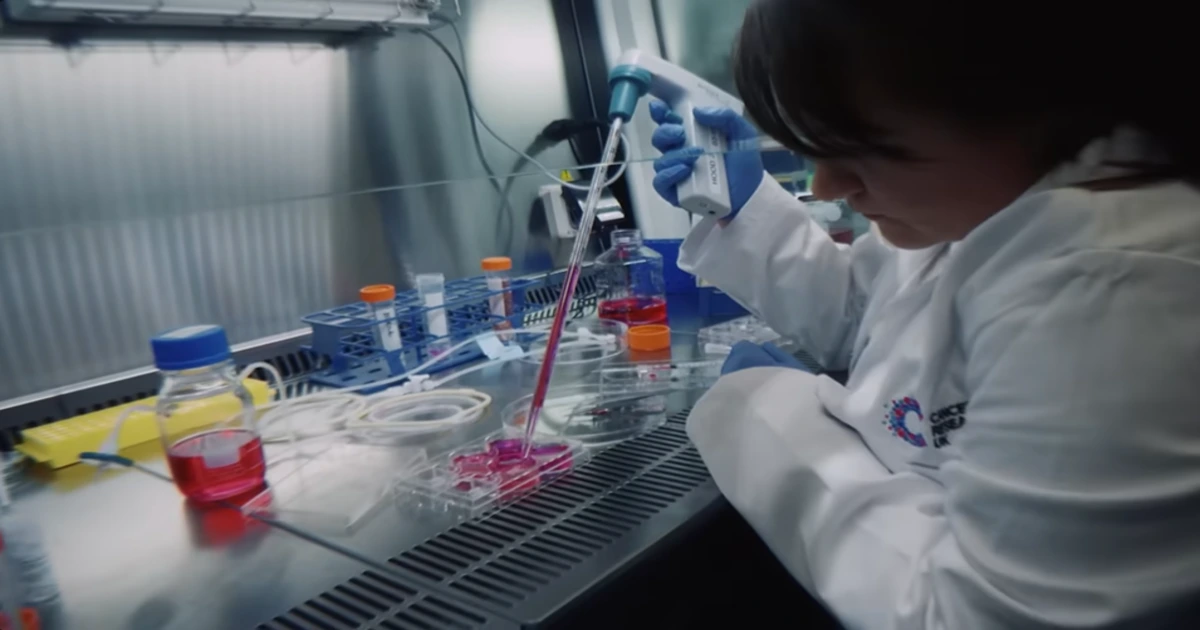
From personalised mRNA cancer vaccines cutting melanoma relapse by 49% to AI detecting pancreatic cancer three years early, here is a comprehensive guide to the biggest cancer research advancements of 2026 and what they mean for European patients.
Cancer remains one of the most formidable challenges in modern medicine. The International Agency for Research on Cancer estimates nearly 20 million new cancer cases occur globally each year, with almost 10 million deaths. Yet 2026 has arrived with a wave of scientific momentum that leading oncologists are describing as genuinely transformative: personalised vaccines that cut melanoma relapse nearly in half, artificial intelligence detecting pancreatic cancer three years before conventional diagnosis, engineered immune cells entering solid tumours for the first time, and a new class of drugs dismantling cancer proteins once considered untouchable.
This is a guide to the breakthroughs that matter most, what the science actually shows, and what patients across Europe and the world can realistically expect in the years ahead.
1. The mRNA Cancer Vaccine: From COVID Pandemic Tool to Cancer Cure Candidate
No development in oncology has generated more excitement in 2026 than the rapid advance of personalised messenger RNA cancer vaccines. The same platform technology that produced the Moderna and Pfizer-BioNTech COVID-19 vaccines within months of the pandemic’s emergence has now been adapted to fight cancer, and the early results are striking.
The leading candidate is Intismeran Autogene, previously known as mRNA-4157 or V940, developed by Moderna in partnership with Merck. The vaccine works by analysing a patient’s tumour genome to identify unique mutations, called neoantigens, that are present only in their cancer cells and not in healthy tissue. A personalised vaccine is then manufactured for that specific patient, instructing the immune system to recognise and attack cells carrying those mutations. No two patients receive the same vaccine.
People with advanced melanoma who received the customised mRNA vaccine alongside the immune checkpoint inhibitor pembrolizumab continue to show sustained and clinically meaningful improvement in recurrence-free survival at five years, with the combination associated with a 49% reduction in the risk of disease recurrence or death.
The phase 2b KEYNOTE-942 trial showed a 49% reduction in the risk of recurrence or death and a 62% reduction in distant metastasis or death versus pembrolizumab alone, results that have driven the vaccine into a multi-trial phase 3 programme. The pivotal Phase 3 INTerpath-001 trial in melanoma is expected to deliver interim results later this year, and INTerpath-002 is testing the same combination in non-small cell lung cancer.
Revolutionary advances in pancreatic cancer vaccines have emerged as a defining achievement of this period. A personalised mRNA vaccine developed by Memorial Sloan Kettering Cancer Center in collaboration with BioNTech demonstrated remarkable efficacy in pancreatic ductal adenocarcinoma, with vaccine-induced immune responses persisting for nearly four years after treatment in some patients and a reduced risk of cancer recurrence at three-year follow-up compared to non-responders.
Current clinical development now encompasses over 120 RNA cancer vaccine trials across various malignancies including lung, breast, prostate, melanoma, pancreatic, and brain tumours, representing a significant expansion from previous years.
For European patients, the most immediate relevance is in the United Kingdom. A personalised mRNA-based vaccine for advanced melanoma is now in the final phase of trials and is expected to become the first therapeutic cancer vaccine available through NHS clinics. Another candidate, a head and neck cancer vaccine targeting HPV-related tumours, was recently fast-tracked into clinical trials as part of the NHS Cancer Vaccine Launch Pad.
LungVax, backed by Cancer Research UK, targets early-stage lung cancer signals and will be trialled in 2026 on 3,000 high-risk participants aged 55 to 74, who are current or former smokers with a significant history of tobacco use. This is a prevention vaccine, not a treatment, designed to train the immune system against pre-cancerous lung cells before they become malignant.
By 2027, the field may see the first regulatory approvals in melanoma and lung cancer, setting not only therapeutic precedents but also shaping new regulatory and reimbursement frameworks globally.
2. CAR-T Cell Therapy Breaks Into Solid Tumours
Chimeric antigen receptor T-cell therapy, in which a patient’s own immune cells are extracted, genetically re-engineered to recognise cancer, and reinfused, has produced extraordinary results in blood cancers since its emergence in the 2010s. Some patients with leukaemia who were given weeks to live have remained cancer-free for more than a decade. The challenge has always been extending those results to solid tumours, which make up the vast majority of cancers.
CAR-T cell therapy has achieved remarkable outcomes in blood cancers, with some patients living beyond ten years after treatment. Now, the frontier is shifting.
CAR-T therapy is demonstrating survival benefits in advanced gastric and gastro-oesophageal junction cancers, marking a first for solid tumours. Bispecific and dual checkpoint agents are providing deeper and more durable responses in early trials.
The technical breakthrough enabling this advance is the development of armoured T cells. Armoured T cells are next-generation T cells modified to express their own cytokines and chemokines, helping them to proliferate and persist in tumour microenvironments better than their non-armoured counterparts. Real progress has been seen in delivering T cells armoured with IL-18 in lymphoma, and studies are also working with IL-12, IL-15, and IL-7.
The tumour microenvironment is the central obstacle in solid tumour CAR-T therapy. Unlike liquid tumours circulating in the bloodstream, solid tumours surround themselves with immunosuppressive signals that exhaust and disable incoming immune cells before they can do damage. Armoured T cells, equipped with their own survival signals, represent the most promising engineering approach yet to overcome that barrier.
Other T-cell advancements detail approaches to tune CAR T-cell recognition and enhance potency through modular designs that incorporate synthetic receptors, switchable signalling domains, and payload delivery systems.
3. Targeted Protein Degradation: Destroying the Undruggable
For decades, certain cancer-driving proteins have been described as undruggable. Traditional cancer drugs work by blocking a protein’s active site, preventing it from carrying out its cancer-promoting function. But many of the most important cancer proteins have no obvious active site to block, or they perform essential functions in healthy cells too, making conventional inhibition toxic.
Targeted protein degradation takes an entirely different approach. Instead of blocking these proteins, it hijacks the cell’s own waste-disposal machinery to destroy them entirely.
Targeted protein degradation is highly innovative and one of the most promising new approaches to emerge in drug discovery research in the past decade, and it is poised to reach a major milestone in 2026 with the expected FDA approval of vepdegestrant, the first drug derived from this approach, currently under active review for the treatment of patients with advanced breast cancer.
One of the programmes developed at the ICR’s Centre for Protein Degradation combines targeted protein degradation with personalised immunotherapy, and this programme is expected to advance in 2026 into clinical trials for the treatment of paediatric brain tumours or paediatric solid body tumours, one of the first clinical examples of this approach in childhood cancers.
The implications extend well beyond breast cancer. KRAS, one of the most commonly mutated genes in human cancer and long considered the ultimate undruggable target, has recently become druggable through a new generation of small molecule inhibitors. New compounds designed to inhibit specific oncogenic pathways, including KRAS, EGFR, and BRAF, are now entering clinical trials or receiving regulatory attention, enhancing the ability to tailor treatment to individual tumour profiles.
4. Radiopharmaceuticals: Delivering Radiation Directly to Tumour Cells
Radiopharmaceuticals represent one of the most elegant and conceptually straightforward advances in cancer treatment: combine a molecule that homes in on cancer cells with a radioactive payload, and deliver lethal radiation with pinpoint precision, sparing the surrounding healthy tissue that conventional radiation therapy inevitably damages.
Recent advances have accelerated progress in this field significantly. New radioisotopes are available, particularly highly potent alpha-emitters such as actinium-225, which release large amounts of energy over very short distances. That short range is a crucial feature: the radiation kills cancer cells in its immediate vicinity without the scatter that damages normal tissue in conventional radiotherapy.
The FDA approved the first PSMA-targeted radiopharmaceutical for prostate cancer in 2022, and the pipeline of candidates for other tumour types has grown rapidly since. Trials are underway in breast cancer, neuroendocrine tumours, and several other solid tumours, with European regulatory reviews following closely behind American approvals.
5. AI-Assisted Early Detection: Catching Cancer Before It Causes Symptoms
Artificial intelligence has moved from cancer research laboratories into genuine clinical practice across multiple diagnostic specialties, and the results being reported in peer-reviewed literature in 2026 are, in some cases, extraordinary.
As covered in detail in our recent Europeans24 guide to AI in medical diagnostics, a Mayo Clinic AI system has demonstrated the ability to detect pancreatic cancer up to three years before conventional diagnosis, nearly doubling specialist detection rates for one of the deadliest and most late-diagnosed cancers in medicine. Pancreatic cancer’s five-year survival rate below 12 percent is almost entirely a function of how late it is typically caught. A system that can flag at-risk patients years earlier has the potential to fundamentally change survival outcomes for a disease that currently offers very few.
Experts at City of Hope, one of the largest cancer research and treatment organisations in the United States, predict that 2026 will mark the year AI moves beyond hype to become an integrated and measurable driver of improved patient care.
The PRET system developed at the Hong Kong University of Science and Technology can now recognise 18 distinct cancer types from a minimal number of tissue samples without requiring additional training on local data, achieving diagnostic accuracy exceeding 97 percent AUC on 15 of 20 tasks assessed. That performance, in specific diagnostic tasks, rivals the most experienced human pathologists in those areas.
AI is also transforming the drug discovery pipeline itself. Machine learning models can now screen billions of molecular compounds to identify cancer drug candidates in days rather than years, a capability that is dramatically compressing the timeline between target identification and clinical trial readiness.
6. Menin Inhibitors: New Hope for Leukaemia and Pancreatic Cancer
Acute myeloid leukaemia and pancreatic cancer have for a long time been difficult to treat. Novel targeted therapies called menin inhibitors are generating excitement and hope. For AML, two targeted therapies called menin inhibitors were recently approved for approximately 40% of AML cases.
Menin is a protein that acts as a co-regulator of gene expression, and in certain leukaemias it plays a direct role in driving uncontrolled cell division. The menin inhibitors block this function, restoring more normal gene expression patterns in leukaemia cells. The FDA approved the first menin inhibitor, revumenib, in late 2024, and a second agent has since followed. Researchers are now testing these drugs in combination with chemotherapy and other targeted agents, with early combination trial results showing response rates that were previously considered unachievable in relapsed and refractory AML.
For pancreatic cancer, a novel RAS inhibitor is being tested in a phase III clinical trial and is showing promising early results. Given that KRAS mutations drive the vast majority of pancreatic cancers, an effective RAS inhibitor in this disease would represent a historic breakthrough for a cancer that has barely moved the survival needle in five decades.
7. Cancer Prevention: Intercepting Disease Before It Starts
Perhaps the most philosophically significant shift in oncology in 2026 is the turn toward prevention and interception, the idea that it is better to identify and eliminate precancerous cells or high-risk genetic states before they ever become life-threatening disease.
Cancer researchers are approaching 2026 with a renewed focus on early detection and prevention, personalising treatment, and closing gaps in care, with strategies to prevent and intercept cancer before it becomes life-threatening now forming a central pillar of the field’s agenda.
Liquid biopsy, the detection of circulating tumour DNA in a blood sample, is advancing rapidly as a screening tool that can identify cancer signals years before conventional imaging can detect a tumour. The Guardian breast cancer liquid biopsy trial published findings in 2026 suggesting that circulating tumour DNA can predict breast cancer relapse months to years before clinical recurrence, opening a window for earlier intervention.
The gut microbiome is also emerging as a genuinely important variable in cancer risk and treatment response. Gut microbiome-guided therapies that turn food into medicine are among the innovations that experts predict will reshape cancer treatment and survivorship in 2026. Research has shown that the composition of a patient’s gut bacteria can significantly affect how well their immune system responds to checkpoint inhibitor immunotherapy, and trials are now testing whether microbiome modulation, through probiotics, faecal transplants, or targeted dietary intervention, can improve immunotherapy outcomes.
What This Means for European Patients
The advances described above are unfolding primarily in research institutions and clinical trial settings in the United States, the United Kingdom, and a handful of other high-income countries. For the majority of European patients, access to these treatments depends heavily on how quickly regulatory agencies and national health systems move to approve and reimburse them.
The European Medicines Agency has been tracking the mRNA cancer vaccine pipeline closely, and analysts expect EMA review applications to be filed for the leading personalised vaccine candidates within the next 12 to 18 months if Phase 3 results in melanoma are positive. That timeline would put potential European approvals in the 2027 to 2028 range for the first indications.
Researchers are hopeful that the first generation of cancer vaccines, including therapeutic options for skin cancer and preventative approaches for lung cancer, could become available within the next five years. Significant challenges remain, including production costs, logistics, and long-term efficacy tracking, especially for personalised approaches.
The production challenge is real and substantial. A personalised neoantigen vaccine must be manufactured individually for each patient, which requires genomic sequencing of the tumour, computational identification of neoantigens, synthesis of the personalised mRNA sequence, and quality-controlled manufacturing, all within a clinically acceptable timeframe.
Current timelines from biopsy to vaccine delivery run to several weeks. Scaling that process to serve the millions of patients who might eventually benefit from these vaccines, across diverse healthcare systems with varying laboratory infrastructure, is a logistical challenge that has barely begun to be addressed.
Cost is the other unavoidable dimension. Personalised cancer vaccines are inherently expensive to produce, and questions of how national health systems will fund them, and which patients will have access, are already being raised by health economists and patient advocacy groups across Europe.
The Road Ahead
The scientific momentum in cancer research in 2026 is real and substantial. The convergence of mRNA vaccine technology, engineered immune cells, protein degradation drugs, precision radiopharmaceuticals, and AI-assisted diagnosis represents a genuinely different landscape from even five years ago. The pace of progress has accelerated, and the range of cancer types now yielding to precision medicine approaches continues to expand.
But oncologists are also careful to distinguish between laboratory breakthroughs, early trial results, and proven therapies available to the patients who need them most. The pipeline from a Phase 1 trial demonstrating safety to a Phase 3 trial demonstrating survival benefit to regulatory approval to health system reimbursement to actual patient access spans years and sometimes decades, and many promising candidates do not make it through that journey.
The breakthroughs of 2025 and 2026 show that while cancer remains a formidable disease, precision, data-driven, and immune-based approaches are closing the gap toward longer survival and better quality of life. Whether the pace of that progress can be sustained, and whether the benefits can be extended equitably to patients across all income levels and geographies, are the defining questions of cancer medicine in the years ahead.
Related Articles:






+ There are no comments
Add yours