An analysis on the strategic significance of the Tibetan Plateau’s most valuable desert in China, the Qaidam Basin.
Nestled on the northeastern fringe of the Tibetan Plateau at an average elevation of 2,800 metres, the Qaidam Basin is rapidly emerging as one of the most strategically significant regions on Earth. This vast endorheic basin, covering approximately 121,000 square kilometres, houses the world’s second-largest concentration of lithium brine deposits, hosts China’s largest solar energy complex, contains substantial oil and gas reserves, and serves as a critical node in Beijing’s renewable energy and electric vehicle supply chain strategy.
With identified lithium resources exceeding 2.77 million metric tonnes of lithium metal from modern salt lakes alone and deep brine potential estimated at over 30 million tonnes, the Qaidam Basin represents a geological endowment that will shape global energy transition dynamics for decades.
As the world grapples with supply chain vulnerabilities exposed by the 2026 Hormuz crisis and the ongoing restructuring of global mineral trade, the Qaidam Basin’s strategic importance transcends its immediate resource value. It embodies China’s approach to energy security: domestic resource maximisation, vertical integration of supply chains, and the transformation of barren landscapes into industrial powerhouses. For policymakers, investors, and geopolitical analysts, understanding the Qaidam Basin is essential to comprehending the future of critical minerals, renewable energy, and great power competition in the 21st century.
I. Geological Fortunes: The Basin That Time Built
A Desert of Extraordinary Riches
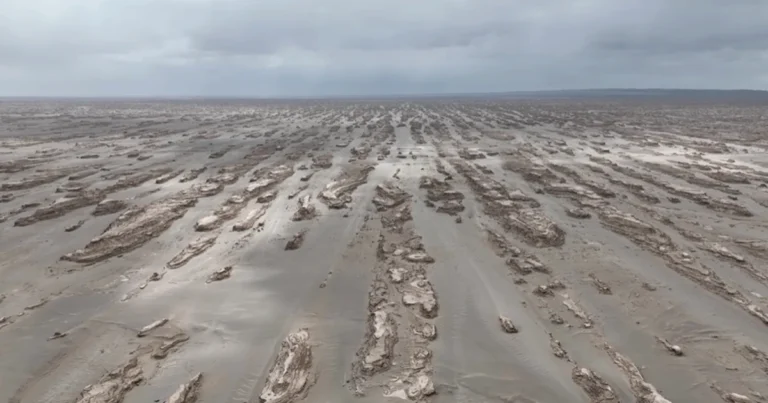
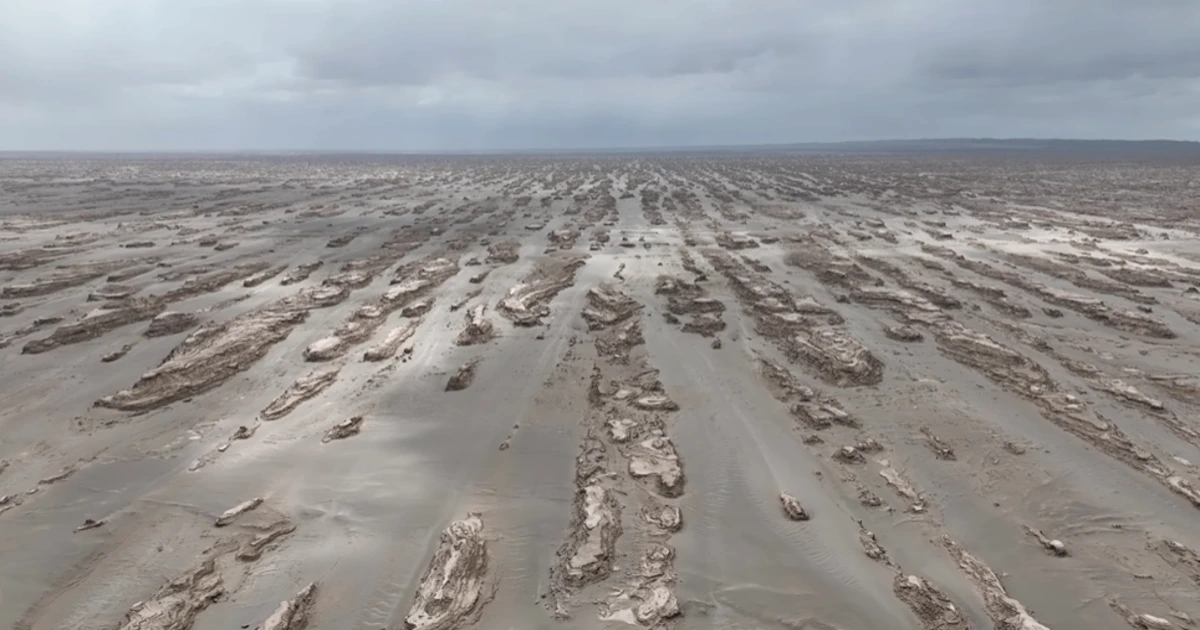
The Qaidam Basin is a geological anomaly, a high-altitude desert basin surrounded by the Kunlun Mountains to the south, the Qilian Mountains to the northeast, and the Altun Mountains to the northwest. This topographic enclosure creates a unique hydrological system where over 30 rivers drain inward, feeding a network of salt lakes that have concentrated minerals over millions of years through evaporation. With annual rainfall of merely 25–50 millimetres and evaporation rates reaching 3,000–3,200 millimetres, the basin functions as a natural evaporative concentrator, accumulating vast quantities of dissolved minerals in its terminal lakes.
The basin’s geological history reveals a story of tectonic transformation. During the Cenozoic era, a unified ancient megalake gradually separated into distinct basins through neotectonic uplift and increasingly arid climatic conditions. This process created three primary salt lake regions: the Mangai graben in the southwest, the central basin depression, and the Qilian Mountain piedmont faulted block belt along the northeastern edge. Each region possesses distinct mineral signatures shaped by the geochemistry of its surrounding rock formations and the hydrology of its recharge systems.
The Lithium Treasury
The Qaidam Basin’s lithium endowment is staggering by any measure. Modern salt lake brines contain identified resources of 2.77 million metric tonnes of metal lithium, concentrated in six primary mining areas. The Qarhan Salt Lake alone at 5,856 square kilometres, the world’s second-largest salt lake accounts for approximately 54% of these identified resources. West Taijinaier, East Taijinaier, and Yiliping playas contribute additional substantial reserves, with lithium concentrations in brines reaching as high as 632 mg/L in the phreatic layers of West Taijinaier Salt Lake.
Yet these surface resources may represent merely the tip of the geological iceberg. Deep brine deposits lithium-rich fluids trapped in Paleogene-Neogene anticlinal structures at depths of 700 to 6,000 metres holding estimated potential resources of 19.72 million tonnes according to early assessments, with more conservative recent estimates of 10.91 million tonnes to 6,000 meters depth. These deep brines, associated with oil and gas reservoirs in the western basin, offer lower magnesium-to-lithium ratios than surface brines, potentially enabling more efficient extraction and higher recovery rates.
The genesis of these lithium deposits reveals fascinating geochemical processes. Modern salt lake lithium primarily originates from lithium-rich hot springs surfacing along deep fault zones surrounding the basin, with deep thermal fluids contributing an estimated 70.2% of total lithium resources to lakes like Da Qaidam. Isotopic tracing demonstrates that these thermal fluids, heated by subsurface heat sources and interacting with lithium-bearing granites through water-rock reactions, transport dissolved lithium over tens of kilometres before depositing it in terminal salt lakes. This understanding, developed through decades of Chinese geological research has direct implications for exploration targeting, suggesting that fault zones and geothermal anomalies represent prime targets for new lithium discoveries.
Beyond Lithium: A Polymetallic Cornucopia
While lithium dominates contemporary attention, the Qaidam Basin’s mineral wealth extends far beyond this single element. The basin contains China’s principal potash production base, with Qarhan Salt Lake alone holding 540 million tonnes of potassium resources. Boron deposits at Da Qaidam and Xiao Qaidam represent significant national reserves, with hot springs contributing over 1.89 million tonnes of boron. Bromine, iodine, magnesium, and rare earth elements are present in substantial quantities, creating a polymetallic resource base that supports diverse industrial applications.
Oil and gas production, while overshadowed by lithium in recent discourse, remains economically significant. The Qinghai Oil and Gas Project produced 17.66 million barrels of oil in 2024, with tight gas and shale gas potential identified across the basin’s western anticlines. CNPC, China’s national oil company, has identified the Qaidam Basin as one of several basins with “abundant tight oil potential”, employing advanced horizontal drilling and hydraulic fracturing technologies to unlock these unconventional resources.
II. The Solar Transformation: From Desert Wasteland to Energy Powerhouse
Golmud and Beyond: China’s Solar Frontier
The Qaidam Basin’s renewable energy potential rivals its mineral wealth. The basin’s high altitude, clear skies, and extreme solar radiation exceeding 6,000 MJ/m² annually and classified as “very rich” by Chinese standards—create ideal conditions for photovoltaic power generation. Cooler temperatures at elevation enhance panel efficiency compared to lower-altitude desert installations, while the vast, flat, uninhabited terrain minimizes land-use conflicts.
The Golmud Solar Park, located within the broader Qaidam region, stands as the world’s largest operational solar installation. Commissioned in 2019 and comprising 80 separate solar plants with over 7.2 million panels, Golmud delivers approximately 2,800 MW of installed capacity. This facility is not merely a power station; it represents a strategic energy node within China’s west-to-east power transmission network, sending clean electricity to population centres thousands of kilometres away.
The Huanghe Hydropower Hainan Solar Park, another major installation in Qinghai Province, adds approximately 2.2 GW of capacity with integrated energy storage—demonstrating the evolution from simple solar generation to dispatchable renewable power systems. These facilities collectively establish the Qaidam region as the epicenter of China’s utility-scale solar deployment, a status reinforced by ongoing expansion and technological upgrading.
Wind-Solar Complementarity
Qinghai Province’s climate exhibits a distinctive seasonal pattern that enhances renewable energy system design: strong winds and abundant sunlight in spring, with weaker winds but continued good solar exposure and increased precipitation in summer. This complementarity enables more stable year-round power generation than single-source renewable systems. Annual average wind speeds in western Qinghai exceed 3 m/s, meeting the threshold for commercial wind energy development, while the basin’s topographic funnelling effects may enhance localized wind resources.
The strategic implication is profound. The Qaidam Basin offers not merely abundant renewable energy but renewable energy that can be configured for baseload-like reliability through intelligent combination of wind, solar, and storage technologies. This characteristic distinguishes it from many other high-quality renewable resource areas where intermittency poses persistent challenges.
The Hydrogen Connection
China’s national hydrogen strategy—formalised in the Medium and Long Term Development Plan for the Hydrogen Energy Industry (2021-2035)—positions green hydrogen as a critical component of the carbon neutrality pathway. The Qaidam Basin’s renewable energy resources make it an ideal production location for green hydrogen via electrolysis, with the potential to supply industrial hubs in eastern China through pipeline networks.
While the most prominent green hydrogen projects announced to date are located in Inner Mongolia, Xinjiang, and Jilin, the Qaidam Basin’s unique combination of solar, wind, and mineral resources creates synergies that these other regions cannot match. Hydrogen produced in Qaidam could directly supply local mineral processing operations—lithium refining, potash production, ammonia synthesis creating vertically integrated industrial ecosystems with minimal carbon footprint. The 2025 Energy Law‘s reclassification of hydrogen as an energy resource rather than hazardous chemical accelerates infrastructure development possibilities, enabling hydrogen storage and transport facilities outside designated chemical parks.
III. Strategic Significance: Why the Qaidam Basin Matters Globally
The Lithium Supply Chain Imperative
Global lithium demand is projected to increase tenfold by 2030, driven primarily by electric vehicle battery production. Current global lithium supply is concentrated in the “Lithium Triangle” of South America (Chile, Argentina, and Bolivia) and Australia, creating geopolitical vulnerabilities that China already the world’s largest lithium processor and battery manufacturer—seeks to mitigate through domestic resource development.
The Qaidam Basin’s lithium resources, while geologically different from South American salares (higher magnesium content requiring more complex processing), offer China strategic supply security that external sources cannot match. Domestic production insulates against export restrictions, shipping disruptions, and price volatility in international markets. With extraction capacity already reaching 70,000 tonnes annually and expansion ongoing, the basin is positioned to supply an increasing share of China’s lithium requirements [^web_search:1#0^].
This domestic production capability carries profound implications for global lithium markets. If China successfully scales Qaidam Basin lithium extraction while maintaining processing cost competitiveness, the country’s position as both largest consumer and significant producer could shift global pricing dynamics, potentially reducing reliance on Australian spodumene and South American brine imports.
Energy Security in an Age of Disruption
The 2026 Hormuz crisis demonstrated the fragility of global energy supply chains and the strategic value of domestic resource endowments. For China, the Qaidam Basin represents a dual-layered energy security asset: direct fossil fuel production (oil and gas) and renewable energy capacity that reduces dependence on imported fuels for electricity generation.
The basin’s solar and wind installations, once fully developed with storage integration, could theoretically supply a substantial portion of western China’s electricity demand while freeing coal and gas resources for industrial applications or strategic reserves. In a scenario of prolonged maritime supply disruption—whether through Hormuz closure, South China Sea tensions, or other contingencies—domestic renewable capacity becomes an irreplaceable strategic asset.
The Belt and Road Nexus
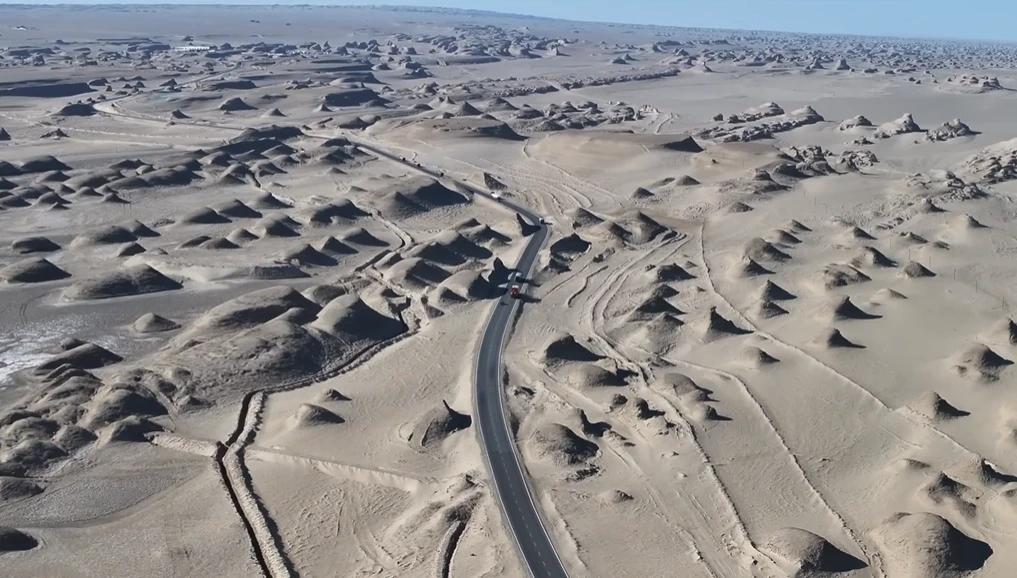
Geographically, the Qaidam Basin sits at a critical juncture of China’s Belt and Road Initiative corridors. It connects to Central Asia via the Qilian Mountain passes, to Tibet and South Asia through the Kunlun routes, and to eastern China through established rail and highway networks. This positioning makes the basin a potential logistics and energy hub for trans-Eurasian trade, with mineral products and renewable energy potentially flowing westward while Central Asian resources move eastward.
The basin’s development also supports China’s western development strategy, aimed at reducing economic disparities between coastal and interior regions. High-value mineral extraction and renewable energy manufacturing create employment and investment in a historically underdeveloped area, contributing to political stability and demographic balance.
IV. Challenges and Constraints: The Limits of Resource Wealth
Environmental and Ecological Pressures
The Qaidam Basin’s extreme environment, cold, arid, and high-altitude poses significant operational challenges. Winter temperatures regularly drop below -20°C, requiring specialized equipment and construction techniques. The thin atmosphere at 2,800 metres elevation affects both worker health and combustion engine performance, increasing operational costs and limiting certain industrial processes.
Water scarcity represents the most fundamental constraint. With annual precipitation of 25–50 millimetres and evaporation exceeding 3,000 millimetres, the basin is among the driest inhabited regions on Earth. Lithium extraction via evaporation ponds, the current primary method consumes substantial water volumes, creating tension between mineral production and ecological preservation. Brine extraction must be carefully managed to prevent aquifer depletion and salt lake ecosystem degradation, which could affect the very resources being exploited.
The fragile alpine ecosystem surrounding the basin is vulnerable to industrial development. Dust from construction and mining activities can affect snow albedo in nearby mountain ranges, potentially accelerating glacial melt with downstream hydrological consequences. Wildlife corridors for species such as the Tibetan antelope and snow leopard require protection, limiting development in certain areas.
Technological and Processing Challenges
The Qaidam Basin’s lithium brines present processing challenges distinct from South American counterparts. Higher magnesium-to-lithium ratios (ranging from 40:1 to over 1,000:1 depending on the deposit) require more complex and energy-intensive separation processes than the relatively low-Mg/Li brines of Chile’s Atacama. Current extraction methods involve solar evaporation followed by chemical precipitation, a time-consuming process that can take 18–24 months from brine intake to lithium carbonate production.
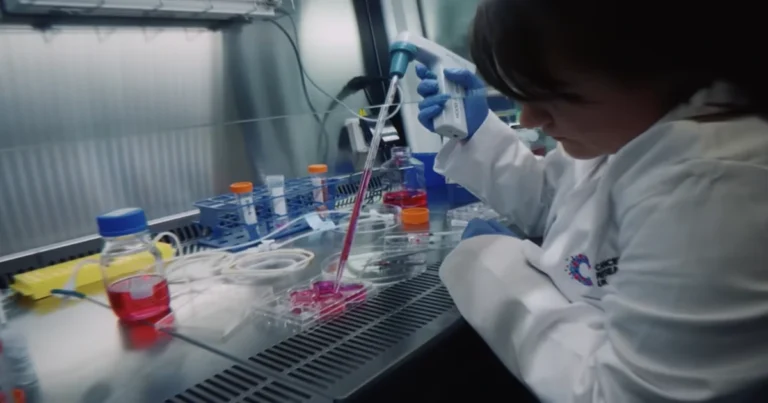
Emerging direct lithium extraction (DLE) technologies—adsorption, ion exchange, solvent extraction—offer potential solutions by selectively capturing lithium without extensive evaporation. Chinese companies and research institutions are actively developing DLE approaches tailored to Qaidam Basin brine chemistry, with pilot projects underway. Successful DLE deployment could dramatically reduce water consumption, processing time, and environmental footprint while increasing recovery rates.
Deep brine resources, while potentially vast, present additional technological hurdles. Extraction from 700–6,000 metre depths requires advanced drilling and pumping technologies, with costs substantially higher than shallow brine operations. The association with oil and gas reservoirs introduces complexities regarding well integrity, reservoir management, and potential interference between hydrocarbon and mineral extraction.
Infrastructure and Logistics
Despite significant investment, the Qaidam Basin remains relatively isolated. The Qinghai-Tibet Railway and associated highway networks provide basic connectivity, but transporting bulk minerals and energy equipment to eastern markets requires traversing thousands of kilometers of challenging terrain. The Golmud-Lhasa railway, while an engineering marvel, operates under capacity constraints due to altitude-related limitations on train operations.
Grid connectivity for renewable energy projects requires substantial transmission infrastructure investment. While ultra-high voltage (UHV) lines are being constructed to transmit Qaidam Basin power to load centers, these projects involve multi-year timelines and significant capital expenditure. Until transmission capacity fully matches generation potential, renewable curtailment may limit project economics.
Geopolitical Vulnerabilities
The Qaidam Basin’s proximity to contested borders introduces geopolitical risk. The basin lies within several hundred kilometers of the Line of Actual Control with India, the disputed Aksai Chin region, and the volatile Xinjiang Uyghur Autonomous Region. While direct military threat to the basin itself is limited by its interior location and the Himalayan barrier, regional tensions could affect logistics, workforce mobility, and investment confidence.
The basin’s development also occurs against the backdrop of international scrutiny regarding labor practices in Xinjiang and Tibet. Western consumers and governments increasingly demand supply chain transparency for critical minerals, with potential restrictions on products linked to forced labor or environmental degradation. Chinese companies operating in the Qaidam Basin must navigate these evolving regulatory landscapes to maintain market access.
V. Comparative Analysis: Qaidam vs. Global Lithium Hub
The Lithium Triangle: South America’s Enduring Advantage
Chile’s Salar de Atacama and Argentina’s Cauchari-Olaroz salares remain the global benchmarks for lithium brine production, with lower magnesium content, established infrastructure, and decades of operational experience. However, these advantages are eroding. Water scarcity in the Atacama has triggered environmental protests and regulatory restrictions on extraction rates. Argentina’s political and economic instability creates investment uncertainty. Bolivia’s vast Uyuni salt flat remains largely undeveloped due to technical and political challenges.
The Qaidam Basin offers China advantages that South American sources cannot match: political stability, infrastructure integration with domestic markets, absence of foreign exchange risk, and alignment with national industrial policy. While production costs may currently exceed Chilean levels, scale economies, technological learning, and vertical integration with downstream processing could narrow or reverse this gap.
Australia: The Hard Rock Alternative
Australian spodumene mining—primarily in Western Australia’s Greenbushes and Pilgangoora deposits—supplies the majority of global lithium raw materials through hard rock extraction. This method offers faster production cycles (weeks rather than months) and higher lithium grades than brine processing but requires substantially more energy input and generates greater environmental disturbance.
The Qaidam Basin’s brine resources, once fully developed with efficient extraction technologies, could undercut Australian spodumene on cost while offering lower carbon intensity (particularly if powered by basin renewable energy). This competitive dynamic will shape global lithium market structure in the coming decade.
North America: The New Entrant
The Salton Sea in California, Nevada’s Thacker Pass, and various Canadian projects represent emerging North American lithium sources, often promoted as “friend-shoring” alternatives to Chinese supply chains. However, these projects face regulatory, technical, and financing challenges that have delayed development timelines. The Qaidam Basin’s head start in production capacity and processing infrastructure creates a competitive moat that new entrants will struggle to cross.
VI. The Path Forward: Scenarios for Qaidam Basin Development
Scenario One: Accelerated Integration (2026–2035)
Under this optimistic scenario, China successfully deploys DLE technologies at commercial scale in the Qaidam Basin, reducing extraction costs and environmental impact while increasing output. Renewable energy capacity expands to 50+ GW, enabling green hydrogen production and powering mineral processing with near-zero carbon emissions. The basin becomes a fully integrated industrial ecosystem: raw brine extraction, lithium carbonate production, battery precursor manufacturing, and potentially cell assembly, all within a concentrated geographic area.
This scenario would establish the Qaidam Basin as the global template for critical mineral development, demonstrating that domestic resource endowments, renewable energy, and advanced processing can create supply chain resilience. Global lithium markets would shift toward greater Chinese self-sufficiency, with the potential export of processed lithium products to international markets.
Scenario Two: Constrained Development (2026–2035)
In this more cautious scenario, technological challenges with DLE and deep brine extraction limit production growth. Water constraints force extraction rate restrictions, while environmental regulations slow project approvals. Renewable energy development proceeds but faces grid integration bottlenecks. The basin remains significant but does not achieve its full potential, with China continuing to rely heavily on imported lithium raw materials.
This scenario would maintain current global lithium market structures, with Australian and South American sources remaining dominant. China’s battery industry would face continued supply chain vulnerabilities, potentially accelerating recycling investments and alternative battery chemistry research (sodium-ion, solid-state).
Scenario Three: Geopolitical Disruption (2026–2035)
A scenario involving regional conflict, severe trade restrictions, or domestic political instability could disrupt Qaidam Basin development. Border tensions with India, international sanctions related to Xinjiang or Tibet, or internal unrest could delay projects, restrict technology access, or limit market integration. In this scenario, the basin’s resources remain underdeveloped relative to potential, and global lithium supply chains fragment further.
This outcome would intensify competition for alternative lithium sources, potentially accelerating development in North America, Africa, and Europe while increasing prices and supply uncertainty for battery manufacturers globally.
VII. Implications for Global Stakeholders
For Policymakers
The Qaidam Basin’s development underscores the strategic imperative of diversified critical mineral supply chains. Nations dependent on Chinese lithium processing—essentially all major battery and EV manufacturers—must accelerate alternative source development, invest in recycling infrastructure, and support technological innovation in extraction and processing. The basin’s success or failure will directly affect global lithium availability and pricing for decades.
For Investors
The Qaidam Basin offers substantial investment opportunities in lithium extraction, renewable energy, and supporting infrastructure but with significant risks related to regulatory uncertainty, technological unprovenness, and geopolitical volatility. Investors must weigh the basin’s enormous resource potential against these constraints, with particular attention to water sustainability and environmental compliance.
For Environmental Advocates
The basin presents both challenges and opportunities for sustainable development. Current extraction methods are water-intensive and environmentally disruptive, but the potential for renewable-powered DLE and integrated industrial ecosystems offers a pathway to lower-carbon mineral production. Engagement with Chinese authorities and companies on environmental standards, transparency, and community consultation could shape development trajectories.
Conclusion: The Basin That Will Shape the 21st Century
The Qaidam Basin is more than a geological curiosity or regional resource deposit. It is a strategic fulcrum upon which global energy transition dynamics will pivot. Its lithium resources could determine whether China achieves mineral self-sufficiency or remains import-dependent. Its solar and wind potential could demonstrate whether renewable energy can power industrial-scale mineral processing at competitive costs. Its development trajectory will signal whether critical mineral extraction can be reconciled with environmental sustainability.
For the international community, the Qaidam Basin demands attention not as a distant Chinese hinterland but as a central node in global supply chains that will define economic competitiveness and national security. The policies, investments, and technologies deployed in this high-altitude desert over the next decade will reverberate through battery factories in Europe, electric vehicle showrooms in America, and energy systems worldwide.
The basin’s name, Qaidam, meaning “salt marsh” in Mongolian, belies its strategic significance. This is no mere marsh. It is a crucible where geology, technology, and geopolitics converge to shape the future of energy. Understanding the Qaidam Basin is not optional for those seeking to comprehend the contours of 21st-century power; it is essential.
The race for the Qaidam Basin’s resources is already underway. Its outcome will determine much about who powers the future and at what cost.
READ MORE:
Magical Karst Mountains of Guilin, China: Nature’s Timeless Masterpiece