
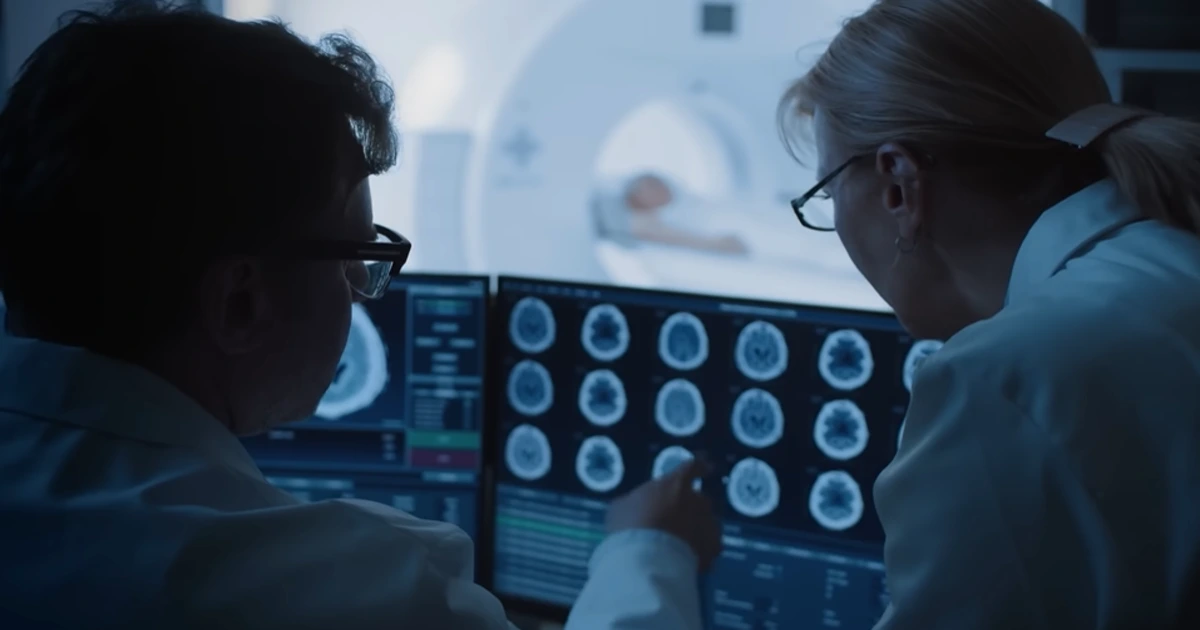
From detecting pancreatic cancer three years early to recognising 18 tumour types from a handful of tissue slides, AI is transforming medicine. Here is a comprehensive guide to the breakthroughs, the challenges, and what Europe’s AI Act means for healthcare in 2026.
Something fundamental is shifting in medicine. For most of the past century, a doctor’s ability to diagnose a disease has been limited by human perception: the naked eye examining a scan, the specialist who may or may not catch a subtle shadow on an X-ray, the pathologist reading tissue slides in a hospital that has too few specialists and too many patients. Artificial intelligence is beginning to change that equation in ways that would have seemed implausible a decade ago.
In April and May 2026, two major peer-reviewed studies pushed the boundaries of what AI-assisted cancer detection can accomplish, with one system identifying 18 distinct cancer types from just a handful of tissue slides and another detecting pancreatic cancer up to three years before conventional diagnosis. These are not laboratory curiosities. They are the leading edge of a transformation that is already reshaping clinical medicine and is about to reshape the regulatory landscape of European healthcare too.
The Scale of the Problem AI Is Being Asked to Solve
To understand why artificial intelligence in medical diagnostics matters so much, it helps to understand the scale of what human medicine is currently failing to achieve. The International Agency for Research on Cancer projects that there will be approximately 19.9 million new cancer cases globally each year, with 9.7 million cancer-related deaths.
A significant proportion of those deaths are attributable not to incurable disease but to late detection. The earlier a cancer is caught, the more treatable it typically is. The challenge has always been that early-stage cancers are often invisible to the human eye on standard imaging, or they present with ambiguous signs that neither a patient nor a doctor thinks to investigate urgently.
At the same time, the specialist workforce capable of catching those early-stage cancers is under severe strain. Hospitals across the United States are accelerating adoption of AI-driven diagnostic tools, with the US market for AI-enabled diagnostics projected to reach several billion dollars by the early 2030s, driven in large part by a staffing crunch and an ageing population. In Europe, the picture is similar. Radiologist shortages across NHS trusts and major European health systems have created backlogs in imaging interpretation that have grown longer every year, and which directly affect patient outcomes when diagnostic delays push cancers from early to late stage.
The Breakthrough Studies of 2026
PRET: Recognising 18 Cancer Types From a Handful of Slides
A research team led by the Hong Kong University of Science and Technology developed PRET, a pioneering AI pathology analysis system that can accurately recognise multiple types of cancer using only a minimal number of samples, without requiring any additional training, marking a major step forward toward the widespread adoption of intelligent pathology.
The significance of the “without requiring additional training” element cannot be overstated. One of the persistent challenges with AI diagnostic systems has been that they typically need to be trained on large, institution-specific datasets before they can be deployed in a new clinical environment. A model trained on tissue samples from hospitals in one country often performs poorly when applied to samples from hospitals in another, because of differences in slide preparation, staining technique, scanning equipment, and patient demographics. PRET is designed to operate as a plug-and-play system, meaning it can be dropped into an existing clinical workflow without needing months of local retraining.
The results showed that PRET outperformed existing methods in 20 tasks, with its Area Under the Curve, a measure of diagnostic accuracy, exceeding 97 percent in 15 of those tasks. For context, an AUC above 90 percent is generally considered excellent in clinical medicine, and above 97 percent is a level that rivals or exceeds the most experienced human specialists in the specific tasks tested.
Mayo Clinic AI: Catching Pancreatic Cancer Three Years Early
The second major study to emerge from research published in 2026 addresses one of oncology’s most intractable problems: pancreatic cancer. A Mayo Clinic AI detected pancreatic cancer up to three years before conventional diagnosis, nearly doubling specialist detection rates.
Pancreatic cancer is among the deadliest of all cancers precisely because it is almost always caught late. By the time most patients present with symptoms, the disease has typically spread beyond the pancreas, making surgical removal impossible and dramatically reducing survival odds. The five-year survival rate for pancreatic cancer remains below 12 percent globally. If an AI system can identify patients at high risk years before they would otherwise be diagnosed, and flag them for early intervention or surveillance, the implications for survival rates could be genuinely transformative.
What AI Can Already Do in Clinical Practice
The two headline studies are striking, but they sit within a much broader pattern of AI capability that has been accumulating steadily across multiple clinical domains.
Radiology and Imaging
Transformer-based AI models designed to capture long-range relationships within imaging data are enhancing tasks such as lesion detection and segmentation and can support not only detection but also risk stratification, prognosis, and treatment monitoring, all of which are central to precision oncology.
In certain applications, particularly AI-assisted mammography for breast cancer screening and lung nodule classification on low-dose CT, large externally validated studies have reported performance comparable to that of expert radiologists. That comparison, once considered aspirational, is now being made routinely in peer-reviewed literature, and in some specific tasks the AI systems are not merely comparable but superior, particularly in detecting small lesions that human radiologists might overlook during a long reading session.
Pathology
The emergence of machine learning and deep learning-based AI algorithms has resulted in significant accuracy and improved outcomes in digital pathology, with AI algorithms that combine genomics, radiomics, and other clinical parameters yielding promising results.
Digital pathology, the process of scanning physical tissue slides into high-resolution digital images for computer analysis, has opened up a new domain for AI that simply did not exist when pathologists could only examine slides under a microscope. An AI system can scan a digital slide and analyse every cell in the image in seconds, applying statistical pattern recognition that would take a human pathologist hours and that might miss subtle cellular changes that the algorithm has learned to associate with pre-malignant states.
Colonoscopy and Gastrointestinal Cancer
AI-powered systems significantly enhance polyp detection rates during colonoscopies, optimising the adenoma detection rate and improving diagnostic workflows. Colorectal cancer is one of the most preventable of all cancers if polyps are identified and removed before they become malignant, and AI assistance during colonoscopy procedures has been shown in multiple clinical trials to increase the proportion of polyps that are caught and removed.
Dermatology and Ophthalmology
The FDA has already cleared a number of AI diagnostic algorithms for use in radiology, dermatology, and ophthalmology. In dermatology, convolutional neural network models trained on hundreds of thousands of skin lesion images have demonstrated the ability to classify melanomas and other skin cancers with accuracy that matches or exceeds that of board-certified dermatologists in controlled settings. In ophthalmology, AI systems that screen fundus photographs for diabetic retinopathy have been deployed in real clinical settings in multiple countries, enabling diabetic patients in areas without specialist eye care to receive screening that would otherwise be inaccessible to them.
How These Systems Actually Work
For readers who are not familiar with the underlying technology, a brief explanation helps clarify why AI can do some of these things better than humans and why it still cannot do everything.
Modern medical AI systems are built primarily on deep learning, a class of machine learning in which artificial neural networks with many layers learn to identify patterns in data through exposure to large quantities of labelled examples. Deep learning algorithms, such as convolutional neural networks, are pivotal in improving diagnostic accuracy by identifying patterns in imaging data that may elude human radiologists.
The key word is patterns. A convolutional neural network trained on 500,000 mammograms labelled by expert radiologists learns to associate specific patterns of pixel intensity, shape, texture, and spatial relationship with the presence or absence of malignancy. It does this without being given any rules about what to look for.
Instead, it discovers the patterns that best predict the label through a mathematical optimisation process. The result is a system that can sometimes detect patterns too subtle for the human visual system to consciously register, particularly when reviewing large volumes of images under time pressure.
Recurrent neural networks, which recognise sequential patterns in speech or text, are increasingly being used in natural language processing applications, particularly in the extraction of clinically relevant data from reports on cancer pathology. This means AI is not limited to analysing images. It can also read through thousands of patient records, pathology reports, and clinical notes to identify patterns that predict disease risk or treatment response, tasks that are impossible for human clinicians to perform at scale.
The Challenges: Why AI Has Not Yet Transformed Every Clinic
Despite the impressive results accumulating in the research literature, broader clinical impact remains limited by issues of generalizability, workflow integration, regulatory uncertainty, and the need for substantial human oversight. These are not minor technical inconveniences. They are systemic challenges that will take years of careful work to resolve.
The Bias Problem
The demographic and disease characteristics of a tool’s training population may not match the characteristics of the clinical population in which it is deployed, creating bias that manifests as systematic under- or over-diagnosis for specific groups.
An AI system trained predominantly on imaging data from white European patients may perform significantly worse when applied to patients of different ethnic backgrounds, because skin tone, bone density, tissue composition, and disease presentation can differ systematically across populations. If these systems are deployed without adequate validation across diverse populations, they risk entrenching existing health disparities rather than reducing them.
The Black Box Problem
Many of the most powerful AI diagnostic systems operate as black boxes: they produce a diagnosis or a risk score, but they cannot explain in terms a doctor or patient can understand why they reached that conclusion. To address this challenge, heatmaps that highlight regions on images influencing a model’s decision have been developed, allowing clinicians to see which parts of an image the AI is attending to when it makes its assessment. But the explainability problem remains genuinely difficult, and it matters both for clinical trust and for regulatory compliance.
The Workflow Problem
AI systems are making headlines, but their integration into clinical workflows remains a practical challenge that extends well beyond the technical performance of the algorithms themselves. A system that performs excellently in a research study may fail in clinical practice because it does not integrate with a hospital’s existing electronic health record system, because it slows down rather than speeds up the radiology workflow, or because clinicians do not trust its outputs and override them reflexively. Effective deployment requires not just good technology but thoughtful implementation, training, and cultural change within clinical teams.
Europe’s Response: The EU AI Act and Healthcare
The European Union has not been a passive observer of AI’s advance into medicine. It has responded with the world’s first comprehensive legal framework specifically designed to govern artificial intelligence, and healthcare sits at the centre of that framework.
The EU AI Act classifies health AI as high-risk and sets compliance deadlines from 2027. Healthcare AI obligations under the EU AI Act are expected to be implemented by August 2nd, 2026, making it a pivotal regulatory moment for the sector.
Under the AI Act, most radiology AI tools, from diagnostic support algorithms to workflow assistants, qualify as high-risk AI. While the primary compliance burden lies with the AI provider, deployers, including hospitals and imaging centres, now have explicit responsibilities: procure only compliant solutions, maintain human oversight, log performance, and cooperate on post-market monitoring.
What does “high-risk” mean in practice? It triggers a compliance framework that includes mandatory conformity assessment, data quality requirements, human oversight obligations, and transparency requirements. In other words, a hospital cannot simply buy and deploy an AI diagnostic tool. It must ensure the tool has been assessed by an authorised body, that the training data meets defined quality standards, that a qualified human clinician remains accountable for every diagnosis the system contributes to, and that the system’s reasoning is sufficiently transparent to be audited.
Companies may benefit from a clear legal path for new AI-driven diagnostics, rather than a patchwork of national rules. The emphasis on human rights and transparency aims to avoid public backlash from AI errors, preserving patient safety. Some analysts view the AI Act as positioning Europe as a global leader in safe healthcare AI, arguing that Europe’s stringent regulation is ultimately an advantage for EU-based AI health innovators, as it sets a gold standard for safety and credibility.
Not everyone agrees. A 2025 survey by Pharmaceutical Technology found that approximately 60 percent of European healthcare companies were concerned that the compliance burden could slow innovation relative to less regulated markets. Critics argue that the same requirements that protect patients from dangerous AI could also delay the deployment of genuinely beneficial systems, creating a regulatory bottleneck at precisely the moment when AI diagnostics are maturing most rapidly.
The European Commission made €63.2 million available in April 2026 to support AI innovation in health and online safety and launched the first meeting of the European Network of AI-Powered Advanced Screening Centres in May 2026, signalling that Brussels intends to back AI diagnostic deployment alongside its regulatory framework rather than simply constraining it.
The UK has chosen a different path. Outside the EU, the United Kingdom has opted for guidance and a voluntary AI Airlock sandbox led by the MHRA and NHS partners. Experts test AI in real clinics while regulators watch. The sandbox is iterative and pro-innovation, unlike the EU’s binding law. Whether the UK’s lighter-touch approach produces faster clinical adoption without compromising safety is a question that European health systems will be watching closely over the next several years.
The Companies Leading the Transformation
The AI diagnostics market has attracted substantial investment and produced a new generation of companies operating at the intersection of computer science and clinical medicine.
PathAI, based in Boston and led by a physician-researcher CEO, works with clinical labs, biopharma firms, and academic centres around the world, specialising in digital pathology. It uses advanced technology to reduce diagnostic errors and has received FDA Breakthrough Device Designation for select applications. Paige AI, headquartered in New York, specialises in AI-powered digital pathology, supporting clinical labs, cancer centres, and biopharma organisations worldwide.
European companies are also active participants. Deepc, a Munich-based company focused on radiology AI, has been among the most vocal in advising hospitals on compliance with the EU AI Act. Kheiron Medical Technologies in London focuses on breast cancer screening with AI, and Aidence, based in Amsterdam, has developed AI tools for lung cancer detection from CT scans deployed across European health systems.
What This Means for Patients
For the tens of millions of Europeans who will interact with healthcare systems over the coming decade, AI diagnostics represent a meaningful and in some cases potentially life-saving change in the quality of care they receive.
In the most optimistic scenario, AI-assisted screening will catch cancers earlier, reduce diagnostic errors caused by fatigue or inexperience, extend specialist-level diagnostic quality to parts of the healthcare system that currently cannot access it, and free specialist time for the complex cases where human judgement is most irreplaceable.
In a more cautious view, the benefits will be uneven, with well-resourced hospitals in wealthy countries gaining access to transformative AI tools while smaller clinics and health systems in lower-income countries lag behind. The bias risks inherent in systems trained on non-diverse datasets could also mean that the patients who benefit most from AI diagnostics are not the patients who need help most urgently.
What is not in serious doubt is the direction of travel. AI systems are demonstrating performance that rivals or exceeds specialist humans in specific cancer detection tasks, and the FDA has already cleared nearly 1,000 AI diagnostic algorithms for use across multiple clinical specialties. The technology is moving from research laboratories into real clinical settings at an accelerating pace, and the question facing governments, hospitals, and regulators is no longer whether to incorporate AI into medicine, but how to do so safely, fairly, and effectively.
The Bottom Line
Artificial intelligence is not going to replace doctors. The human dimensions of medical care, the conversation between a patient and a clinician, the exercise of judgement in complex and ambiguous cases, the emotional and ethical weight of communicating a serious diagnosis, remain irreducibly human. But AI is going to make doctors significantly more capable in ways that will be measurable in lives saved and suffering avoided.
The trajectory is clear. AI systems are demonstrating performance that rivals or exceeds specialist humans in specific cancer detection tasks, and as these systems mature, the vision of AI-assisted early detection, catching malignancies when they are most curable, from routine imaging or tissue samples that would otherwise be evaluated without AI assistance, is becoming measurably closer to clinical reality.
For Europe specifically, the coming months mark a crucial inflection point. August 2026 brings the first binding deadlines of the EU AI Act for medical AI systems. The choices that hospitals, regulators, and governments make in this period about which systems to deploy, which to scrutinise, and which to reject will shape the continent’s trajectory in AI-assisted medicine for a generation.
Related Articles:







[…] How AI Is Revolutionising Medical Diagnostics in 2026 […]
[…] How AI Is Revolutionising Medical Diagnostics in 2026 […]