
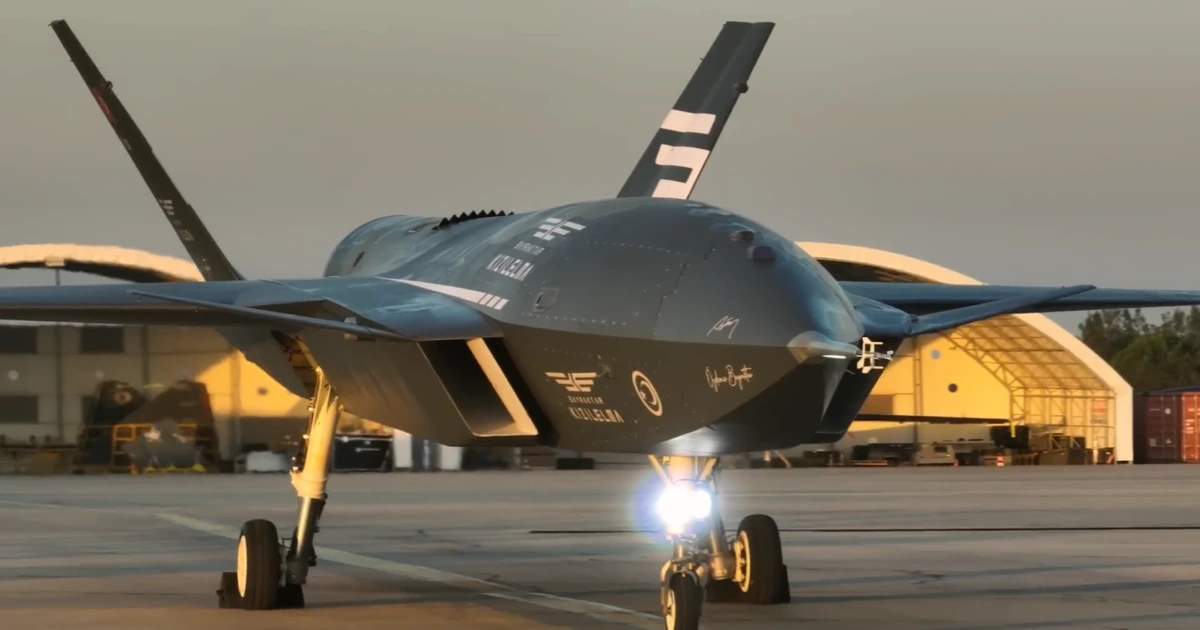
Turkey’s Bayraktar Kızılelma is now in serial production and entering Turkish Armed Forces service. Here is a complete breakdown of its design, capabilities, and what it means for NATO, the Eastern Mediterranean, and global drone warfare.
For decades, the benchmark for air combat power was straightforward: the nation with the best pilots flying the most advanced jet fighters held the advantage. That assumption is being challenged in a fundamental way by a machine rolling off a production line in Turkey. The Bayraktar Kızılelma is not a drone in the conventional sense.
It is an autonomous unmanned combat aircraft with the performance profile of a jet fighter, the stealth characteristics of a fifth-generation warplane, and the ability to engage enemy aircraft beyond visual range without a human pilot on board. It is entering service with the Turkish Armed Forces in 2026, and its arrival is already reshaping how analysts think about power in one of the world’s most contested regions.
What Is the Bayraktar Kızılelma?
The name Kızılelma translates from Turkish as “Red Apple”, a term rooted in Ottoman mythology representing an ideal homeland or ultimate goal just beyond the horizon. The symbolism is deliberate. This aircraft represents the furthest frontier of what Turkey’s defence industry has yet achieved.
Developed by Baykar, the Turkish private defence firm that also produces the globally deployed Bayraktar TB2, the Kızılelma is an unmanned stealth multirole fighter based on artificial intelligence, designed to operate as a loyal wingman alongside manned aircraft or independently. It made its maiden flight on December 14, 2022, and is now entering limited operational service in 2026. It is Turkey’s first domestically made multipurpose unmanned combat aerial vehicle, marking a milestone in the country’s local defence industry.
What separates the Kızılelma from anything Turkey has previously built is the combination of jet propulsion, stealth design, AI-driven autonomy, and air-to-air combat capability all rolled into a single platform. No other country has put such a system into operational service.
Design and Technical Specifications
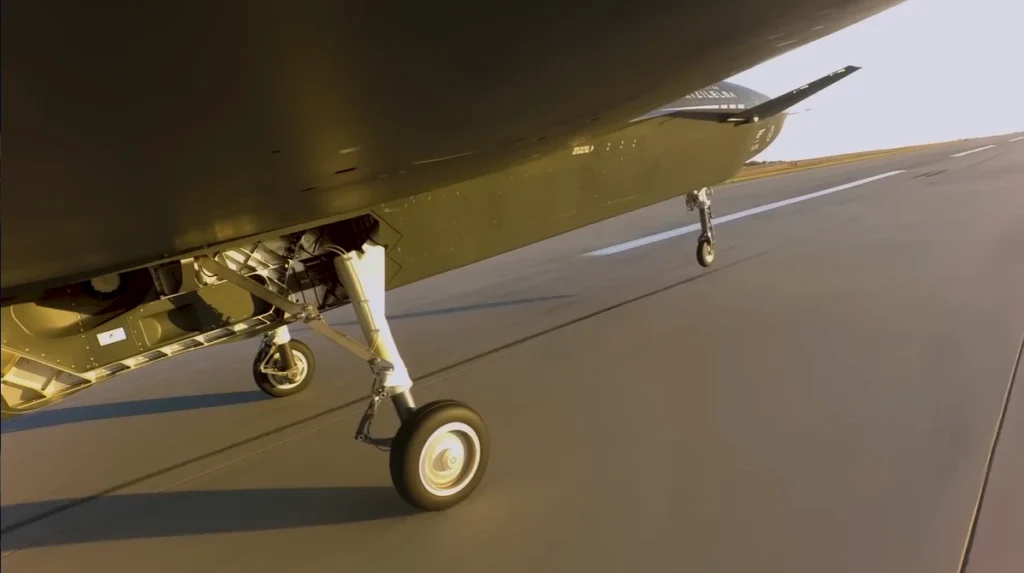
The Kızılelma’s airframe is purpose-built for low detectability and high performance. The airframe features a low radar cross-section design with a canard-delta configuration and two vertical stabilisers, constructed for carrier-capable operations specifically optimized for the TCG Anadolu amphibious assault ship without the requirement for a catapult system.
The aircraft is 14.5 metres long with a wingspan of 10 metres. Its maximum takeoff weight is 6 tonnes, with 1.5 tonnes allocated for weapons payload. Munitions are stored in internal compartments to preserve the stealth profile.
Internal weapon compartments maintain low observability. Armament is carried across two internal stations and six external wing hardpoints, giving the aircraft considerable flexibility in mission configuration.
The Kızılelma exists in three distinct variants:
The Kızılelma-A is the subsonic version powered by a single Ivchenko-Progress AI-25TLT turbofan engine. The Kızılelma-B is the supersonic variant powered by a single AI-322F afterburning turbofan engine. The Kızılelma-C is the most powerful version, featuring a twin-engine configuration with two AI-322F engines.
In its current configuration, Kızılelma achieves a cruise speed of approximately Mach 0.6, topping out near Mach 0.9. Its combat radius is approximately 500 nautical miles, or 926 kilometres, with a service ceiling around 25,000 feet. Future supersonic variants, once the afterburning engine versions are fully cleared, will push well beyond those numbers.
The aircraft’s sensor suite is equally formidable. It is most likely equipped with the MURAD-200A AESA radar onboard, a domestically developed active electronically scanned array system produced by Turkish firm Aselsan. This gives the Kızılelma a genuine beyond-visual-range detection and engagement capability that is normally associated only with top-tier manned fighter jets.
The November 2025 Test That Changed Everything
For years, drone warfare has been associated with strike missions against ground targets: precision bombing, reconnaissance, and the suppression of enemy ground forces. The Kızılelma broke that paradigm in a landmark test that took place over the Black Sea in November 2025.
In a test near Sinop, Kızılelma fired an indigenous Gökdoğan missile and successfully destroyed a jet-powered target, marking the first time an unmanned fighter has completed a full radar-guided beyond-visual-range air-to-air kill.
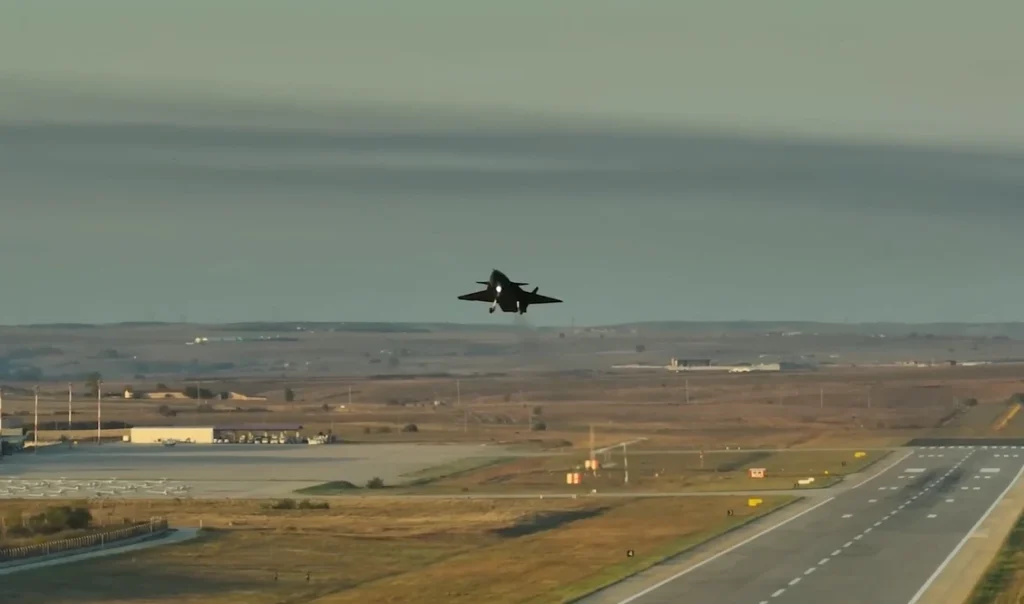
The significance of that test cannot be overstated. UCAV programmes historically emphasised strike missions rather than autonomous aerial combat operations. That event potentially alters doctrinal assumptions regarding future force structures and pilot survivability calculations. An unmanned platform that can hunt and destroy other aircraft autonomously is not just a new weapon. It is a different category of weapon, one that forces every air force in the world to reconsider how it plans for conflict.
Operational testing has also included autonomous formation flights. On December 17, 2025, two Kızılelma aircraft performed a close-formation flight using AI-driven autonomy, demonstrating the platform’s ability to coordinate with other unmanned systems without human intervention.
The TCG Anadolu: A Carrier Built for the Drone Age
The Kızılelma does not operate in isolation. Its most strategically significant deployment context is aboard the TCG Anadolu, Turkey’s amphibious assault ship that has been progressively transformed into the world’s first dedicated drone carrier.
The vessel is now configured to carry up to 80 drones, including the TB3 and the Kızılelma, with the ability to control between 10 and 15 armed drones simultaneously. The Kızılelma’s catapult-free carrier takeoff capability is not an afterthought. It was designed into the aircraft from the outset to match the Anadolu’s short-deck configuration.
Recent modifications to the TCG Anadolu have added multiple large satellite communication antennas, significantly increasing bandwidth capacity for persistent ISR operations, real-time UAV video feeds, and network-centric command. The new antenna architecture effectively turns TCG Anadolu into a UAV carrier and operations hub rather than a traditional helicopter assault ship.
The combination of the Anadolu and Kızılelma gives Turkey something no other country in its immediate neighbourhood possesses: a mobile, sea-based platform capable of projecting autonomous air combat power across the Eastern Mediterranean, the Aegean, the Black Sea, and beyond. In February 2026, TCG Anadolu participated in NATO’s Steadfast Dart exercise in the Baltic Sea, where it was identified as the largest ship in the NATO fleet. An aircraft carrier full of autonomous combat drones sailing under the NATO flag is a sight that would have seemed improbable a decade ago.
What It Means for the Turkish Military
The Kızılelma’s arrival transforms Turkey’s military options in several concrete ways.
First, it fills the capability gap left by Turkey’s exclusion from the F-35 programme. After Ankara purchased the Russian S-400 air defence system in 2019, Washington removed Turkey from the F-35 Joint Strike Fighter consortium, denying the Turkish Air Force access to the most advanced manned stealth fighter in Western service. That exclusion remains in place, though 2025 and 2026 have seen renewed negotiations regarding a potential return or alternative acquisition. In the meantime, the Kızılelma provides Turkey with a domestic stealth platform capable of many of the missions originally envisioned for the F-35 in Turkish service.
Second, it dramatically expands Turkey’s options for suppression of enemy air defences, the most dangerous mission category in modern air warfare. Kızılelma is ideally suited for suppression of enemy air defences, deep-penetration strikes, maritime strike operations from carriers, and loyal-wingman support for manned aircraft. Sending an unmanned platform into heavily defended airspace to destroy radar and missile systems before manned jets follow removes the most consequential risk from those missions: the loss of a pilot.
Third, it cements Turkey’s position as a genuine defence industrial power. Baykar’s chairman noted that Turkey is the first country in the world to mass-produce unmanned aerial vehicles and currently occupies 65 percent of the global UAV market as of 2025. The Kızılelma is the apex of that production ecosystem, built with Turkish airframes, Turkish radar systems from Aselsan, and Turkish weapons from Roketsan.
Baykar’s trials also reflect Turkey’s push toward a fully domestic defence supply chain. The company is developing the Kızılelma airframe, while ASELSAN and ROKETSAN are responsible for the fighter’s guidance systems and munitions, respectively.
The Geopolitical Picture: Eastern Mediterranean and Beyond
The Kızılelma does not exist in a political vacuum. It enters service at a moment of heightened tension across Turkey’s strategic neighbourhood, and its capabilities land directly in the middle of several unresolved disputes.
Turkey, Greece, and the Blue Homeland Doctrine
Since 2006, Ankara has treated the waters surrounding Turkey as a form of national territory through its Blue Homeland doctrine, elevating maritime disputes with Greece and Cyprus into existential claims. This vision envisions Turkey as a maritime power controlling expansive zones across the Black Sea, the Sea of Marmara, the Aegean, and the Eastern Mediterranean.
Turkey has already deployed armed drones in northern Cyprus, systems capable of targeting Israeli gas rigs, naval assets, and critical infrastructure. Adding to regional concerns, Ankara has deployed ATMACA anti-ship missiles with a 200-kilometre range covering Israel’s offshore energy fields. The Kızılelma, deployable from TCG Anadolu anywhere in the Mediterranean, takes those capabilities several orders of magnitude further.
Turkey’s actions have undermined energy cooperation projects that could contribute to Europe’s energy security, discouraged investment, weakened diplomatic coordination, and intensified mistrust among NATO allies at a time when Western cohesion is already under strain. For Greece and Cyprus in particular, a Turkey operating autonomous carrier-based jet fighters represents a qualitative shift in the military balance that no amount of diplomatic goodwill meetings can paper over.
The NATO Paradox
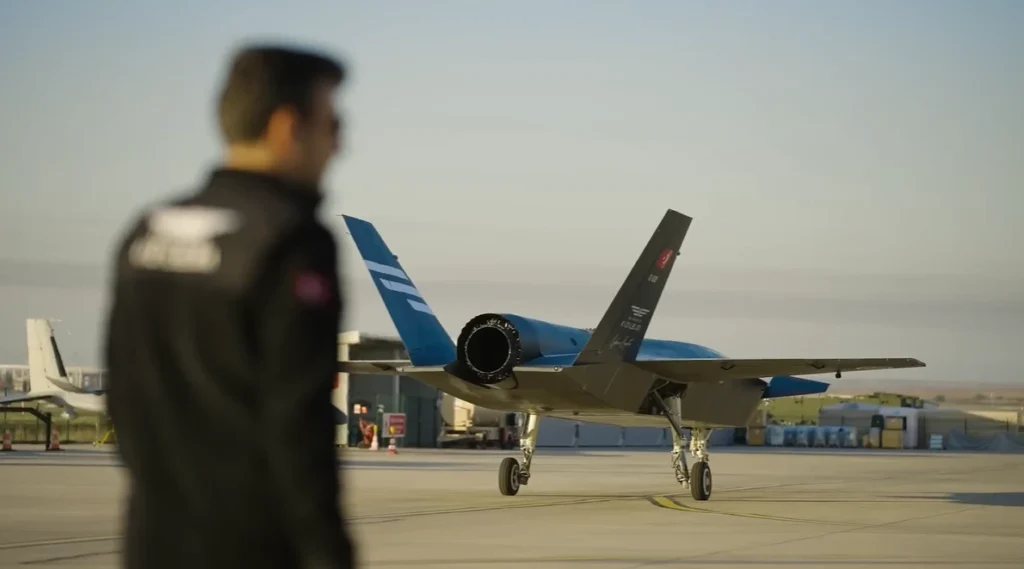
The TCG Anadolu, carrying Kızılelma and TB3 combat drones, participated in NATO’s Steadfast Dart exercise in 2026, which creates one of the more striking paradoxes in contemporary geopolitics. The same platform Turkey could theoretically use to project power against fellow NATO members Greece and Cyprus is also participating in NATO exercises in the Baltic Sea. Turkey uses its NATO membership as both a shield and a lever, and the Kızılelma makes that leverage considerably more powerful.
Turkey’s increasingly assertive posture embodies a dangerous mix of nationalism, militarism, and geopolitical revisionism for a NATO member situated at a strategic crossroads, challenging the trust essential to collective defence.
The Export Dimension
Baykar’s drones have already been exported to at least 30 countries and have been used in conflicts in Azerbaijan, Libya, and Ukraine. The TB2 rewrote the outcome of the Nagorno-Karabakh conflict in 2020 and became one of the most widely studied weapons systems of the early 21st century. The Kızılelma represents the next tier of that export pipeline.
Turkey is already in discussions to export a drone carrier ship like TCG Anadolu to Gulf nations, with potential buyers including Saudi Arabia, Qatar, the UAE, and Kuwait. A Gulf state operating its own drone carrier equipped with Kızılelma aircraft would represent a fundamental change in regional airpower dynamics across the Middle East.
The Pakistan Air Force is also examining the Kızılelma as a candidate system, a development that analysts in New Delhi are watching with considerable attention given the ongoing military competition between Pakistan and India in the subcontinent.
Baykar has also moved aggressively into the European defence market, acquiring Italy’s Piaggio Aerospace in 2024 and forming a partnership with Leonardo in 2025. These steps give the company a production and development presence inside the European Union, including plans to relaunch manufacturing and produce unmanned systems in Italy.
That move raises a question that European defence planners are increasingly confronting: in a world where the most capable drone systems are Turkish and where Turkey’s strategic interests do not always align with European ones, what does dependence on Turkish defence technology mean for the continent’s security?
The Loyal Wingman Wildcard
The Kızılelma is one of the options under consideration as a loyal wingman drone for the GCAP and Tempest sixth-generation fighter jet being developed by the United Kingdom, Japan, and Italy. If that partnership were to materialise, it would mean a Turkish unmanned combat aircraft flying in formation with the next generation of Western manned fighters, sharing data, extending strike range, and potentially suppressing enemy air defences ahead of the crewed jets it accompanies. For Ankara, such a role would represent full rehabilitation into the Western defence ecosystem at the highest possible level.
The Bigger Picture
The Bayraktar Kızılelma is the most consequential piece of military hardware to enter European or Middle Eastern service in years. It validates Turkey’s ambition to become a genuine defence industrial power, it fills capabilities that Ankara lost when it was excluded from the F-35 programme, and it provides the Turkish military with options in the Eastern Mediterranean and beyond that simply did not exist before.
For Europe, it presents a dual challenge. As a NATO ally, Turkey brings capability and capacity that strengthens the alliance’s collective posture, as the TCG Anadolu’s participation in Baltic exercises demonstrates. As a strategic actor pursuing the Blue Homeland doctrine in waters claimed by EU member states, Turkey armed with carrier-based autonomous fighter drones is a very different proposition than Turkey operating conventional warships.
The Kızılelma is not just a weapon. It is a statement about who Turkey intends to be in the decades ahead. And whether that statement reassures or unsettles you depends almost entirely on where you are standing.
Europeans24 covers European defence, geopolitics, and international security. Follow us for ongoing analysis of Turkey’s military modernisation and its implications for NATO and the Eastern Mediterranean.









[…] Bayraktar Kızılelma Explained: Turkey’s Unmanned Fighter Jet and the New Age of Drone Warfar… […]