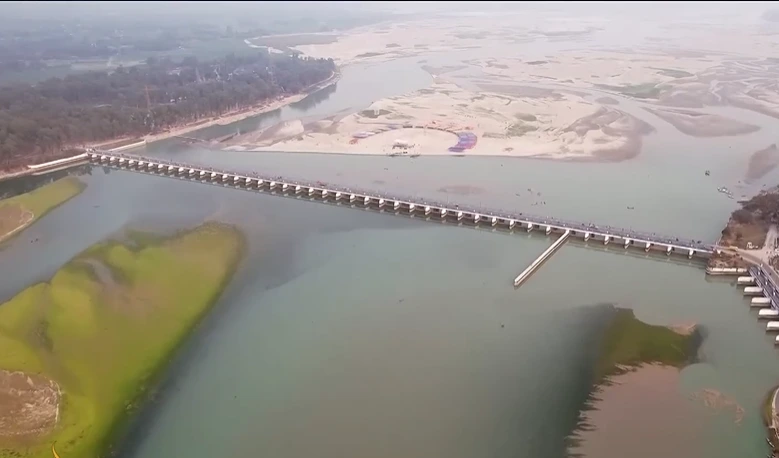
Bangladeshi Prime Minister Tarique Rahman has officially requested China’s help for the US$1 billion Teesta River restoration project. Read how this bold move near India’s sensitive Siliguri Corridor impacts regional geopolitics and water security.
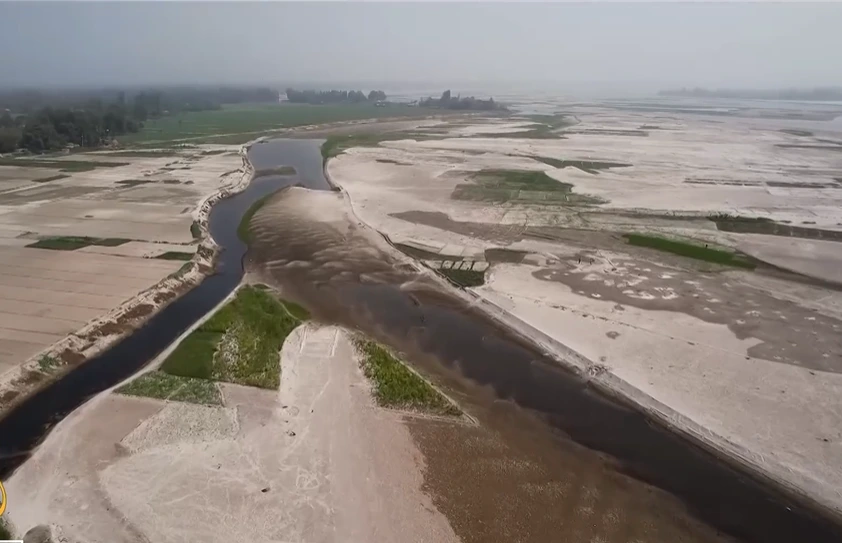
Every dry season, the northern agricultural heartland of Bangladesh faces the same parching reality. The Teesta River, which serves as a lifeblood for millions, shrinks a little more, dragging local livelihoods and food security down with its receding waters.
For years, Dhaka has pleaded with New Delhi for a formal water-sharing treaty to guarantee downstream flows during these lean months. Now, driven by growing desperation, Bangladesh is changing its strategy and looking toward Beijing instead.
Earlier this month, Bangladesh’s new Prime Minister, Tarique Rahman, who took office in February, formally requested China’s assistance to revive the long-delayed Teesta River restoration project. The bold diplomatic move has sent ripples through South Asia, serving as a direct challenge to India’s traditional influence along its sensitive northern periphery.
The Human Cost of a Fading Waterway
The Teesta River originates in the eastern Himalayas, snaking through the Indian states of Sikkim and West Bengal before crossing the border into northern Bangladesh, where it runs for more than 102 kilometres (63 miles).
The proposed US$1 billion Teesta River Comprehensive Management and Restoration Project aims to dredge and rehabilitate this vital waterway to prevent massive seasonal flooding and severe dry-season droughts.
For the people living along its banks, the lack of water management is an existential crisis.
“The Teesta project is an issue of survival for millions of our population,” notes Lailufar Yasmin, an international relations professor at the University of Dhaka. “Reduced water flow during the lean months devastates harvests, directly threatening food security and the economic survival of entire northern communities.”
Yasmin points out that despite India’s stated “Neighbourhood First” foreign policy, New Delhi has Materially failed to take Bangladesh’s downstream water crisis seriously. Without a signed treaty guaranteeing upstream water flows, Bangladesh has been left to watch its crops wither year after year.
The Shadow of the Chicken’s Neck
Dhaka’s decision to invite Chinese infrastructure investment into this specific region is highly sensitive due to its geographic location. The Teesta River flows dangerously close to the Siliguri Corridor, a narrow sliver of land in West Bengal often referred to as the “Chicken’s Neck”.
Measuring just 20 kilometers wide and 60 kilometers long, this chokepoint is surrounded by Nepal, Bhutan, and Bangladesh. It serves as India’s sole overland connection to its eight northeastern states, making it a highly vulnerable military and strategic chokepoint.
New Delhi’s deep discomfort with Chinese infrastructure projects along its borders is well documented. However, analysts suggest that India’s own bureaucratic inertia is to blame for its shrinking regional influence.
Aparna Pande, a senior India and South Asia fellow at the Washington-based Hudson Institute, highlights this ongoing systemic issue:
“Many of these neighbours have historically asked India for support, but sometimes it takes too long to approve or start the project, so they turn to other countries. All of them know India views with askance any Chinese investment and involvement in infrastructure projects.”
Bureaucracy vs. Blueprints: The Shift to Beijing
The official pivot toward Beijing was solidified on May 6, 2026, during a high-level meeting in Beijing between Bangladesh Foreign Minister Khalilur Rahman and Chinese Foreign Minister Wang Yi. During the talks, Wang reaffirmed Beijing’s readiness to align its expansive Belt and Road Initiative (BRI) with Bangladesh’s national development agenda.
The operational contrast between the two regional superpowers is stark. The Power Construction Corporation of China is already moving rapidly and is expected to submit a finalized comprehensive master plan for the Teesta project by the end of this year. India, by contrast, remains stalled at the preliminary stage, offering only to conduct technical and conservation studies.
A Project Matrix: How India and China Compare
| Feature | India’s Approach | China’s Approach |
| Project Status | Stalled at proposing basic technical and conservation studies | Actively drafting a comprehensive master plan due by late 2026 |
| Financial/Strategic Focus | Focused on historical river rights and preserving bilateral hegemony | Aligned with the multi-billion dollar Belt and Road Initiative (BRI) |
| Geopolitical Sensitivity | Views the region as a vital homeland defense chokepoint (Siliguri Corridor) | Views the region as an opportunity to expand economic and infrastructure footprints |
| Water-Sharing Record | Reluctant to sign dry-season flow guarantees due to regional state politics | Acts as an external engineering and funding partner without upstream control |
A Rare Political Window and Border Friction
Paradoxically, recent domestic political shifts within India have cracked open a rare diplomatic window that could resolve the water crisis peacefully. For decades, the state government of West Bengal, historically held by opposition parties, vigorously blocked any water-sharing agreement with Dhaka. Local politicians argued that rationing the Teesta’s lean-season flow would deprive their own citizens of drinking and agricultural water.
However, a major shift occurred last month when Indian Prime Minister Narendra Modi’s Bharatiya Janata Party (BJP) swept to a historic victory in West Bengal, becoming the first central ruling party to control the state government in nearly five decades.
With the BJP now holding power in both New Delhi and West Bengal, the institutional excuses for delaying a treaty have dissolved. “Now that they are in power there as well, India should show positive intent in resolving the Teesta water-sharing treaty,” says Shafi Md Mostofa, a security studies scholar at the University of Dhaka. “Otherwise, Bangladesh naturally wants to look for other options.”
Yet, challenges remain. The BJP’s aggressive domestic focus on anti-immigrant rhetoric, including crackdowns and forced expulsions of undocumented Bangladeshis along the border, threatens to sour diplomatic relations. Aparna Pande warns that if India wishes to remain a dominant regional power and push back against China, it must ensure its internal political rhetoric does not actively damage its broader foreign policy goals.
The Strategic Path Forward for Dhaka
To prevent an aggressive backlash from New Delhi, security experts advise the Rahman administration to tread carefully and maintain strict diplomatic transparency. If Bangladesh frames the Teesta restoration as a strategic weapon or a geopolitical stunt backed by China, India will likely react with harsh economic or political countermeasures.
The consensus among regional scholars is that Dhaka must treat the initiative strictly as a humanistic climate adaptation and river management project. Elizabeth Roche, an associate professor at O.P. Jindal Global University, stresses that the safest path forward requires total transparency between all three nations.
By keeping the technical cooperation open and leaving room for Indian participation, Bangladesh can stabilize its northern agricultural heartland without turning the Teesta River into the next major flashpoint of the South Asian cold war.