
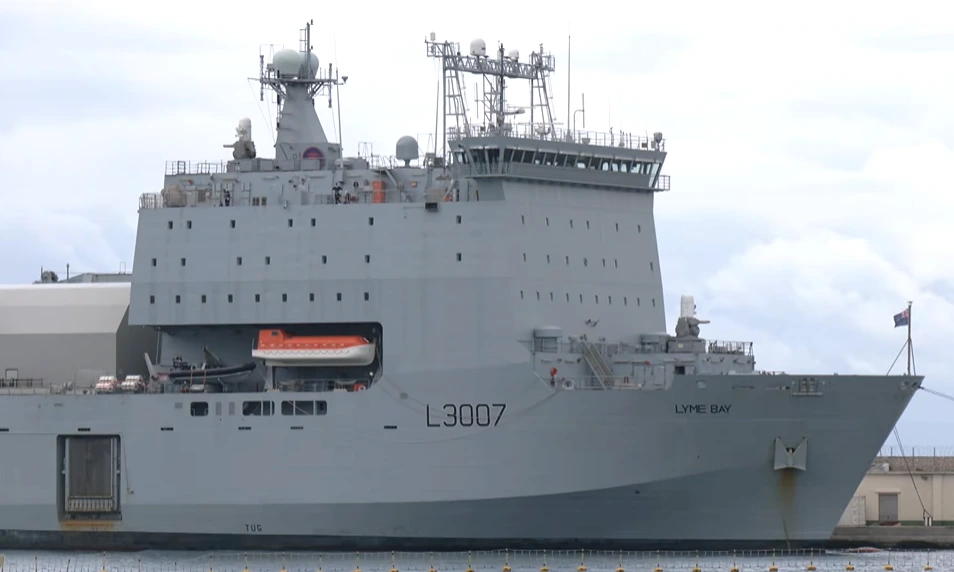
Aboard the RFA Lyme Bay, British sailors are on standby for a potential mine-clearing mission in the Strait of Hormuz. The Royal Navy is using autonomous drone technology to prepare for the reopening of the world’s most critical shipping lane.
On the sun-drenched deck of the RFA Lyme Bay, the atmosphere is one of disciplined, high-stakes anticipation. Hundreds of British sailors stand ready, their equipment calibrated and their training sharpened, awaiting a deployment that remains as critical as it is uncertain.
They are the frontline of a potential international mission to clear the Strait of Hormuz, the world’s most vital maritime artery of the hidden dangers left in the wake of recent regional conflict.
For months, this narrow waterway has been effectively paralysed. The crisis has throttled global energy supplies, trapped hundreds of vessels, and sent shockwaves through international markets. Now, as diplomatic efforts gain momentum, the Royal Navy is preparing for the day the fighting stops, aiming to be the first to ensure that commercial traffic can move safely once more.
A Complex and Hidden Threat
While the world watches the progress of peace talks, the technical challenge facing the Navy remains immense. Cmdr Gemma Britton, who leads the Royal Navy’s Mine and Threat Exploitation Group, describes the potential threat as both diverse and lethal.
“Iran could have a huge variety of mines throughout the strait,” she explains. The dangers range from sophisticated seabed devices triggered by sound, movement, or light, to more traditional rocket-propelled or cabled mines.
To counter this, the Navy has unveiled an arsenal of autonomous technology. Aboard the RFA Lyme Bay, reporters were shown state-of-the-art sea drones equipped with high-resolution sonar. These systems can map the seabed in a fraction of the time it would take a traditional crewed vessel, producing detailed imagery of everything from abandoned fishing traps to potential ordnance, all while keeping sailors at a safe distance from the danger zone.
The “Absolute Certainty” Requirement
The mission, should it be given the green light, is focused on a clear priority: clearing a safe transit lane to allow the hundreds of ships currently stranded in the Gulf to depart, followed by a separate lane for incoming traffic. However, Armed Forces Minister Al Carns emphasizes that this is not a short-term fix.
“Clearing the entire strait could take months or years,” Carns told reporters. He notes that the primary obstacle is not just the physical removal of mines, but the restoration of confidence for commercial insurance companies, who currently view the strait as a “war risk” zone.
“Commercial shipping firms need absolute certainty to get vessels traveling through the strait again,” Carns said. “That is what this capability will provide.”
The Waiting Game
Despite the operational readiness, the mission currently exists in a state of suspended animation. The deployment of the RFA Lyme Bay, which is set to link up with the destroyer HMS Dragon and various allied naval assets, depends entirely on the successful conclusion of a peace agreement that is still being negotiated.
As the world waits, the crew of the Lyme Bay continue to train, trial remotely operated vehicles, and refine the tactics that may eventually turn the tide on the maritime blockade. For now, they remain “really, really ready”, a silent, technological watchman positioned at the edge of one of the most volatile regions on Earth.
Whether they are eventually deployed to clear the mines themselves or simply to provide the reassurance needed for trade to resume, their presence represents a core tenet of British maritime strategy: ensuring the freedom of navigation, even in the most challenging of times.