
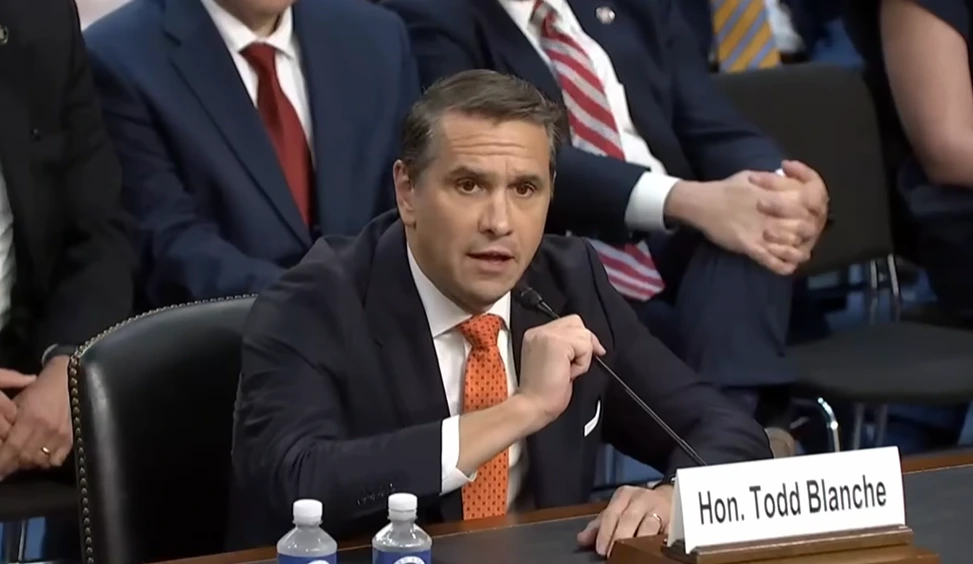
President Trump’s attorney general nominee, Todd Blanche, faces an uncertain future in the Senate after refusing to commit to direct meetings with Epstein survivors.
President Donald Trump’s nomination of Todd Blanche for Attorney General has hit a significant roadblock, with the Senate confirmation process teetering on the edge of failure. The primary point of contention: a demand from key lawmakers that Blanche meet directly with survivors of the late financier Jeffrey Epstein, a move the nominee has thus far been unable to guarantee.
The standoff reached a boiling point during Wednesday’s Senate Judiciary Committee hearing. Under intense pressure from Committee Chairman Dick Durbin, Blanche was pressed to commit to a personal sit-down with ten Epstein survivors who were present in the hearing room. Durbin demanded a pledge that the nominee would hear the victims’ cases regarding the ongoing oversight of the so-called “Epstein files” within 30 days.
The Legal Hurdle
Blanche, who has served as acting attorney general since April 2026 following the abrupt firing of his predecessor, Pam Bondi, cited strict legal protocols as the reason for his hesitation. “If they have lawyers, as you know, I am prohibited from meeting directly with them,” Blanche told the committee.
While the nominee noted that he and other Department of Justice officials have engaged with the survivors’ legal counsel, he stopped short of bypassing established procedural boundaries to meet the group one-on-one.
Instead, Blanche offered that the head of the DOJ’s human trafficking task force, an official with extensive experience on Epstein-related cases, was available to speak with them immediately. For members of the committee, this offer fell short of the personal accountability they are demanding from the administration’s top legal pick.
Mounting Scrutiny
The tension surrounding the nomination reflects the broader climate of mistrust regarding the Justice Department’s management of files tied to Epstein’s criminal activity. The controversy has already claimed the career of Blanche’s predecessor, Pam Bondi, who was dismissed amid mounting criticism over her perceived lack of transparency regarding the investigation.
Blanche’s nomination is already facing fierce opposition, with over 1,200 former DOJ employees signing a letter urging the Senate to reject his confirmation. Critics point to his history as a lead defence attorney for President Trump, representing him in both the Manhattan “hush money” conviction and federal cases brought by special counsel Jack Smith – as evidence that he lacks the necessary independence to helm the nation’s primary law enforcement agency.
A Narrow Path Forward
As the confirmation hearings continue, the “Epstein factor” has become a pivotal litmus test for senators, particularly moderate Republicans who have expressed discomfort with the administration’s handling of the files.
Whether Blanche can navigate this political minefield depends on his ability to address the concerns of the committee without violating the very legal protocols he is sworn to uphold.
For now, the nomination remains in a state of deep uncertainty. With the Senate Finance Committee also signalling scrutiny over the nominee’s past statements and involvement in administration-led “anti-weaponisation” funds, Blanche’s path to becoming the permanent Attorney General appears increasingly perilous.
The coming days will reveal whether the administration is willing to bend on the accuser meeting in exchange for securing the support required for a successful confirmation vote.









[…] who had been running the department in an acting capacity since April following the departure of former Attorney General Pam Bondi, faced weeks of grueling legislative […]