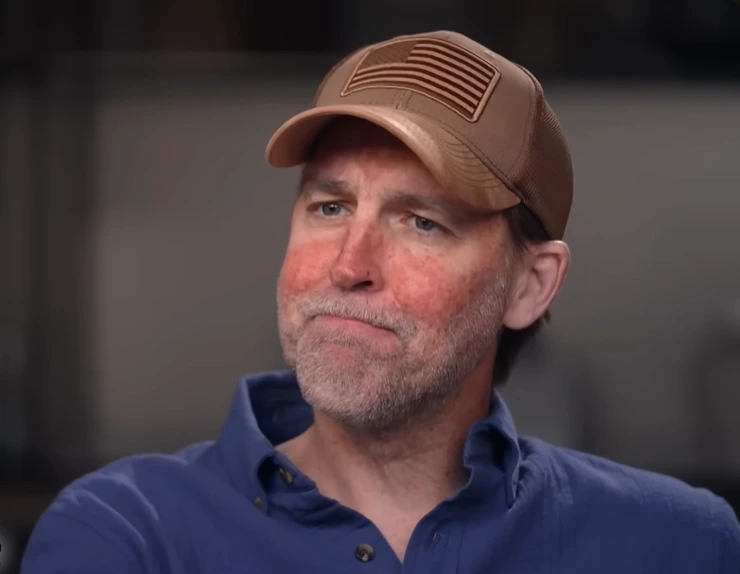
BEN SASSE 60 MINUTES INTERVIEW: Former Senator Ben Sasse discusses his stage 4 pancreatic cancer diagnosis, his 76% tumour reduction via the drug daraxonrasib, and his reflections on family and faith in an emotional interview with Scott Pelley.
In a deeply personal and sobering 60 Minutes interview that aired Sunday night, former Nebraska Senator Ben Sasse opened up to Scott Pelley about his battle with stage-four pancreatic cancer.
Diagnosed in December 2025 and originally given just three to four months to live, the 54-year-old Republican leader is now living on what he calls “extended time”, a gift he attributes to a combination of “providence, prayer, and a miracle drug.”
The conversation, which ranged from the clinical realities of his metastasized tumors to a scathing critique of a “tribalistic” Congress, offered a rare glimpse into the mind of a statesman grappling with his own mortality while still deeply concerned for the country’s future.
The “Miracle” in the Lab: Daraxonrasib
Sasse revealed that his survival beyond the initial three-month window is largely due to an experimental oral medication called daraxonrasib, developed by Revolution Medicines. The drug, which targets specific proteins that drive tumor growth, has had a dramatic impact on his condition.
“I have a massive 76% reduction in tumor volume over the last four months,” Sasse told Pelley. “Maybe I’m going to crank and live a year instead of a handful of months, and if so, I’d feel incredibly blessed.”
| Statistic | Details |
| Initial Life Expectancy | 3–4 Months (Diagnosed Dec 2025) |
| Current Status | Metastasized (Lung, Liver, Vascular, Spine) |
| Tumor Reduction | 76% (credited to Daraxonrasib) |
| Median Survival (Drug) | 13.2 Months (vs. 6.7 for Chemotherapy) |
The Pain of the “Stealthy Disease”
Before the experimental treatment took hold, Sasse described a period of excruciating physical agony. He recounted nights spent in the shower with water turned up to a scalding heat, attempting to drown out the “throbbing” of tumors pressing against his spine.
“Death is wicked. Death is evil,” Sasse said, reflecting on his Christian faith and the harsh reality of his diagnosis. “But it’s a touch of grace because it forces me to tell the truth. The lie I want to tell myself is that I’m the centre of everything and I’m going to be around forever. I can’t.”
A Father’s Final Prayers
While Sasse discussed the “smack-down nonsense” of national politics, his most emotional reflections were reserved for his family: his wife of 31 years, Melissa, and their three children. He expressed the particular sting of knowing he likely won’t be there to walk his daughters, ages 24 and 22, down the aisle, or to see his 14-year-old son transition into manhood.
“I want to give him more advice than he wants, and I want to put my arm on his shoulder, and I want his shoulders to get taller,” Sasse remarked. “But it’s not a surprise to God. We’re all on the clock.”
A Parting Wish for America
Sasse used the platform to urge Americans to “turn off the devices” and return to the dinner table to discuss the “grand questions” of life. He criticized the current political climate for ignoring fundamental shifts—such as the disruption of work by AI—in favor of shallow, performative outrage.
His parting advice to his former colleagues in Washington was characteristically blunt: “The best thing you can do is be called dad or mom, lover, neighbor, friend. Being a Senator? It should be your 11th calling, or maybe your sixth, but never your top.”