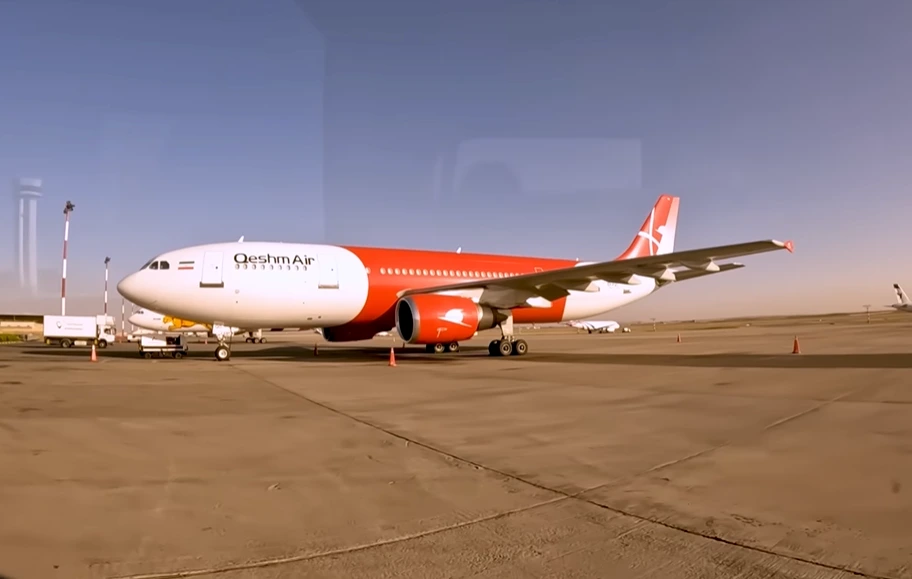
The first civilian flights have departed Iran, with destinations including Istanbul, Muscat, and Mecca in Saudi Arabia. Meanwhile, the aviation authority has analysed the battle damage, which is huge.
Tehran’s international airport restarted foreign flights on Saturday. The state news agency IRNA and the state broadcaster IRIB stated that the first flights had left Imam Khomeini Airport for Istanbul (Turkey), Muscat (Oman), and Medina (Saudi Arabia). The link to Medina, in particular, permits devoted Muslims to resume their journey to Mecca.
Iranian airspace had already been essentially blocked to civilian international travel following the beginning of direct military confrontations between the United States, Israel, and Iran on February 28. Western airlines have avoided the region since then. The reopening comes after a truce between the United States and Iran, negotiated by Pakistan on April 8, 2026.
On April 20, the Iranian Civil Aviation Authority had already opened the airport in Mashhad, in the northeast of the country, for international flights. This was intended to relieve the pressure on the hub in Tehran.
Despite the opening, European airlines, including the Lufthansa Group, continue to avoid Iranian airspace. The stated reasons include the unsettled environment in the Middle East and an increased risk to civil aircraft.
According to the Financial Times (FT), Hamid Reza Sanei, the deputy head of the civil aviation authority, stated on state television on Wednesday that most of the country’s airports had been bombed, sometimes the runways, sometimes the buildings, but that the damage could be repaired.
He reported that four control towers were directly struck, as well as twelve civilian radar systems and other navigation systems that appeared to have been destroyed. Many aircraft from the civilian fleet were also apparently destroyed.
Even before the war, Iran’s civilian and military aviation was considered outdated due to years of sanctions.