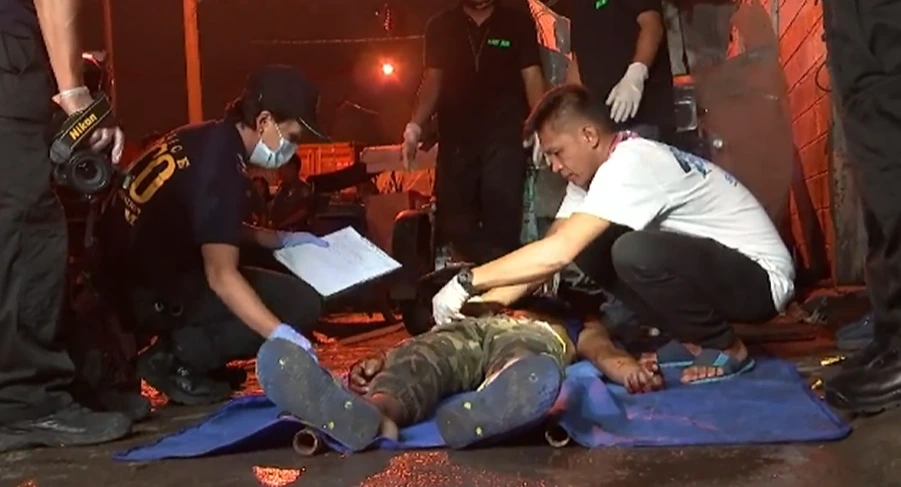
The Davao Death Squad killed over 1,400 people under Rodrigo Duterte’s mayorship and became the template for a national drug war that left up to 30,000 dead. Now Duterte faces trial at the ICC. Here is the full story.
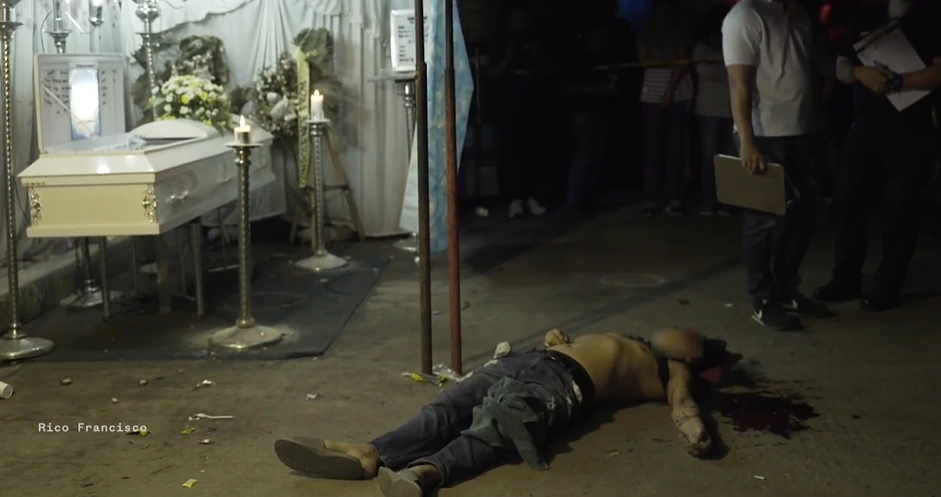
In the southern Philippine city of Davao, for more than two decades, men on motorcycles would pull up alongside their targets and shoot them in the head. Sometimes they used knives. Sometimes the victims were suspected drug dealers. Sometimes they were petty criminals. And sometimes, documented repeatedly by human rights organisations and a UN special rapporteur, they were children: street children, some as young as twelve years old, shot dead in broad daylight with no trial, no arrest, and no due process of any kind.
The group responsible became known as the Davao Death Squad, or DDS. The mayor of Davao City, a man named Rodrigo Duterte, was repeatedly alleged to have directed it. In 2016, Duterte became president of the Philippines and scaled the model nationwide, producing a drug war that killed between 6,000 and 30,000 people depending on whose count you accept. Earlier this month, he was arrested and transferred to the International Criminal Court in The Hague. His trial for crimes against humanity is scheduled to begin on November 30, 2026.
This is the full story of how a local vigilante death squad in one Filipino city became the seed of a national catastrophe and a landmark case in international criminal law.
The Origins: Davao in the 1980s
To understand the Davao Death Squad, you have to understand the city it emerged from. Davao City in the 1980s was a frontline in a conflict that most Western observers have largely forgotten: the communist insurgency of the New People’s Army, the armed wing of the Communist Party of the Philippines. The NPA exercised de facto authority over significant parts of Davao’s urban heartland, particularly the district of Agdao, which residents came to call Nicaragdao, a portmanteau of Nicaragua and Agdao reflecting its reputation as a revolutionary zone.
The NPA created its own parallel system of justice, and its Sparrow hit squads targeted police, military personnel, and civilians, extracting what the organisation called revolutionary justice. In response, the Philippine military armed and supported counter-insurgent vigilante groups, the most prominent of which was Alsa Masa, whose name translates as Masses Arise.
When Rodrigo Duterte became mayor of Davao City in 1988, he inherited a city saturated with armed men who had been trained to kill on behalf of one faction or another and who were now looking for a new purpose as the communist insurgency began to recede. Early DDS recruits were typically ex-NPA rebels or Alsa Masa vigilante members who found in Duterte’s campaign against crime a continuation of the only work they knew. By embedding these groups in Davao’s security infrastructure, the DDS found not only a new sense of purpose but stable employment.
As the nature of the threat changed, so did the targets. The communist insurgents who had been the original justification for armed vigilantism gave way to a new category of enemy: drug dealers, petty criminals, and eventually, almost anyone that the death squad or its alleged patrons decided was a problem.
How the DDS Operated
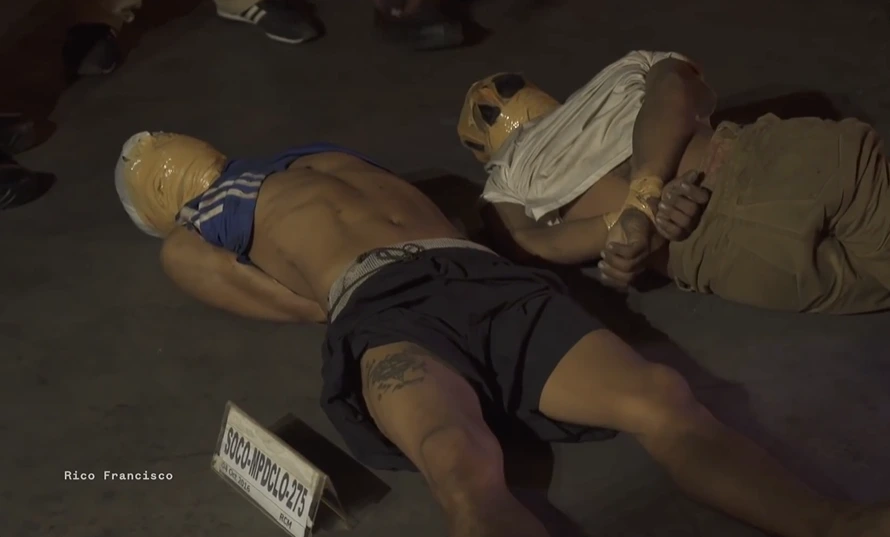
The Davao Death Squad was not a shadowy mystery organisation. It operated openly, in daylight, with a visibility that was itself a form of power. Armed with butcher’s knives or pistols, the Davao death squads meted out their idea of swift justice with impunity.
Operatives typically worked in pairs or small teams, often using motorcycles to approach and escape from targets quickly. Victims were shot in the head or stabbed, and the killings occurred on streets, in markets, outside homes, and in other public spaces where the visibility was intentional. Impunity required no concealment. The message to Davao’s criminal community was delivered not in private but in public.
The squad’s alleged structure was revealed in remarkable detail by two former members who eventually broke their silence. Edgar Matobato, a self-described hitman for the DDS, testified before the Philippine Senate in 2016 that the squad had around 300 members, received payments for each killing, and disposed of bodies through burial in mass graves or by feeding them to crocodiles. Arturo Lascañas, a retired police officer who initially denied involvement before recanting, confirmed Matobato’s account and described payment systems, leadership structures, and the alleged direct involvement of then-Mayor Duterte in ordering specific killings.
“I was one of those who started it,” Lascañas told journalists in 2017. “We implemented the personal instructions of Mayor Duterte to us.”
Duterte’s own statements over the years have ranged from outright denial to something approaching admission. In a televised Senate hearing in 2024, he confirmed that a death squad had existed under his watch during his time as mayor, though he gave contradictory accounts of its membership, saying first that it consisted of police officers and then that it was made up of gangsters. “I had a death squad of seven, but they were not police, they were gangsters,” he told senators. He denied ordering the killing of defenceless suspects, but acknowledged telling the group “to encourage criminals to fight back, and when they fought back, kill them so my problems in the city will be solved.”
The Victims: Who the DDS Killed
The casualty figures assembled by human rights organisations over more than two decades of DDS activity are staggering. According to Amnesty International and local human rights groups, death squads killed over 300 people in Davao City between 1998 and 2005. The rate of killing then accelerated. Between 2005 and 2008, death squads were responsible for between 700 and 720 executions.
By 2016, it was estimated that the group was responsible for the killing or disappearance of more than 1,400 people. From 1998 to 2015, the Coalition Against Summary Executions recorded 1,424 victims of summary executions in Davao City, with the youngest being a 12-year-old boy.
The victims were predominantly drawn from Davao’s most marginalised communities. A 2009 report by Human Rights Watch documented that the dead were mostly alleged drug dealers, petty criminals, and street children. That last category, street children, has remained one of the most internationally condemned aspects of the DDS’s operations. The killing of children as young as twelve for suspected involvement in petty theft or minor drug offences was documented by multiple independent organisations and by the UN special rapporteur who visited Davao in 2007.
Philip Alston, the UN Special Rapporteur on Extrajudicial, Summary, or Arbitrary Executions, stated unequivocally after that visit: “A death squad operates in Davao City, with men routinely killing street children and others in broad daylight.” He recommended that Mayor Duterte be stripped of his control over the local police and that the national government take responsibility for dismantling the death squad and prosecuting its members.
None of that happened.
The Political Immunity That Protected the DDS
One of the most disturbing aspects of the Davao Death Squad’s decades-long operation is the near-total absence of legal consequences for those involved. Under Duterte’s mayorship, no DDS operative was successfully prosecuted for the killings. Police investigations consistently went nowhere. National oversight bodies showed little interest.
A 2009 Philippine Commission on Human Rights report noted stonewalling by local police under Duterte’s mayorship. A 2005 US State Department cable, later released by WikiLeaks, documented that human rights organisations and the Catholic Church protested the killings but that they remained popular among the public in Davao and elsewhere in Mindanao.
In 2005, the deputy ombudsman for Military and Other Law Enforcement Offices suspended four senior police officials for failing to solve vigilante killings in their area, calling their inaction “gross neglect of duty and inefficiency and incompetence in the performance of official functions.” Duterte responded by directing the four officers to appeal the suspension, saying the penalty would demoralise the police. The Court of Appeals subsequently reversed the suspension order.
Successive Philippine presidents proved equally unwilling to act. President Gloria Macapagal Arroyo, rather than investigating the DDS, appointed Duterte as her special advisor on crime in 2004, a move Human Rights Watch described as signifying her approval of extrajudicial killings. She subsequently adopted what became known as the Davao Model in national policy, aligning her government’s drug strategy with Duterte’s approach and extending the reach of vigilante-style enforcement across Mindanao and beyond.
The combination of public popularity, presidential backing, and police complicity created an environment of near-total impunity that allowed the death squad to operate for decades without meaningful consequences.
The Davao Model Goes National
When Rodrigo Duterte won the Philippine presidential election in May 2016, campaigning explicitly on a platform of killing drug dealers and criminals, the Davao Death Squad’s operating model had its most important promotion yet. A local strategy of extrajudicial killing would now be applied to a nation of over 100 million people.
Duterte was explicit about his intentions. He had promised during the campaign to kill 100,000 people in his first six months in office, saying he would be “happy to slaughter” drug addicts and that the fish in Manila Bay would grow fat from the bodies of criminals. Those statements were received by many Filipinos, exhausted by crime and drug violence, as the plain speaking of a decisive leader.
His drug war, dubbed Operation Double Barrel, began immediately after his July 2016 inauguration. The results were catastrophic. By August 2016, just two months into the presidency, over 850 people had been killed. By the end of Duterte’s six-year presidential term in 2022, human rights organisations estimated between 12,000 and 30,000 people had died in connection with the war on drugs, with 6,235 deaths recorded during police operations alone. The remainder were killed by unidentified gunmen in circumstances that bore the unmistakable hallmarks of the DDS’s Davao operations: motorcycle-riding pairs, execution-style shootings, victims from the poorest communities.
The vast majority of those killed were not drug lords or cartel bosses. They were small-scale dealers, drug users, and, in many documented cases, people with no involvement in drugs at all who had been falsely accused by neighbours or planted with evidence by corrupt police officers seeking to meet informal quotas. Their families have been seeking justice for years, many of them appearing at ICC proceedings and Philippine legislative hearings to put names and faces to what official statistics reduce to numbers.
International Condemnation and the ICC Investigation
The international response to Duterte’s drug war began during his presidency and has continued and escalated since his departure from office.
The International Criminal Court opened a preliminary examination into the Philippines situation in February 2018, focusing on whether the killings constituted crimes against humanity. The Philippines under Duterte withdrew from the Rome Statute, the ICC’s founding treaty, in March 2019, in an attempt to insulate himself from the court’s jurisdiction. The ICC ruled that the withdrawal did not affect its jurisdiction over crimes committed while the Philippines was a state party to the statute.
In 2025, Duterte was arrested in Manila and transferred to the ICC detention facility in The Hague. The development marked one of the most significant moments in the history of international criminal accountability: a former head of state of an Asian nation being held in detention to face charges of crimes against humanity before an international court.
Duterte is scheduled to stand trial at the ICC on November 30, 2026. The prosecution’s case draws a direct line from the Davao Death Squad’s operations during his years as mayor to the national drug war conducted during his presidency, arguing that both represent a systematic, state-sanctioned campaign of extrajudicial killings that constitutes crimes against humanity under international law. The ICC’s prosecutor has confirmed that the alleged role of Duterte and his administration in the Davao Death Squad will be factored into the prosecution’s argument at trial.
As of 2025, the ICC is continuing to investigate the ties between the Dutertes and the Davao Death Squad. Sara Duterte, the former president’s daughter and the current Vice President of the Philippines, has organised and attended rallies in The Hague, Malaysia, and Melbourne calling for the charges against her father to be dropped on humanitarian grounds.
What Remains Unresolved
Despite Duterte’s arrest and the pending ICC trial, justice for the victims of the Davao Death Squad and the national drug war remains elusive in practical terms. No senior DDS operative has been convicted in a Philippine court. The families of the thousands killed during the drug war are still waiting for proceedings that will name and hold accountable the individual officers and officials responsible for specific killings.
The Philippines under President Ferdinand Marcos Jr. has continued to record drug-related killings, with at least 854 such deaths documented during his first 2.5 years in office, according to monitoring organisation Dahas. The culture of impunity that the DDS cultivated over decades has not been dismantled simply because its alleged architect now sits in a detention facility in the Netherlands.
Amnesty International has continued to call on the Philippine government to fully commit to addressing extrajudicial killings and to implement policies that would radically change the situation. As of 2025, that commitment has not been forthcoming.
The ICC trial, when it begins in November, will be one of the most closely watched proceedings in the court’s history. Whether it delivers accountability for a pattern of state-sanctioned killing that lasted for decades, across two levels of government, and claimed thousands of lives will be a defining test of what international criminal justice can actually achieve.
Related Articles: