
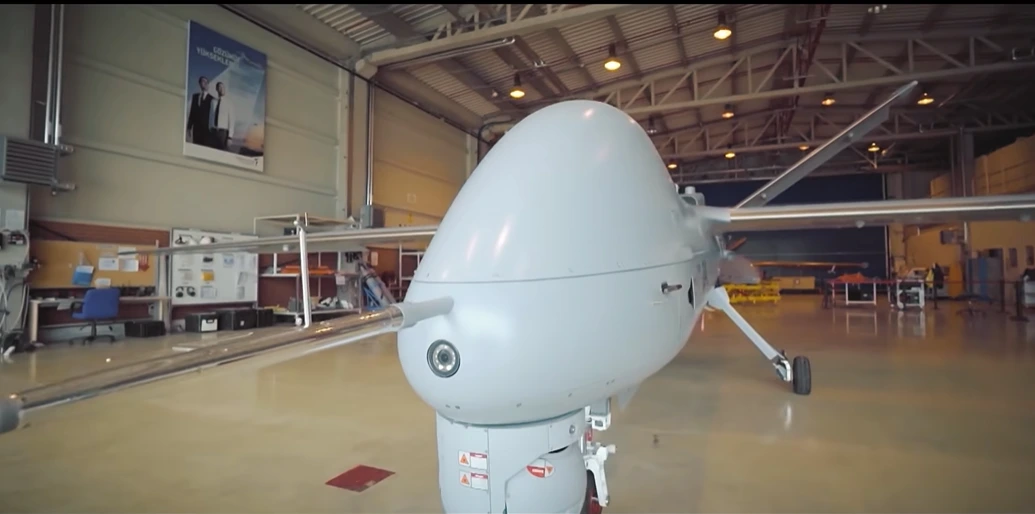
Malaysia has deployed three Turkish ANKA-S MALE drones at Labuan Air Base on the South China Sea. Here is a full breakdown of the drone’s capabilities, why Malaysia chose it over the MQ-9 Reaper, and what it means for regional geopolitics.
When the Royal Malaysian Air Force quietly flew its newly acquired Turkish ANKA-S drone over Malaysian skies for the first time on April 3, 2026, it marked the end of a four-year procurement journey and the beginning of a new chapter in the country’s defence posture. Three Turkish-built medium-altitude long-endurance unmanned aerial vehicles, contracted for roughly $104 million from Turkish Aerospace Industries, are now operational at Labuan Air Base on Malaysia’s eastern frontier, pointed directly at one of the most contested stretches of water on the planet: the South China Sea.
The acquisition is modest in scale but significant in implication. It tells a story about how a mid-sized Southeast Asian nation is choosing to defend its maritime interests in an era of great power competition and about how Turkey’s defence industry has quietly emerged as a global alternative to American and Chinese weapons platforms.
How the Deal Came Together
The origins of Malaysia’s ANKA acquisition stretch back further than most coverage acknowledges. The procurement followed an open international tender process initiated in August 2020, which included evaluations of various MALE UAV options such as the General Atomics MQ-9 Reaper and China’s Wing Loong. Malaysia took its time, evaluated its options carefully, and ultimately chose neither the American nor the Chinese platform. The Turkish drone won on a combination of capability, cost, and the absence of the political complications that come with acquiring weapons from either Washington or Beijing in a contested maritime region.
Malaysia ordered three ANKA MALE aircraft on May 25, 2023, during the LIMA exhibition. The deal was worth MYR 423.8 million, equivalent to approximately $91.6 million, and it covered three UAVs, a single ground control station and two years of support.
The path from contract to operational deployment was not entirely smooth. Malaysia also selected a new type of radar not used by other ANKA users, and integration work for this undisclosed radar meant delivery took more than 2.5 years. Malaysian aircraft also feature modified wings. Malaysian pilots and technicians had been training on the system in Turkey. Six RMAF personnel were deployed to Turkey to monitor the construction process and oversee adaptation work.
Malaysia received the three UAVs in January 2026. Ground tests and institutional acceptance procedures were completed, and the three UAVs have since been deployed with No. 11 Squadron at Labuan Air Base. The Royal Malaysian Air Force successfully flight tested an ANKA-THS MALE drone in Malaysian skies for the first time on April 3, 2026.
What Is the ANKA-S? Full Specifications and Capabilities
The ANKA takes its name from the Turkish word for phoenix, a bird that rises from destruction to fly again. It is an apt metaphor for Turkey’s defence industry as a whole, which rebuilt itself from near-total dependence on foreign suppliers into a significant global exporter within a single generation.

Developed by Turkish Aerospace Industries, the ANKA is a medium-altitude long-endurance platform, classified in the same category as the American MQ-9 Reaper and the Chinese Wing Loong. The maximum speed of the drone is 217km/h with a cruise speed of around 204km/h. At maximum possible load, the drone can endure around 30 hours of uninterrupted flight.
The ANKA-S variant, which is what Malaysia has acquired, is the most operationally significant member of the family. It derives from the ANKA-A variant, which entered into serial production first for the Turkish Air Force in 2012, consisting of a total of 30 drones.
The ANKA-S is a beyond-line-of-sight communication variant with over-the-horizon service capability via satellite. This is the critical feature that separates it from earlier ANKA models. Conventional drone systems require the operator and the aircraft to remain within line-of-sight of each other, limiting range to a few hundred kilometres at most. Satellite control removes that constraint entirely. An ANKA-S can be launched from Labuan, fly 1,000 kilometres into the South China Sea, and be controlled in real time by operators on the ground throughout the entire mission.
The ANKA-S drones are each capable of flying over 30 hours at altitudes of 30,000 feet, with key components including radar integration sourced from Germany. The service ceiling of 30,000 feet keeps the aircraft well above the range of most man-portable air defence systems while maintaining the altitude necessary for wide-area surveillance with its sensor suite.
The standout characteristics of the TAI ANKA include its long endurance of 30-plus hours of flight time, which allows it to carry out extended missions and fly further than the Bayraktar TB2, and advanced autonomy that enables the aircraft to perform complex missions with minimal human intervention.
The ANKA family also encompasses several specialised variants beyond the S model. These include the ANKA-I, which is equipped with electronic warfare as well as ELINT and COMINT intelligence systems, and the ANKA-B, which has a greater payload capacity and is equipped with SAR/ISAR/GMTI radar capable of providing high-grade intelligence data. Malaysia’s acquisition of the S variant prioritises surveillance and beyond-line-of-sight reach, which aligns precisely with the South China Sea mission profile.
Why Malaysia Chose the ANKA Over the Reaper and Wing Loong
The choice between the MQ-9 Reaper, the Wing Loong, and the ANKA was not purely a technical decision. It was a political one.
The MQ-9 Reaper is the more powerful platform by most technical measures. It carries a heavier payload, has a higher maximum takeoff weight, and has an unmatched combat record across decades of American operations in the Middle East and Central Asia. But acquiring the Reaper would have placed Malaysia inside a dense web of American end-user agreements, export controls, and political conditions. Washington typically attaches significant conditions to the sale of advanced unmanned systems, including restrictions on where they can be deployed and against whom they can be used. For a country navigating the treacherous waters between American alliance structures and Chinese economic dependence, those conditions are an uncomfortable fit.
The Wing Loong, China’s closest equivalent to the Reaper, was an even more fraught option. Acquiring a Chinese surveillance drone to watch Chinese activity in the South China Sea was never a realistic proposition regardless of the technical specifications. The political signal it would send, and the intelligence access it might provide Beijing, made it a non-starter for Malaysia’s defence planners.
The ANKA occupies a middle ground that Malaysia found uniquely attractive. It is produced by a NATO member state with no territorial interest in the South China Sea. It carries no American end-user restrictions. It comes without the political complications of Chinese hardware. And it is priced at a level that Malaysia’s defence budget can sustain without extraordinary commitment.
Labuan Air Base: The Strategic Logic of the Deployment Location
The RMAF described Labuan as a strategic location for Malaysia due to its proximity to the South China Sea. That is an understatement. Labuan Island sits at the mouth of Brunei Bay on the northeastern coast of Sabah, directly adjacent to the waters where Malaysia’s maritime territorial claims are most actively contested by China.
Malaysia’s intention to deploy ANKA-S to the EEZ aligns with its strategic imperative to monitor resource-rich waters increasingly challenged by overlapping claims and Beijing’s assertive maritime patrols. Former Defence Minister Datuk Seri Mohamad Hasan put it plainly: “The three MALE drones we acquired will be deployed to the South China Sea. We must possess the capability to see and hear. Our eyes must have the ability to observe up to 350km from the shoreline.” He warned that without real-time intelligence, surveillance and reconnaissance coverage, Malaysia risks being caught off guard in one of the world’s most strategically sensitive theatres.
G7 Aerospace, a Malaysian company, completed upgrades at Labuan Air Base, including purpose-built hangars and support facilities required for ANKA operations. The investment in ground infrastructure signals that this is not a temporary deployment. Malaysia is building a permanent UAV surveillance capability at its most strategically sensitive frontier base.
ISTAR: What the ANKA-S Can Actually See
The RMAF said the ANKA-THS deployment will improve its intelligence, surveillance, target acquisition, and reconnaissance, or ISTAR, capabilities in the eastern region and over the South China Sea.
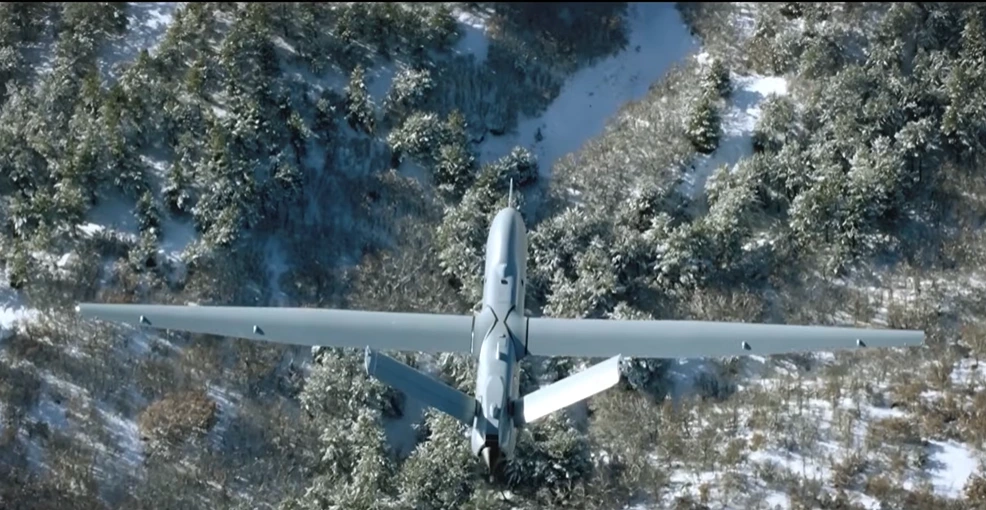
In practical terms, what does that mean? A single ANKA-S operating from Labuan at 30,000 feet with a 30-hour endurance can cover an enormous swath of Malaysia’s exclusive economic zone in a single sortie. Its sensor package, including electro-optical and infrared cameras, allows operators to identify and track surface vessels at long range in all weather conditions and at night. The satellite data link means that imagery and intelligence can be transmitted to ground stations in near-real time, allowing decision-makers to respond to incidents while they are still developing rather than hours later.
One defence analyst described the significance of this: “Provocations often rely on deniability; a highly capable sensor platform will lay bare grey-zone activities and prevent denials.” He added that the drones “will certainly be useful in boosting Malaysia’s ability to spot and track foreign naval vessels over a wide area”.
Grey-zone activity is precisely what Malaysia faces in the South China Sea. Chinese coast guard vessels routinely enter Malaysian waters near the Luconia Shoals and other contested features, water cannon incidents occur with increasing frequency, and fishing vessels operating under state protection probe the edges of Malaysia’s claimed maritime territory. None of these activities constitutes open warfare, but all of them challenge Malaysia’s sovereign rights in waters it regards as its own. A persistent aerial surveillance capability that can document and record these incursions in real time is a significant step toward credible deterrence.
The Unarmed Posture: A Deliberate Choice
An important aspect of Malaysia’s ANKA acquisition is what was not ordered. Despite the platform’s capability to carry weapons, Malaysian authorities have not ordered munitions at this stage, although the armed forces are reportedly considering additional acquisitions in future phases.
The RMAF did not mention strike missions in its statement, though ANKA platforms do feature hardpoints. Therefore, Malaysia could acquire munitions at any stage in the future. Electronic and signal intelligence pods, available from Aselsan, for example, could also represent an option for the RMAF.
Deploying armed drones in the South China Sea would be a significant escalation of Malaysia’s posture, one the government is clearly not ready to take at this stage. The surveillance-only configuration sends a clear but measured signal: Malaysia is watching, Malaysia is capable, but Malaysia is not seeking confrontation. It is a posture designed to build deterrence without provoking the kind of response that armed platforms might invite.
What Comes Next: More Drones on the Way
Three UAVs is a beginning, not an endpoint. The ANKA acquisition represented part of Phase 1 of the National Defence Strategic Acquisition Plan under the 12th Malaysia Plan. Malaysian authorities have previously talked about needing six to twelve MALE UAVs in total.
The Malaysian government has indicated interest in expanding the fleet, with up to six additional drones planned under the 13th Malaysia Plan covering 2026 to 2030.
The more capable twin-engine Aksungur was suggested as a potential option for Malaysia’s follow-on phases, representing a significant step up in capability from the three-aircraft ANKA fleet currently in service. The Aksungur is TAI’s larger, more powerful platform, capable of carrying heavier payloads over longer distances and featuring a twin-engine design that provides greater reliability on extended missions.
Turkey’s Growing Defence Footprint in Southeast Asia
Malaysia’s acquisition sits within a broader pattern of Turkish defence exports that has fundamentally changed how analysts assess Ankara’s global influence.
The TB2 Bayraktar rewrote the outcome of the Nagorno-Karabakh conflict in 2020. Turkish drones have been deployed in Libya, Ukraine, and Ethiopia. The ANKA-S deal, which includes joint research and technology sharing, is part of a growing bilateral defence industrial partnership between Malaysia and Turkey across multiple sectors.
Southeast Asia is emerging as a key market for Turkish defence platforms. Beyond Malaysia, the Philippines, Indonesia, and Thailand have all explored Turkish drone systems. Turkey offers something that neither the United States nor China can: advanced capability without the geopolitical strings attached. For countries navigating the fine line between Washington and Beijing, that combination has genuine appeal.
The ANKA-S deployment at Labuan is a small but telling data point in a larger story. The age of drone warfare has arrived in the South China Sea, and Turkey helped bring it there.
Europeans24 covers defence, geopolitics, and international security. Follow us for ongoing analysis of military modernisation across Asia, Europe, and the Middle East.









[…] Malaysia Acquires ANKA-S Drones: What It Means for the South China Sea […]
[…] Malaysia Acquires ANKA-S Drones: What It Means for the South China Sea […]