
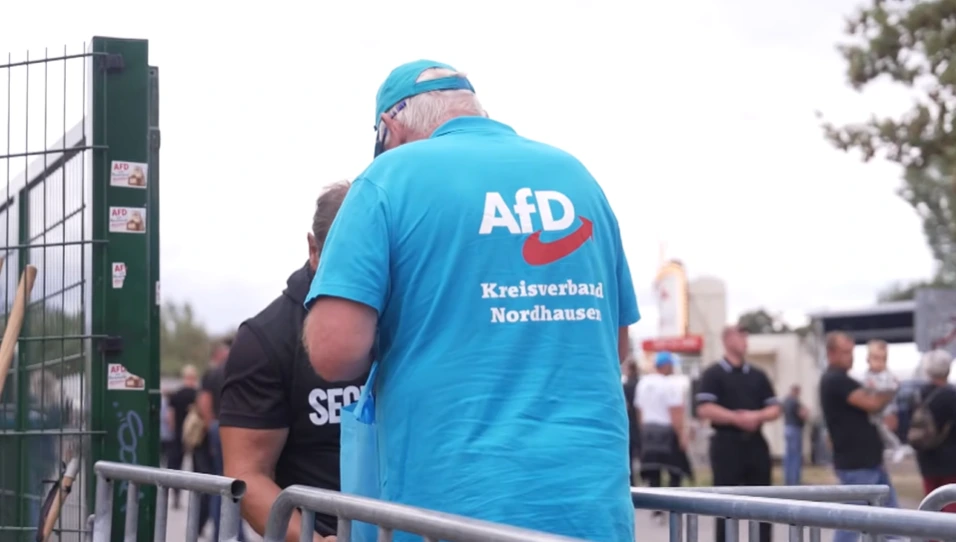
Voters in Saxony-Anhalt have cast ballots in a high-stakes state election as the far-right AfD targets a historic win against Chancellor Friedrich Merz’s CDU.
Approximately 1.7 million eligible voters across the eastern German state of Saxony-Anhalt cast ballots on Sunday in a high-stakes state election carrying immense national ramifications. The vote puts the centre-right Christian Democratic Union (CDU) under severe pressure as the right-wing populist Alternative for Germany (AfD) seeks to secure a historic electoral victory and potentially form its first-ever state government.
The election marks a critical test for Chancellor Friedrich Merz’s federal administration, arriving amid deep voter polarization over economic stagnation, immigration policy, and security in eastern Germany.
An Ascendant AfD and the Shadow of History
Final opinion surveys heading into Sunday’s vote showed the AfD leading comfortably, capturing between 41% and 43% of projected support. If confirmed by official results, the performance would nearly double the party’s 20.8% share from the previous state election in 2021.
The AfD’s campaign in the state was spearheaded by Ulrich Siegmund, a polarizing regional figure whose fiery rhetoric on border security and anti-establishment governance galvanized core anti-incumbent sentiment. The party’s surge reflects persistent socioeconomic divides between western and eastern Germany, with rural and working-class communities feeling left behind by traditional mainstream parties.
Despite commanding a commanding lead in polls, an outright legislative majority for the AfD remains uncertain. Crucially, all mainstream political forces, including the CDU, the Social Democrats (SPD), The Left, and the Greens, have maintained a strict “firewall” (Brandmauer), formally ruling out any coalition or parliamentary cooperation with the AfD. Consequently, even a first-place finish could leave the party locked out of executive power if opposing factions band together to assemble a blocking minority or alternative administration.
The CDU Struggles to Defend Its Stronghold
For the governing CDU, Sunday’s vote represents a severe electoral reckoning. Longtime Minister-President Reiner Haseloff, who governed Saxony-Anhalt for nearly fifteen years with steady, pragmatic leadership, stepped down, handing the reins to successor Sven Schulze.
Schulze inherited a state apparatus facing intense economic headwinds and fierce anti-establishment backlash. Final pre-election polls placed the CDU trailing significantly behind the AfD at roughly 22% to 23%, a stark decline from their 37.1% triumph in 2021.
Political analysts note that the local struggles mirror broader discontent with Chancellor Friedrich Merz’s federal coalition in Berlin, where public satisfaction ratings have slipped amid protracted debates over national economic reforms and tightening migration laws.
Potential Coalition Deadlocks and Institutional Fallout
With smaller parties such as The Left polling near 11% to 12%, the SPD hovering around 7% to 8%, and parties like the Greens and the populist-left BSW fighting to clear the 5% parliamentary threshold, the makeup of the next Landtag in Magdeburg remains razor-thin.
If the AfD falls short of an absolute majority and mainstream parties refuse to deal with them, Saxony-Anhalt faces the prospect of protracted, complex coalition negotiations. Political observers suggest options could range from an unstable minority government backed case-by-case to unwieldy multi-party “Kenya” or “Jamaica” coalitions that risk further alienating frustrated voters.
As polling stations close and ballot counting gets underway, the outcome in Magdeburg is expected to set a turbulent tone for upcoming state elections in Berlin and Mecklenburg-Vorpommern, sending shockwaves through Germany’s federal political landscape.