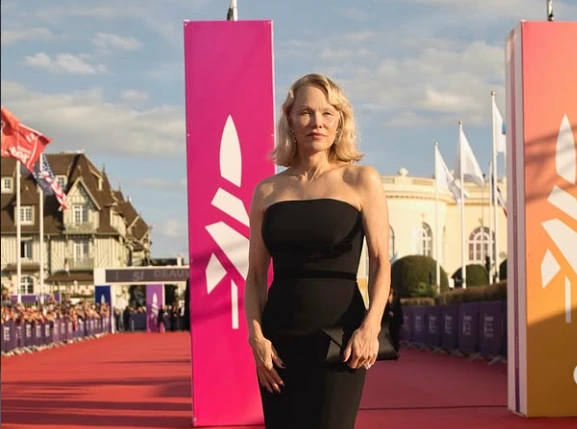
Pamela Anderson recalled being given just 10 years to live after a devastating hepatitis C diagnosis in an emotional speech at the amfAR Gala in Venice.
Reflecting on a dark chapter of her past, iconic actress and model Pamela Anderson has opened up about the profound psychological toll of being diagnosed with hepatitis C in the late 1990s, revealing that doctors initially gave her just a decade to live.
Accepting the prestigious Award of Courage at the amfAR Venezia Gala during the Venice Film Festival, the 59-year-old star delivered a deeply personal and moving speech tracing how the diagnosis fundamentally upended her life, her self-esteem, and her career decisions.
Living Under a Dark Cloud
Anderson, who contracted the blood-borne virus around 1999 via a shared tattoo needle with her then-husband Tommy Lee, recalled the bleak medical landscape of the era. With no effective cure available at the time, the diagnosis carried an ominous prognosis.
“Back in the late ’90s, when I was diagnosed with hepatitis C, there was no cure. It was a death sentence. That’s what my doctor told me, that I probably had around 10 years to live,” Anderson told the gala audience.
Rather than fearing her own mortality, Anderson explained that the crushing weight of the timeline centered entirely on her young sons, Brandon and Dylan, who were small children at the time.
“I’m sure that coloured and corrupted my decisions,” she reflected. “It was not fear of death, but fear of what might happen to my young children. It turned my life inside out.”
Financial Strain and the Long Road to a Cure
More than a decade after receiving the chilling prognosis, medical science delivered a breakthrough. Groundbreaking new antiviral treatments emerged in the early 2010s, offering a genuine path to eradication.
Anderson managed to secure the medication in its early stages, announcing she was entirely “hep C free” by late 2015. However, accessing the treatment came at a steep personal cost.
“Ten blurry years later, there was a cure,” she recalled. “I was lucky, I was offered it in its early stages, and it took everything I had in my bank to pay for it [because] it wasn’t covered by insurance yet.”
Despite being cured, Anderson confessed that the emotional fallout left deep scars.She admitted to grappling with persistent feelings of survivor’s guilt regarding those who could not afford or access the breakthrough treatments, noting that the stigma associated with the illness made her feel like “damaged goods”.
Channelling Pain into Art and Advocacy
Addressing the crowd in Venice, Anderson emphasized that she has ultimately chosen to redefine her narrative, channelling her historic hardships into her creative work, advocacy, and recent acclaimed film performances.
Refusing to cast herself as a tragic figure, the veteran actress concluded with a powerful message of resilience:
“I’m not a victim, I’m a victor. I am strong and capable, more now than I could ever dream of… I’m not the damsel in distress, no matter how easy that role is to play.”