Facing rising threats from cyberattacks and climate volatility, European governments are urging citizens to stockpile 72 hours of emergency supplies.
For decades, the concept of keeping a stocked pantry for national emergencies felt like a relic of the Cold War. European citizens grew accustomed to just-in-time supply chains, uninterrupted digital services, and immediate emergency response. That era of guaranteed convenience is officially over. Across the continent, governments are quietly but firmly issuing a unified directive to their populations. They are asking every household to prepare for prolonged disruptions by stockpiling at least 72 hours worth of food, water, and survival supplies.
This shift in public policy is not the plot of a dystopian thriller. It is the new baseline for European civil defence. From the United Kingdom rolling out national readiness campaigns to the European Union formally adopting overarching preparedness strategies, the core message is identical. State resources will be stretched during a major crisis, and citizens must be able to survive independently during the critical first days of an emergency.
The Threat Matrix: What Are We Preparing For?
Officials are careful to emphasise that stockpiling does not mean a conventional military invasion is imminent. The true threat matrix of late 2026 is far more complex and heavily focused on infrastructure vulnerability.
Cyber warfare and sabotage represent the most immediate risks to daily civilian life. Intelligence agencies have repeatedly warned that hostile state actors increasingly target critical civilian infrastructure. A sophisticated cyberattack on a national electricity grid, telecommunications network, or water treatment facility could plunge millions into darkness without a single soldier crossing a border.
The intensifying frequency of severe climate events adds another layer of vulnerability. Unprecedented floods and winter storms frequently sever rural communities from immediate state aid. In all these scenarios, emergency responders face impossible bottlenecks. Firefighters, medical personnel, and disaster relief teams must prioritize structural collapses and acute medical crises over delivering drinking water to stranded neighbourhoods.
The 72-Hour Baseline: The Math Behind the Mandate
Why exactly three days? Disaster management experts consider 72 hours the absolute minimum buffer required for state authorities to assess a catastrophic event, mobilize federal resources, and establish temporary supply lines.
During the initial phase of a nationwide blackout or digital communications failure, localized emergency services operate blindly. First responders must triage their operations. By removing millions of ordinary citizens from the immediate crisis queue, the state buys the vital time necessary to restore baseline societal functions.
A National Breakdown of Civil Defence Strategies
Different nations are tailoring this strategy to their specific geopolitical and geographic realities.
The United Kingdom: The Be Ready Campaign
In late October 2026, the British government relaunched its Be Ready initiative.
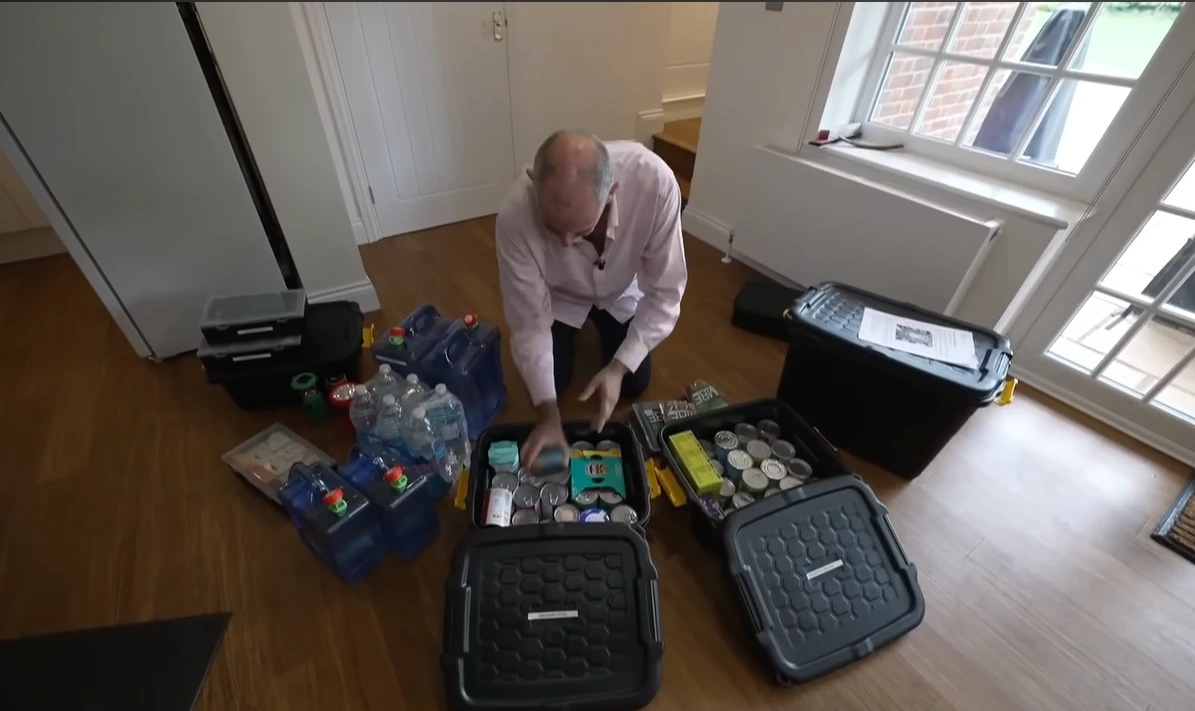
to combat public complacency. The campaign provides households with a concrete checklist to survive a multi-day disruption. The official recommendations go far beyond a few extra cans of soup. British citizens are advised to secure three days of bottled drinking water, non-perishable food, portable power banks, spare batteries, first-aid equipment, physical cash, and a wind-up radio. The inclusion of physical cash and analog radios highlights the government’s specific concern regarding digital blackouts and banking system failures.
The European Union: A Unified Preparedness Vision
Brussels has also elevated civilian readiness from a national suggestion to a bloc-wide priority. Under the Preparedness Union Strategy adopted in March 2025, the European Commission established a uniform recommendation. EU citizens are now expected to cope independently for a minimum of 72 hours during a crisis. This directive pushes member states to standardize their public awareness campaigns and ensure cross-border resilience.
The Nordic and Baltic Vanguard
Unsurprisingly, nations sharing a border with Russia remain years ahead of Western Europe in their civil defense integration. Countries like Finland, Sweden, Estonia, Latvia, and Lithuania have radically expanded their readiness protocols since the onset of the Ukraine conflict.
Finland stands out as the gold standard for societal resilience. Beyond household preparation, the Finnish government has expanded its national grain reserves to cover nine full months of consumption. Sweden has fully reactivated its total defense doctrine, integrating civilian infrastructure directly into military planning. Poland followed suit by passing comprehensive civil defense legislation in 2025, mandating strict shelter renovations and public evacuation drills. For citizens in these regions, keeping emergency supplies is heavily normalized as a basic civic duty.
Economic Realities and Public Reception
While the strategic logic behind the 72-hour rule is sound, implementing it creates friction at the consumer level. Asking citizens to hoard goods during a period of sustained inflation presents a political and economic challenge. Stockpiling bottled water, medical supplies, and backup power banks requires disposable income and adequate physical storage space. Urban renters living in compact European apartments often lack the pantry space required to store weeks of supplies, forcing governments to balance ideal security protocols with practical living conditions.
To address these concerns, public health officials suggest building emergency kits gradually. Adding one or two non-perishable items to the weekly grocery run spreads the financial impact over several months, making compliance far more accessible for lower-income households.
A Permanent Shift in Public Consciousness
The push for household stockpiling represents a fundamental psychological shift for modern Europe. The state is actively stepping away from the promise of immediate, omnipotent protection. Instead, it is renegotiating the social contract by asking citizens to shoulder a portion of the initial burden during a catastrophic event.
As hostile cyber activity and extreme weather events continue to escalate across the continent, the 72-hour survival kit is transitioning from a fringe survivalist concept to a standard household necessity. In the architecture of modern European security, a fully stocked pantry is now viewed as the absolute first line of national defence.