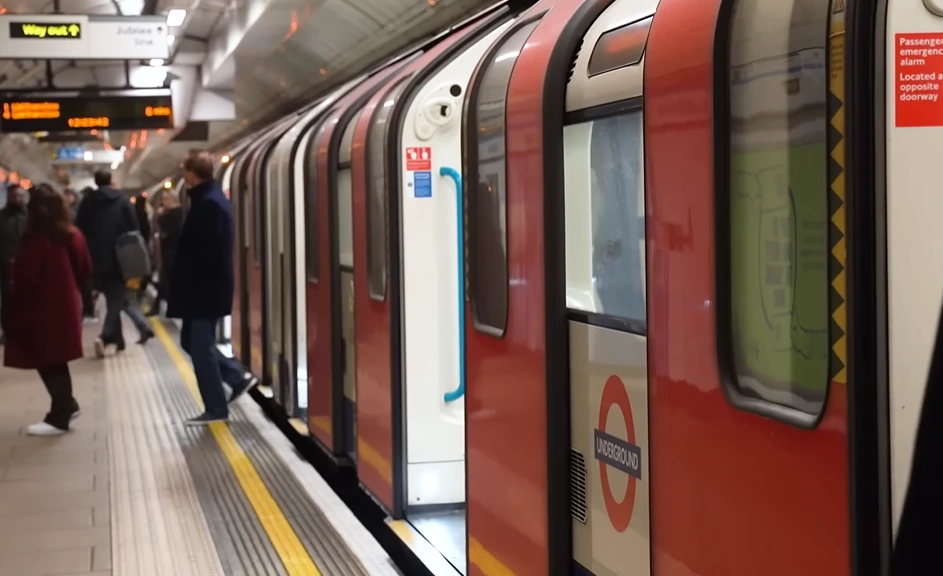
Explore the complete history of the London Underground from its 1863 steam-powered birth to the 2026 Elizabeth Line expansion. Discover how the world’s first metro system survived war, rivalry, and tragedy to become the backbone of modern London, with 272 stations and 1.3 billion annual journeys.
On January 10, 1863, a steam locomotive belched smoke through a gas-lit tunnel beneath London’s streets, carrying 38,000 passengers on its first day of operation. What began as an engineering experiment to solve Victorian traffic congestion has evolved into one of the world’s most complex urban rail networks, 272 stations, 11 lines, and over 1.3 billion annual journeys. As London celebrates 163 years of underground travel in 2026, with major upgrades reshaping the network, the Tube’s history reveals how infrastructure can fundamentally transform a city’s identity.
The Birth of the Underground: 1860–1863
By the mid-19th century, London had become a victim of its own success. Seven railway termini ringed the city centre, but none penetrated the urban core. Carts, cabs, and omnibuses choked the streets, prompting one observer to warn that “if things continue in this way, we shall have to double deck the entire city” .
Charles Pearson, Solicitor to the City of London, championed the radical solution: a subterranean railway. After years of lobbying, Parliament granted permission for the Metropolitan Railway in 1854, with John Fowler appointed chief engineer. Construction began in March 1860, delayed by the Crimean War’s drain on capital.
The “cut-and-cover” method proved brutally disruptive. Trenches up to 30 feet deep were excavated along existing streets, tracks laid, and roofs constructed overhead. The project carved through gas pipes, water mains, sewers, and the notorious Fleet Ditch—an open sewer that burst in June 1862, flooding the works and delaying opening by months. An estimated 12,000 tenants were displaced, though official records optimistically counted only 300 landlords .
The 3.75-mile line opened from Paddington (Bishop’s Road) to Farringdon Street on Saturday, January 10, 1863 . A banquet for 600 dignitaries at Farringdon Station featured speeches celebrating the triumph over “that greatest of all obstacles, that modern dragon”—the Fleet Ditch . Prime Minister William Gladstone declined his invitation, reportedly stating he was “getting old and wished to spend his remaining years above ground” .
The Steam Era: Innovation and Suffocation
The Metropolitan Railway was an immediate commercial triumph, carrying 9.5 million passengers in its first year and 12 million in its second. But success masked a fundamental flaw: steam locomotives in enclosed tunnels created what contemporaries called a “permanent fug” .
Passengers endured suffocating conditions. On opening weekend, station staff at Gower Street (now Euston Square) collapsed from fumes, with one employee admitted to University College Hospital suffering “sickness and dizziness, a low pulse, and very cold hands” . A local tavern keeper, Mr. J. Tilley of the Green Man, established an informal first-aid station, bathing victims’ temples with vinegar . By the 1890s, a pharmacist was reportedly treating distressed travellers with his proprietary “Metropolitan Mixture” .
Engineers scrambled for solutions. Fowler designed “Fowler’s Ghost,” an experimental fireless steam locomotive that proved unsuccessful. Condensing locomotives— which recaptured exhaust steam—provided partial relief. Ventilation shafts were added, though local authorities resisted, fearing openings would “frighten horses and reduce property values”.
The Metropolitan Railway eventually built its own locomotive works at Neasden and developed specialised rolling stock, but the smoke problem persisted until electrification rendered it obsolete.
Expansion and Rivalry: The Circle Line and Beyond
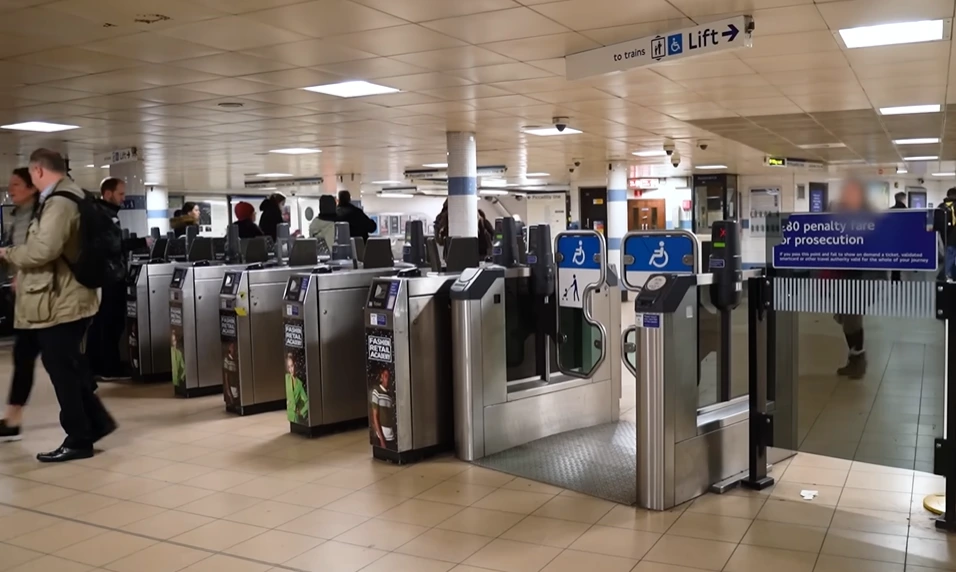
The Metropolitan’s success triggered a frenzy of railway proposals. The House of Lords established a select committee recommending an “inner circuit” connecting all main line termini . The Metropolitan District Railway—intended as a partner—emerged instead as a fierce rival.
Sir Edward Watkin chaired the Metropolitan; James Staats Forbes led the District. Their personal antagonism shaped London’s transport geography . The two companies shared directors and engineers initially, but financial strain and conflicting ambitions drove them apart. The District began operating its own trains in 1871, creating complicated ticketing arrangements that frustrated passengers for years .
Despite the dysfunction, the Circle Line gradually took shape. Extensions reached Hammersmith (1864), Richmond (1877), and Whitechapel (1884). On October 6, 1884, a complete circuit service finally commenced—21 years after the original vision. By then, the Metropolitan had extended far beyond London’s boundaries, reaching Verney Junction in Buckinghamshire—over 50 miles from Baker Street—and stimulating the suburban development that became known as “Metroland”.
The District expanded south and west to Wimbledon, Ealing, Hounslow, and Upminster, with 550 daily trains operating by 1898 . What began as a solution to central London congestion had become the template for suburban sprawl.
The Tube Revolution: Electric Deep-Level Lines
The true “Tube” arrived in 1890 with the City and South London Railway—London’s first deep-level electric line. Unlike the cut-and-cover Metropolitan and District, engineers bored circular tunnels through London’s clay using great shield machines, then lined them with cast iron segments . The circular profile—approximately 12 feet in diameter—gave the system its enduring nickname, “the Tube”.
Electric traction eliminated the smoke problem entirely and enabled deeper, cheaper construction. The Waterloo & City Railway opened in 1898, the Central London Railway (“Twopenny Tube”) in 1900, and the Great Northern and City Railway in 1904 .
The Underground Electric Railways Company of London (UERL), established in 1902 by American financier Charles Tyson Yerkes, consolidated control of the District Railway and built three additional tube lines: the Baker Street and Waterloo Railway, the Charing Cross, Euston and Hampstead Railway, and the Great Northern, Piccadilly and Brompton Railway—all opening between 1906 and 1907 .
Yerkes left an architectural legacy as well as a financial one. Architect Leslie Green designed stations for the UERL with distinctive ox-blood faience facades and tiling patterns influenced by Chicago’s elevated railways . Stations at Elephant & Castle, Piccadilly Circus, and Leicester Square became urban landmarks.
Architecture and Identity: Stations as Storytellers
The Tube’s stations chronicle London’s aesthetic evolution. Baker Street retains platforms from 1863, their brickwork and ironwork virtually unchanged . Farringdon, the oldest surviving station, still serves its original function 163 years later .
Edwardian stations by Leslie Green introduced the iconic tiling patterns that helped passengers navigate the network before comprehensive signage . In the 1920s, Charles Holden’s modernist designs for the Piccadilly Line extension brought stripped-back concrete and glass to Sudbury Town and Arnos Grove.
When Tottenham Court Road was redecorated in 1984 by pop art pioneer Eduardo Paolozzi, it signalled the Tube’s cultural rehabilitation after decades of underinvestment.
The Jubilee Line extension of 1999—delayed from the Queen’s Silver Jubilee of 1977—produced Westminster Station’s cavernous concrete halls, excavated beneath the Houses of Parliament with archaeological precision. Canary Wharf’s cathedral-like interior, designed by Norman Foster, demonstrated that infrastructure could aspire to civic grandeur.
War, Resilience, and Reinvention
The Underground’s role in the Second World War cemented its place in London’s collective memory. Initially, the government discouraged sheltering in stations, fearing civilians would refuse to surface. After the Blitz began in September 1940, official policy reversed dramatically. The government eventually asked London Transport to construct new deep shelters, and stations became subterranean cities—with beds, canteens, libraries, and even concerts organised by volunteer groups.
Post-war, the network faced decline. Underinvestment, staff shortages, and rising car ownership eroded passenger numbers. The 1987 King’s Cross fire—killing 31 people when a match or cigarette ignited wooden escalator treads—exposed systemic safety failures. The resulting smoking ban, metal escalator replacement, and station modernisation programme began the Tube’s slow rehabilitation.
The 2026 Network: Modernisation and Expansion
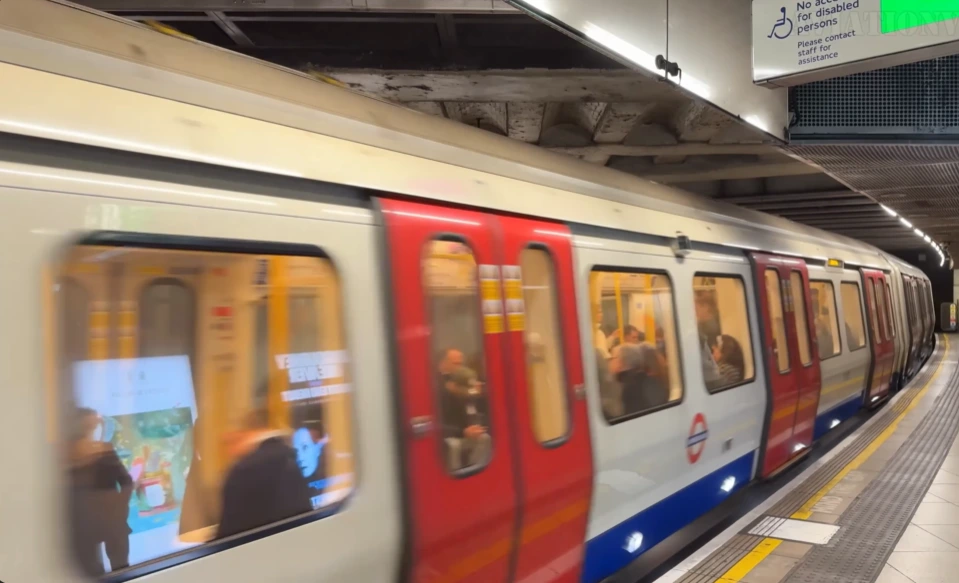
As the Underground enters its 164th year, transformation continues. The Elizabeth line—opened in 2022 at a cost exceeding £18 billion—represents the most significant expansion since the 19th century. Unlike traditional Underground lines, it operates as a hybrid metro-commuter railway, connecting Reading and Heathrow to Shenfield and Abbey Wood via a 21-kilometre central tunnel.
In 2026, the Elizabeth line receives 10 additional Class 345 trains, manufactured at Alstom’s Derby works, to address overcrowding at Acton Main Line, Southall, and Hanwell. These nine-car Aventra units increase capacity on a line already carrying 800,000 daily journeys. Proposed extensions to Ebbsfleet and Heathrow via Staines remain under government review.
The Piccadilly line—still operating 1970s rolling stock—faces delayed modernisation. New air-conditioned trains, originally promised for 2024, have been pushed back to late 2026 or mid-2027 due to safety testing requirements. The 94-train fleet will finally bring cooling to a line where summer temperatures regularly exceed 30°C.
Smaller upgrades matter too. TfL’s 2026 program includes station accessibility improvements, toilet refurbishments, and frequency enhancements on overcrowded branches . At Ealing Broadway, where passengers have called the platform gap a “death trap,” safety measures are under urgent review.
By the Numbers: The Tube in 2026
| Metric | Figure |
|---|---|
| First opening | January 10, 1863 |
| Current stations | 272 |
| Lines | 11 (plus Elizabeth line) |
| Annual journeys | 1.3 billion+ |
| Deepest station | Hampstead (58.5 metres below ground) |
| Longest escalator | Angel (60 metres) |
| Busiest station | King’s Cross St. Pancras |
| Oldest rolling stock still in service | Piccadilly line 1973 Stock (until 2027) |
| Elizabeth line daily ridership | 800,000 |
The Enduring Legacy
The London Underground’s history is not merely a chronicle of engineering milestones. It is the story of how a city learned to build vertically—first downward through clay and rock, then upward through suburban expansion. The Tube created Metroland, shaped commuting patterns, survived wartime bombardment, and adapted from steam to electric to digital signalling.
What began as Charles Pearson’s vision of relieving street congestion became something larger: a civic institution that defines London’s identity as surely as Big Ben or the Thames. When visitors purchase an Oyster card or tap their phone at a yellow reader, they participate in a tradition stretching back to that January morning in 1863, when Victorians first descended into the earth to escape the chaos above.
As new trains roll out and old stations are restored, the Underground continues its evolution. Yet the fundamental achievement remains unchanged: the world’s first metro system proved that cities could grow without choking on their own success. Every subway system from New York to Tokyo, from Moscow to Mexico City, descends from that pioneering tunnel between Paddington and Farringdon.
The dragon of congestion still stalks modern cities. The Tube’s 163-year history suggests that the willingness to dig deep—literally and figuratively—remains the only enduring answer.
Follow Europeans24 for more updates on History.