Introduction
Forensic science serves as the critical bridge between a crime scene and a court of law. Among the most powerful tools available to forensic specialists today is deoxyribonucleic acid (DNA) profiling—a technique that has transformed criminal investigations since its introduction by Sir Alec Jeffreys in 1984 (Butler, 2015). When a blood stain is discovered at a crime scene, it represents a potential biological link to an individual that can be scientifically established through a rigorous chain of analytical procedures. This report outlines the step-by-step process by which DNA profiling is conducted, with particular attention to the indispensable role of the Polymerase Chain Reaction (PCR), which enables forensic scientists to generate sufficient genetic material from even minute or degraded samples for analysis.
DOWNLOAD FULL PAPER
Step 1: Crime Scene Documentation and Evidence Recognition
The forensic process begins with the systematic documentation of the crime scene before any sample collection occurs. Forensic technicians photograph, sketch, and video-record the scene to establish the precise location of the blood stain relative to other physical evidence. This documentation is not merely procedural; it is legally essential, as courts require evidence of the original context (James et al., 2005). The blood stain itself undergoes preliminary examination to determine its pattern, size, and likely age. Blood stain pattern analysis (BPA) can indicate whether the source was a primary wound, secondary transfer, or projected spatter, offering investigative leads before laboratory analysis begins (Bevel & Gardner, 2008).
Step 2: Biological Sample Collection
Once documentation is complete, technicians wearing full personal protective equipment (PPE)—including gloves, masks, and Tyvek suits—carefully collect the blood stain. The collection method depends on the surface and condition of the stain. For a wet stain on a non-porous surface, a sterile swab moistened with distilled water is used to lift the sample (Houck & Siegel, 2015). Dried stains on fabric may require cutting out the stained portion entirely. The sample is then sealed in a labeled, breathable paper envelope or a sterile container—never plastic, as moisture accumulation accelerates microbial degradation. All samples are given unique identifiers and entered into a chain of custody log to ensure evidentiary integrity. Improper collection or failure to maintain chain of custody can render DNA evidence inadmissible in court (National Institute of Justice, 2013).
Step 3: Transportation and Evidence Preservation
Biological evidence is highly susceptible to degradation from heat, humidity, ultraviolet light, and microbial activity (Kayser & Sajantila, 2000). Collected samples must be transported to the forensic laboratory under controlled conditions, typically refrigerated at 4°C for short-term storage or frozen at -20°C or lower for long-term preservation. The chain of custody documentation accompanies the evidence at all times, recording every individual who handles the sample. Upon arrival at the laboratory, the evidence is logged into the Laboratory Information Management System (LIMS) and assigned to a forensic analyst.
Step 4: DNA Extraction
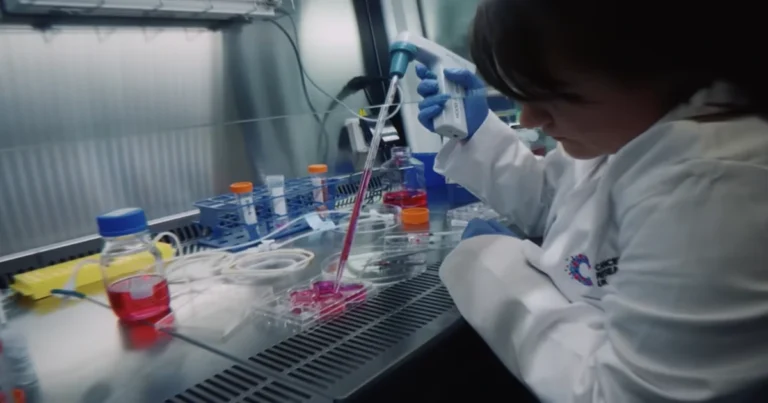
In the laboratory, the forensic analyst begins the extraction phase, the goal of which is to isolate pure DNA from the biological matrix of the blood stain. Whole blood contains nucleated white blood cells (leukocytes), which are the primary sources of nuclear DNA. The analyst lyses (breaks open) the cells using a combination of detergents (such as sodium dodecyl sulfate), proteinase K, and mechanical agitation to release cellular contents (Butler, 2015). The lysate is then purified using one of several methods. The most common in modern forensic practice is solid-phase extraction using silica columns or magnetic beads, which selectively bind DNA while allowing proteins, salts, and other contaminants to be washed away (Houck & Siegel, 2015). The result is a clean aqueous solution of DNA ready for quantification.
Step 5: DNA Quantification
Before amplification, the quantity and quality of extracted DNA must be assessed. Forensic laboratories use real-time quantitative PCR (qPCR) for this purpose, which allows analysts to simultaneously quantify total human DNA and assess the ratio of male-to-female DNA (relevant if the sample may contain mixed male DNA) (Swango et al., 2006). Quantification results guide the subsequent amplification step; if DNA concentration is too high, it may produce artifactual peaks, while too little may result in allelic dropout—the failure to detect one allele at a given locus. Optimal input for forensic STR typing is typically 0.5 to 1.0 nanograms of DNA (Applied Biosystems, 2017).
Step 6: The Polymerase Chain Reaction (PCR)
PCR is the cornerstone of modern forensic DNA analysis and represents one of the most significant methodological advances in biological science (Mullis et al., 1986). Developed by Kary Mullis in 1983, for which he was awarded the Nobel Prize in Chemistry in 1993, PCR is an in vitro enzymatic process that exponentially replicates specific target sequences of DNA, generating millions of copies from as few as a single template molecule (Saiki et al., 1988).
The PCR process proceeds through three thermally controlled stages in repeated cycles, typically 28 to 32 in forensic applications:
1. Denaturation (94–96°C): The double-stranded DNA template is heated, breaking the hydrogen bonds between complementary base pairs and separating the two strands into single-stranded templates.
2. Annealing (50–65°C): Short synthetic DNA sequences known as primers—specifically designed to flank the target locus—bind to complementary sequences on the single-stranded templates.
3. Extension (72°C): Thermostable DNA polymerase (Taq polymerase, derived from Thermus aquaticus) synthesizes new complementary strands by extending from the primers, using the template strand as a guide (Butler, 2015).
Each cycle effectively doubles the target sequence; after 30 cycles, a single copy of DNA can yield over one billion identical copies. This extraordinary amplification capacity is what makes PCR indispensable in forensic science—enabling reliable analysis of degraded, aged, or trace biological samples such as a small dried blood stain (Gill et al., 1985).
Step 7: Short Tandem Repeat (STR) Analysis
Modern forensic DNA profiling is based on the analysis of Short Tandem Repeats (STRs), which are non-coding regions of the genome where a short motif of two to seven base pairs is repeated in tandem a variable number of times (Jobling & Gill, 2004). The number of repeats at each STR locus varies considerably between individuals, making them highly informative for identification purposes. In the United States, the FBI’s CODIS (Combined DNA Index System) database currently employs a standardized panel of 20 core STR loci for forensic comparisons (FBI, 2017). Similar expanded panels are used by Interpol and national databases in the United Kingdom, Australia, and across Europe. Following PCR amplification of multiple STR loci simultaneously through multiplex PCR, the amplified fragments are analyzed by capillary electrophoresis (CE), which separates DNA fragments by size with high resolution. Fluorescent dye-labeled PCR products pass through a polymer-filled capillary under an electric field, with smaller fragments migrating faster. A laser detects the fluorescent signal, and the resulting electropherogram displays peaks corresponding to alleles at each locus (Buckleton et al., 2016).
Step 8: Profile Interpretation and Statistical Analysis
The raw electropherogram is interpreted by a trained DNA analyst who identifies the allelic designations at each locus. In a clean single-source sample, each locus should display one or two peaks corresponding to the individual’s genotype. In mixed samples (containing DNA from two or more contributors), interpretation becomes significantly more complex and may require probabilistic genotyping software such as STRmix or TrueAllele (Taylor et al., 2013). The resulting DNA profile is then subjected to statistical analysis to determine its evidentiary weight. Using population frequency databases stratified by ethnicity, analysts calculate a Random Match Probability (RMP)—the probability that a randomly selected unrelated individual from the population would coincidentally share the same DNA profile. With the full 20-locus CODIS panel, RMPs routinely exceed one in a quadrillion (1 × 10^15), underscoring the extraordinary discriminating power of modern STR profiling (National Research Council, 2009).
Step 9: Database Searching and Suspect Comparison
Once a DNA profile is generated from the crime scene blood stain, it is searched against the CODIS database, which contains profiles from convicted offenders, arrestees, and forensic unknowns. A database match—termed a “cold hit”—can identify a suspect who has no prior connection to the investigation (FBI, 2017). If a suspect has already been identified through traditional investigative methods, a reference DNA sample (typically a buccal swab) is collected from the suspect, processed using identical protocols, and the resulting profile is directly compared to the crime scene profile. For the comparison to constitute a match, the profiles must be concordant at all tested loci. Any unexplained discordance at a single locus is treated as an exclusion.
Step 10: Reporting and Expert Testimony
The forensic analyst prepares a comprehensive written report documenting all procedures, findings, statistical calculations, and conclusions in accordance with accreditation standards set by bodies such as ASCLD (American Society of Crime Laboratory Directors) or UKAS in the United Kingdom. The report must be scientifically transparent and reproducible. When the case proceeds to court, the analyst may testify as an expert witness, explaining the methodology, the resulting profile, the statistical significance, and the conclusion of match or exclusion to the judge and jury in accessible language (Buckleton et al., 2016). Courts in most jurisdictions apply a gatekeeping standard—such as the Daubert standard in the United States—to assess the scientific validity and acceptance of the methodology before admitting DNA evidence (Daubert v. Merrell Dow Pharmaceuticals, 1993).
Conclusion
The forensic application of DNA profiling represents one of the most scientifically rigorous and judicially impactful developments in criminological history. From the careful collection of a blood stain at a crime scene, through the molecular amplification power of PCR, to the statistical certainty of STR comparison against national databases, each step in the process is governed by strict scientific protocols and legal safeguards. The role of PCR is particularly central: without it, the trace quantities of DNA present in most crime scene biological materials would be insufficient for analysis. As technology continues to advance—with developments such as rapid DNA analysis, next-generation sequencing, and probabilistic genotyping—the precision and scope of forensic DNA profiling will only continue to expand, further strengthening the capacity of the criminal justice system to achieve accurate and just outcomes.
References
Applied Biosystems. (2017). GlobalFiler PCR amplification kit user guide. Thermo Fisher Scientific.
Bevel, T., & Gardner, R. M. (2008). Bloodstain pattern analysis with an introduction to crime scene reconstruction (3rd ed.). CRC Press.
Buckleton, J. S., Triggs, C. M., & Walsh, S. J. (Eds.). (2016). Forensic DNA evidence interpretation (2nd ed.). CRC Press.
Butler, J. M. (2015). Advanced topics in forensic DNA typing: Interpretation. Academic Press.
Daubert v. Merrell Dow Pharmaceuticals, Inc., 509 U.S. 579 (1993).
Federal Bureau of Investigation. (2017). CODIS and NDIS fact sheet. U.S. Department of Justice. https://www.fbi.gov/services/laboratory/biometric-analysis/codis/codis-and-ndis-fact-sheet
Gill, P., Jeffreys, A. J., & Werrett, D. J. (1985). Forensic application of DNA fingerprints. Nature, 318(6046), 577–579. https://doi.org/10.1038/318577a0
Houck, M. M., & Siegel, J. A. (2015). Fundamentals of forensic science (3rd ed.). Academic Press.
James, S. H., Nordby, J. J., & Bell, S. (2005). Forensic science: An introduction to scientific and investigative techniques (2nd ed.). CRC Press.
Jobling, M. A., & Gill, P. (2004). Encoded evidence: DNA in forensic analysis. Nature Reviews Genetics, 5(10), 739–751. https://doi.org/10.1038/nrg1455
Kayser, M., & Sajantila, A. (2000). Mutations at Y-STR loci: Implications for paternity testing and forensic analysis. Forensic Science International, 118(2–3), 116–121. https://doi.org/10.1016/S0379-0738(00)00173-4
Mullis, K., Faloona, F., Scharf, S., Saiki, R., Horn, G., & Erlich, H. (1986). Specific enzymatic amplification of DNA in vitro: The polymerase chain reaction. Cold Spring Harbor Symposia on Quantitative Biology, 51(1), 263–273. https://doi.org/10.1101/SQB.1986.051.01.032
National Institute of Justice. (2013). A guide to trace evidence science. U.S. Department of Justice, Office of Justice Programs.
National Research Council. (2009). Strengthening forensic science in the United States: A path forward. National Academies Press. https://doi.org/10.17226/12589
Saiki, R. K., Gelfand, D. H., Stoffel, S., Scharf, S. J., Higuchi, R., Horn, G. T., Mullis, K. B., & Erlich, H. A. (1988). Primer-directed enzymatic amplification of DNA with a thermostable DNA polymerase. Science, 239(4839), 487–491. https://doi.org/10.1126/science.2448875
Swango, K. L., Hudlow, W. R., Timken, M. D., & Buoncristiani, M. R. (2006). Developmental validation of a multiplex qPCR assay for assessing the quantity and quality of nuclear DNA in forensic samples. Forensic Science International, 162(1–3), 90–100. https://doi.org/10.1016/j.forsciint.2006.06.018
Taylor, D., Buckleton, J., & Bright, J. A. (2013). Does the use of probabilistic genotyping change the way we should view sub-threshold data? Australian Journal of Forensic Sciences, 47(3), 259–270. https://doi.org/10.1080/00450618.2014.931997