
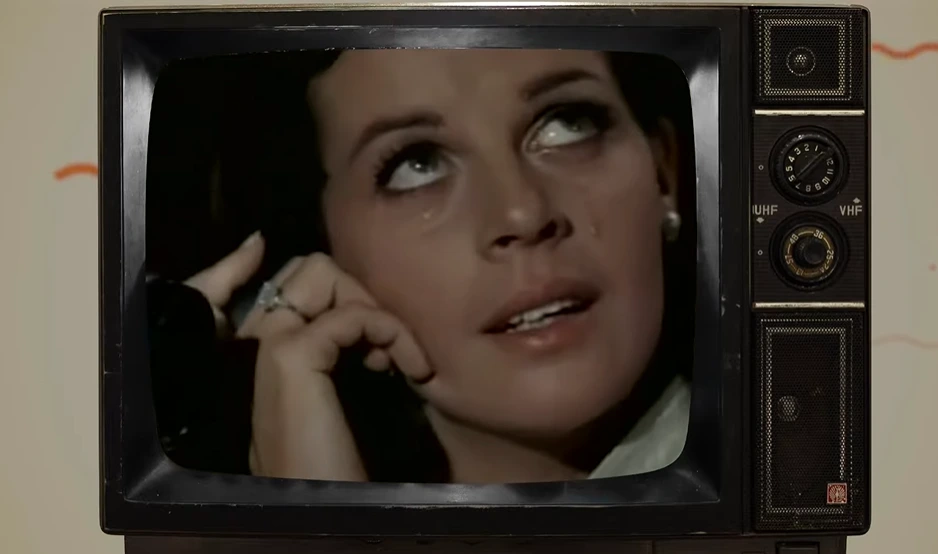
Singer and actress Claudine Longet has died at 84 in Aspen. Read about her marriage to Andy Williams, the fatal shooting of Spider Sabich, her 1977 trial, and her decades of seclusion in Colorado.
The “waiflike” voice that once enchanted millions and the woman at the centre of one of the 20th century’s most sensational trials have fallen silent. Claudine Longet, the French-born singer and actress who defined a specific brand of 1960s pop elegance before disappearing into a life of quiet seclusion in the Rocky Mountains, passed away on Thursday, May 14, 2026. She was 84.
Her death was confirmed by her nephew, Bryan Longet, in a social media tribute that described her as a “true inspiration” and a “star in the sky”. While she spent her final decades far from the flashbulbs of Hollywood, the news of her passing has reignited reflections on a life that was both a fairytale of stardom and a tragedy of Shakespearean proportions.
The “Doe-Eyed” Star of the Sixties
Born in Paris in 1942, Claudine Longet’s ascent was the stuff of Hollywood legend. Discovered as a teenage lead dancer at the Folies Bergère in Las Vegas, she captivated the world’s “favorite crooner,” Andy Williams, after he stopped to help her with her stalled car. Their 1961 marriage turned her into a fixture of American entertainment.
Longet became the embodiment of 1960s “whisper-pop”. With her heavy French accent and delicate delivery, she released a string of hit albums on Herb Alpert’s A&M Records, including The Look of Love and Love is Blue. On screen, she was the standout lead in the 1968 comedy classic The Party alongside Peter Sellers. To the public, she was the “doe-eyed innocent”—a persona that made the events of the following decade all the more shocking.
The Aspen Tragedy and the Shot Heard ‘Round the World
The trajectory of Longet’s life changed forever on March 21, 1976. By then divorced from Williams, she was living in Aspen, Colorado, with her boyfriend, Olympic ski champion Vladimir “Spider” Sabich.
That afternoon, inside their mountaintop home, a .22-calibre pistol in Longet’s hand discharged, striking Sabich in the stomach as he prepared to shower. He bled to death before help could arrive.
The ensuing trial in 1977 turned the quiet ski town of Aspen into a global media circus. Longet maintained the shooting was a tragic accident, claiming the gun went off while Sabich was showing her how to use it.
Though the prosecution painted a picture of a jealous, volatile relationship, a jury eventually convicted her of negligent homicide—a misdemeanor.
The light sentence—30 days in jail and a $250 fine—outraged the Sabich family and many in the sports world, sparking a debate about celebrity privilege that persisted for fifty years.
Five Decades of Seclusion
Following the trial, Longet did what few modern celebrities could: she vanished. Despite the intense media harassment, she chose to stay in Aspen, the very town that had judged her.
In 1985, she married her defense attorney, Ron Austin, and lived a remarkably private life, reportedly focusing on her three children and her garden.
She never returned to the stage, never wrote a “tell-all” memoir, and never sought to reclaim her fame. For the people of Aspen, she became a ghostly figure, a “neighbour” whom everyone knew but no one bothered with.
In her silence, she left behind a legacy that remains deeply polarised: to some, a tragic figure caught in a moment of horror; to others, a woman who escaped the full weight of justice.
As the sun sets over the peaks of Starwood this evening, the story of Claudine Longet finally moves from the tabloids into the history books. She leaves behind a catalog of music that remains a time capsule of 1960s optimism, forever contrasted against the haunting, quiet life she led in the shadows of the mountains.