Did Coachella’s record-breaking $10 million payout for Justin Bieber’s “YouTube set” pay off?
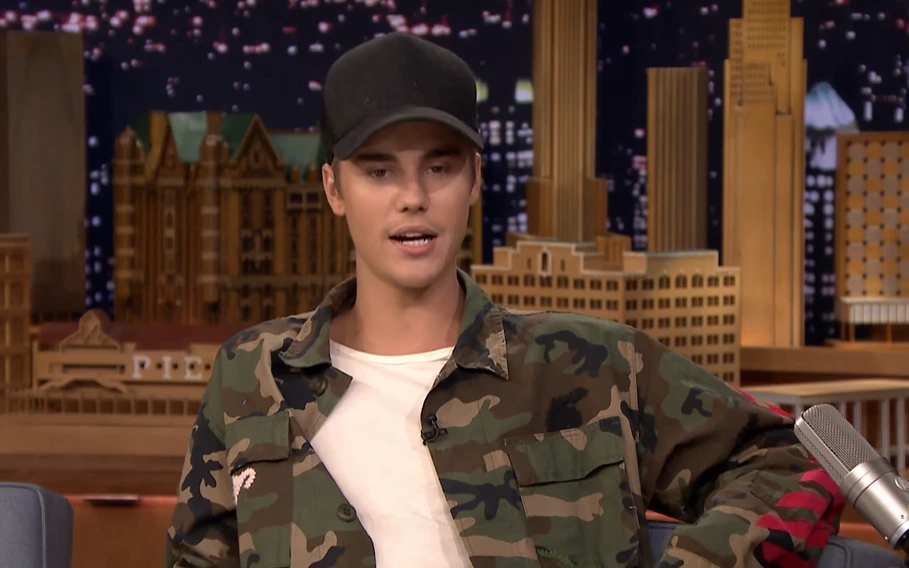
As the dust settles over the Empire Polo Club following the second weekend of Coachella 2026, one image remains seared into the collective memory of the festival: the world’s most famous pop star, Justin Bieber, sitting on a stool, bathed in the glow of a MacBook Pro.
It was a 90-minute set that redefined the concept of a “headliner”, trading the pyrotechnics and precision choreography of his peers for a lo-fi, deeply personal, and highly controversial “digital self-portrait“.
For Goldenvoice, the promoter behind the desert spectacle, the price tag for this experiment was a staggering $10 million, the highest guarantee ever paid to a single artist in the festival’s history. Now, as the industry crunches the numbers and the internet continues its polarized debate, the question remains: was it a stroke of genius or a costly miscalculation?
A Defiant Return to the “Bedroom Era”
After years of health struggles and a retreat from the global stage, Bieber’s return was expected to be a maximalist triumph. Instead, he presented its opposite. Dressed in a simple pink hoodie and sunglasses, he turned the cavernous main stage into a metaphorical version of the Ontario bedroom where his career began.
The most discussed segment of the night saw Bieber manually scrolling through his own YouTube history, pulling up 2010-era music videos for hits like “Baby” and “All That Matters“. For nearly a third of the set, the audience watched a 32-year-old man watch his 15-year-old self.
To his critics, it was “lazy” and “underproduced”, a sentiment echoed by a viral social media post from Julia Fox that highlighted the double standard between male and female performers. To his “Beliebers”, however, it was a moment of radical vulnerability, a superstar finally “healing” his childhood trauma in front of 100,000 people.
The Economics of the Catalog Sale
The $10 million payday did not happen in a vacuum. It arrived three years after Bieber sold his entire music catalogue to Hipgnosis Songs Capital for over $200 million a move that provided immediate liquidity but stripped him of the long-term royalties from his biggest hits.
Industry analysts suggest that the Coachella fee was a calculated “market reset”. By negotiating the deal directly without an agent, Bieber secured a pay cheque that signalled to the broader endorsement and residency markets that he is once again a high-value, bookable asset. While he may not own the rights to the songs he played via YouTube that night, the performance itself acted as a massive advertisement for his 2025 albums, Swag and Swag II, which provided the sonic backbone for the rest of his set.
Contrasting the Desert Landscape
The “gamble” was made even more apparent by the performances that bookended Bieber’s Saturday night slot. On Fridays, Sabrina Carpenter delivered a high-octane, Hollywood-themed spectacle with multiple outfit changes and intricate staging for roughly half of Bieber’s fee. On Sundays, Karol G brought a vibrant, reggaeton energy that celebrated Latin culture with a production cost that reportedly tripled her own payout.
Bieber’s choice to skip the “pop star” tropes was a deliberate pivot toward artistic autonomy. “He’s not playing into your idea of what a ‘pop star’ is anymore,” noted one fan in a viral Reddit thread. “No production, no choreography, just him. Take it or leave it.” This “take it or leave it” attitude was bolstered by guest appearances from the likes of The Kid LAROI, Wizkid, and Tems, who provided the energy peaks that the minimalist set otherwise lacked.
The Verdict: A Victory of Narrative Over Spectacle
So, did the gamble pay off? If the metric is purely social media engagement and cultural relevance, the answer is a resounding yes. “Bieberchella” dominated the 2026 news cycle in a way that a standard, high-production show likely would not have. It sparked essential conversations about gendered expectations in music, the nature of celebrity trauma, and the future of live performance art.
Financially, the payoff sits downstream. The Coachella headline slot has effectively re-opened Bieber’s “premium tier” for future Saudi or Vegas residencies and brand activations. More importantly, it allowed a “troubled prince” of pop to rewrite his own story. He didn’t just perform; he invited the world to sit in his living room and witness his growth.
For a festival that has always prided itself on being at the bleeding edge of culture, perhaps a $10 million laptop session was exactly the kind of risk it needed to take.