New York City Mayor Zohran Mamdani urges King Charles III to return the Koh-i-Noor diamond to India.
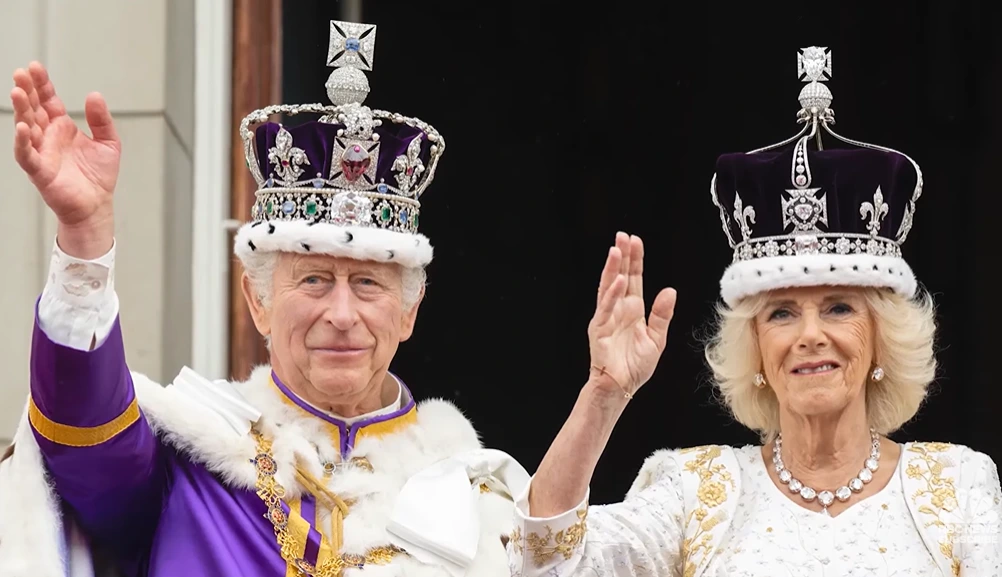
In a city known for its bluntness and bold political statements, the visit of a British monarch was never going to be a simple affair of ribbons and handshakes. On Wednesday, as King Charles III and Queen Camilla arrived at the National 9/11 Memorial & Museum to pay tribute to the victims of the 2001 terror attacks, the solemnity of the occasion was met with a sharp reminder of a much older historical grievance.
New York City Mayor Zohran Mamdani, known for his democratic socialist leanings, stepped beyond the bounds of standard statecraft to urge the return of India’s most famous “unreturned asset“: the Koh-i-Noor diamond.
The Mayor’s comments have reignited a global debate that has simmered for nearly two centuries, transforming a standard diplomatic visit into a forum for historical reckoning.
The Private Advice in a Public Forum
Speaking to reporters before his interaction with the royal couple, Mamdani was asked what he would say to the King if given the opportunity for a private conversation. His response was direct and bypassed the usual pleasantries of international diplomacy.
“If I was to speak to the king separately from that, I would probably encourage him to return the Koh-i-Noor diamond,” Mamdani stated at a press conference on Wednesday.
While his primary focus remained on the wreath-laying ceremony honoring the 2,977 victims of 9/11, including 67 British citizens, Mamdani’s background made the comment feel like a personal and intellectual imperative.
The son of renowned academic Mahmood Mamdani, who specializes in the study of colonialism, and Indian-born filmmaker Mira Nair, the Mayor’s perspective is deeply rooted in his family’s work on the lasting impacts of British imperial rule.
A Legacy of “Drain and Duress”
The Koh-i-Noor, or “Mountain of Light”, is currently set in the Crown of Queen Elizabeth the Queen Mother and remains one of the star attractions at the Tower of London. However, for many in India, the 105.6-carat gem is a symbol of the “drain of wealth” that occurred during the colonial era.
The diamond was mined in the Kollur Mine of India and passed through various dynasties before being “ceded” to Queen Victoria in 1849. The legal foundation of its ownership rests on the Treaty of Lahore, signed following the Second Anglo-Sikh War.
Critics, including Mamdani, point out that the treaty was signed by the 10-year-old Maharaja Duleep Singh under extreme duress, arguing that a child-king’s forced signature should hold no moral or legal weight in the modern world.
Global Echoes of Restitution
Mamdani’s call is not an isolated voice. It joins a growing chorus from across the Global South demanding the repatriation of cultural artifacts, from the Elgin Marbles of Greece to the Benin Bronzes of Africa. While some British political figures have already slammed the Mayor’s comments as an “insult to the King,” the Indian government has indicated it will continue to explore “satisfactory resolutions” for the diamond’s return.
As the royal couple concluded their visit to the One World Trade Center, the conversation Mamdani started lingered. For the Mayor, and for many who view the diamond as looted treasure, the path to a truly post-colonial future requires more than just ceremonies: it requires the return of what was taken.