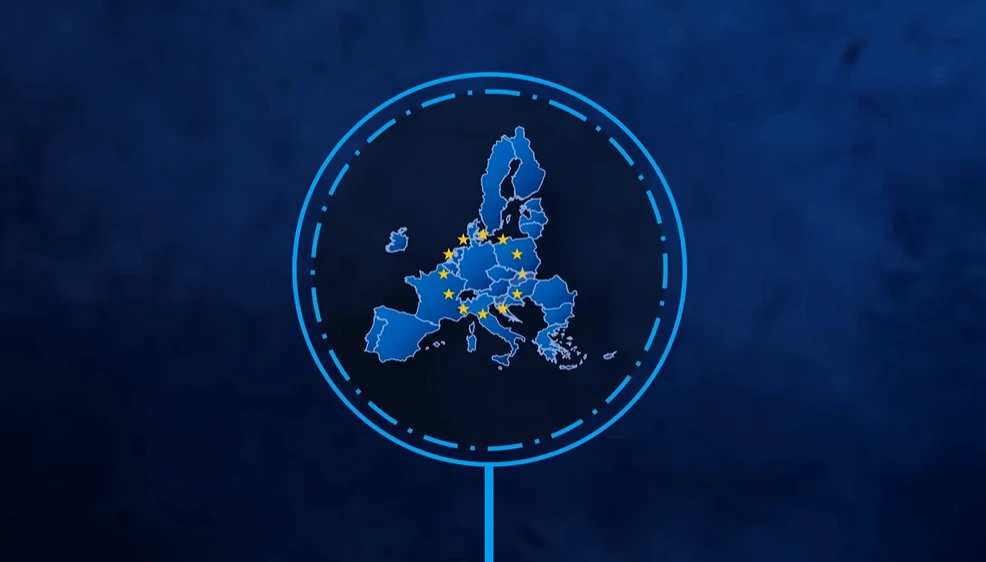
The Cypriot EU Council Presidency stated on Wednesday that EU member states have accepted Ukraine’s €90 billion aid package.
The decision came after Ukraine repaired the damaged Druzhba pipeline, which transports Russian oil to Hungary and Slovakia. Hungary lifted its veto, with departing Prime Minister Viktor Orbán’s administration supporting the decision in Brussels.
Furthermore, the permanent representatives of EU member states in Brussels were able to launch a fresh round of sanctions against Russia. It attempts to further lower Russia’s gas and oil sales income.
Further financial institutions will be barred from doing foreign payment operations, and new trade restrictions will be enforced. Hungary and Slovakia also opposed the package.
“Druzhba” pipeline as an obstacle
The formal judgements must still be made in writing, and they are expected to be finished by Thursday at noon. This could only fail if scheduled Russian oil exports to Hungary and Slovakia are not completed by then.
Budapest confirmed on Wednesday afternoon that the pipeline has started operations. According to the report, Russian crude oil is scheduled to arrive in Hungary later tonight or early Thursday morning.
To persuade Orban and Slovak Prime Minister Robert Fico to withdraw their vetoes, Ukraine permitted the Druzhba pipeline to reopen on Tuesday. This pipeline transports Russian oil over Ukrainian territory to Hungary and Slovakia.
Orban and Kyiv dispute
Orban had accused Ukraine of stopping Russian oil supply through the pipeline for political purposes, and his acceptance of further EU funds for the nation was conditional on the pipeline’s reactivation.
The Kyiv administration denied the charges, emphasising the necessity to rebuild the pipeline following Russian attacks in January.
The Hungarian blockage has sparked indignation and condemnation for weeks, owing principally to Orban’s agreement to the financing package at an EU summit in December.
However, right-wing populists eventually triumphed, forcing Ukraine to restore pipeline operations.
Governments in Ukraine and many other EU nations hope that prospective Prime Minister Peter Magyar would adopt a new path and be less obstructive in Brussels. For example, Orban obstructed Ukraine’s EU admission path.
The loan is meant to allow Kyiv to continue its defensive struggle
Of the extra €90 billion in EU financial aid, €60 billion is set aside for defence-related spending. Half of the funds are scheduled to be distributed this year, with an additional €45 billion potentially coming next year. The financing strategy envisions raising cash for the loan on favourable terms in the capital market.
Ukraine would only have to repay the money if Russia provides compensation for the damages incurred after the end of its war of aggression. An agreement reached by the heads of state and government further stipulates that Russian assets frozen in the EU would be used for repayment if Moscow fails to provide compensation for war damages.
The entry into force was planned for February
The sanctions package now being implemented was originally scheduled to take effect in February, on the fourth anniversary of the Russian invasion. In the energy sector, it prohibits EU companies from participating in the repair of Russian refineries damaged by Ukrainian attacks.
Furthermore, transactions with port terminals in Russia and other nations, as well as LNG terminal services and maintenance for Russian LNG tankers and icebreakers, are forbidden. At the same time, a prior exception for natural gas condensates from the import restriction on Russian crude oil is lifted.
Weber calls for an end to criminal proceedings against Hungary
Meanwhile, Manfred Weber, head of the European People’s Party (EPP) group in the European Parliament, called for a quick end to the EU sanctions on Hungary. The German CSU lawmaker told the German Press Agency (dpa) that the Article 7 proceedings against Hungary were clearly related to Orban’s anti-rule-of-law activities.
Weber stated that it was necessary for the EU Parliament to recognize Magyar’s pro-European path. “This must then lead to us taking the first steps to discontinue the Article 7 procedure,” Weber added.