Original Title: 南京照相馆 (Nanjing Photo Studio)
Director: Shen Ao
Writers: Xu Luyang, Zhang Ke, Shen Ao
Cast: Liu Haoran, Wang Chuanjun, Gao Ye, Wang Xiao, Zhou You, Yang Enyou, Daichi Harashima
Runtime: 137 minutes
Release Date: July 25, 2025, in Mainland China
Box Office: approx. RMB 1.586 billion (~$113 million) domestically.
Plot & Setting
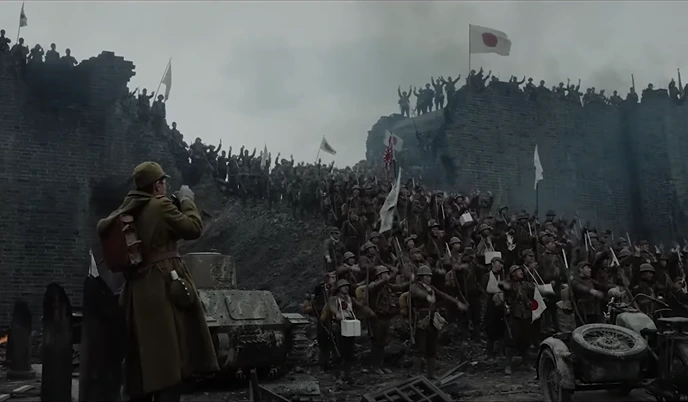
Set against the horrors of the 1937 Nanjing Massacre, Dead to Rights brings you inside a modest photo studio where ordinary civilians, including postman A‑Chang (Liu Haoran), take refuge. Under Japanese occupation, A‑Chang poses as a photo‑lab apprentice for a military translator, forced to edit images for the occupiers. Meanwhile, he covertly shelters Chinese refugees and risks exposure to document atrocities via photographs. As evidence-bearing film rolls are smuggled out, the film becomes a vessel of resistance and memory.
Performances & Direction
Liu Haoran delivers a restrained yet emotionally charged performance as A‑Chang — quiet anguish carried in his eyes, a moral core under pressure. Wang Chuanjun (as Japanese translator Wang Guanghai) and Gao Ye add complexity to the dynamic between oppressor and survivor, while the ensemble supports with realism and emotional depth. Director Shen Ao orchestrates a compelling claustrophobic setting, focusing on detail in tone, costume, and period-accurate cinematography by Cao Yu. Editor Zhang Yifan maintains tight tension throughout the 137 minutes.
Cinematic Craft & Score
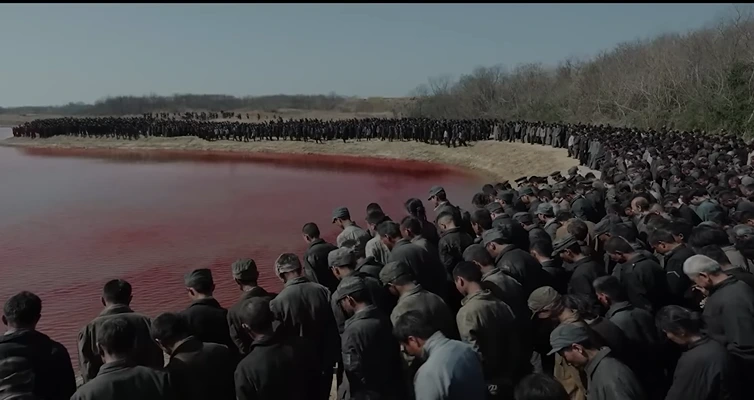
Cinematographer Cao Yu captures the studio’s confined space with grainy austerity, contrasting it with fleeting shots of ruined Nanjing and chaotic street scenes. The color palette drops to muted greys and browns, accented only by the red of blood or film print. The score by Peng Fei underscores emotional climax without overt melodrama; instead, it rises subtly as characters weigh courage against survival.
Themes & Historical Significance

Dead to Rights goes deeper than spectacle. It highlights:
- Moral complexity in wartime — A‑Chang’s dual role as collaborator and protector.
- Power of documentation — photographs as witness and proof.
- Memory and shame — urging viewers to never forget atrocities.
Several user reviews on IMDb emphasise the national importance:
“A heartbreaking film that exposes the horrors of the Nanjing Massacre… A must watch for history and justice.”
“This is the 1st movie ever made to show the viewpoint of the victimized Chinese citizens during Nanjing Massacre.”
Fandom voices echo:
“Every Chinese person should watch—not to forget this piece of history… I was already in tears before the 30 minutes of the film.”
The film’s tone is unwavering, its message resolute.
Box Office & Reception
Debuting at No.1 in China, Dead to Rights earned approx. RMB315.1million (≈$44million) in its opening weekend, with cumulative revenue reaching $57.2million shortly thereafter, and ultimately closing around RMB1.586billion (~$113million) domestically. By mid-August, it ranked fourth among Chinese films in 2025 by gross earnings.
Its success reflects a domestic appetite for historically rooted, emotionally resonant narratives that reinforce collective memory and national dignity.
Public Discourse & Online Response
Although detailed forum debates on Reddit or Douban about this film remain limited, conversations around Chinese cinema show a polarized audience environment. Some express frustration with repetitive patriotic themes or low cinematic quality; others defend historical dramas as necessary cultural preservation.
The grassroots sentiment on IMDb indicates viewers felt profoundly affected: numerous ten‑out‑of‑ten reviews cite its emotional gravity and historical duty.
Strengths & Weaknesses

Strengths:
- Unflinching focus on civilian suffering and resistance.
- Intimate production design and cinematography immerse viewers.
- Strong central performance from Liu Haoran anchors the narrative.
- Resonated broadly with domestic audiences, contributing to strong box-office.
Weaknesses:
- At nearly 2h 17m, pacing lags in quieter scenes.
- Minimal character arcs beyond the core ensemble may leave secondary figures underdeveloped.
- The film speaks primarily to domestic Chinese memory—international audiences may find context lacking without background.
Critical Verdict
Dead to Rights is a powerful historical drama-sombre, moving, visually disciplined—crafted for remembrance. It makes the case that cinema can be archival testimony, a vessel for grief, outrage, and moral accountability. For audiences invested in modern Chinese history or cinematic storytelling about war and survival, this film is an essential experience.
With its emotional focus on ordinary people and unwavering commitment to documenting history, Dead to Rights (2025) stands out as one of the year’s most significant Chinese films. A cinematic tribute to victims, a moral reckoning, and a box-office phenomenon, all in one.
Follow Europeans24 for more updates on China.