Scientists have identified Nagatitan chaiyaphumensis, the largest dinosaur ever found in Southeast Asia. Weighing 27 tonnes and stretching 90 feet, this “Last Titan” was discovered in Chaiyaphum.
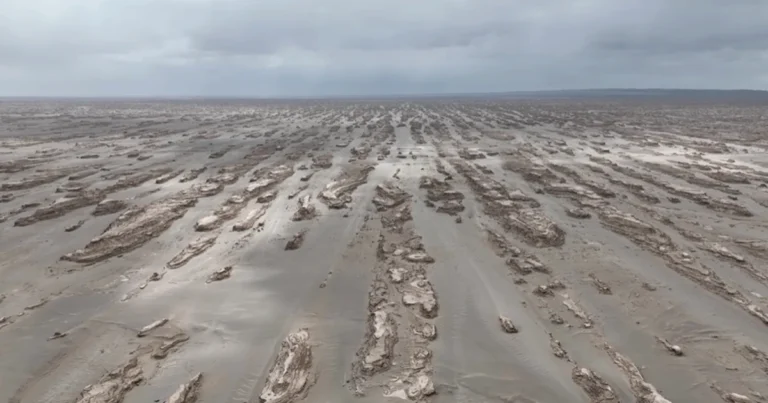
For the residents of a small village in northeastern Thailand, the “strange-looking rocks” sitting at the edge of a public pond were a curious but familiar sight for nearly a decade. To the casual observer, they were merely sun-bleached stones half-buried in the silt.
But to the team of palaeontologists who finally unveiled their secret this week, they were the keys to unlocking a prehistoric mystery.
On Thursday, May 14, 2026, a research team led by National Geographic Explorer Dr Sita Manitkoon announced the discovery of Nagatitan chaiyaphumensis. This newly identified sauropod is not just another addition to the fossil record; it is officially the largest dinosaur ever discovered in Southeast Asia, a behemoth that once shook the ground of what we now call the Khorat Plateau.
The Scale of a Legend
The sheer scale of Nagatitan is difficult to grasp through numbers alone. Estimates published in the journal Scientific Reports suggest the creature weighed approximately 27 to 30 tonnes, which is roughly equivalent to the weight of nine adult Asian elephants. From the tip of its snout to the end of its tapering tail, it stretched nearly 28 metres, or about 90 feet, making it comparable in length to a modern blue whale.
Among the fossils recovered was a front leg bone measuring 1.78 metres. This single bone stands as tall as an average human being. Palaeontologists noted that while Nagatitan was a plant eater, its massive size served as a natural fortress. During the Early Cretaceous period, even the region’s apex predators, such as the 26 foot long relatives of the Carcharodontosaurus, would have been dwarfed by a fully grown Nagatitan.
The “Last Titan” and the Ancient Sea
Researchers have affectionately nicknamed the species “the last titan” of Thailand. This title refers to the unique geological timing of the animal’s life. Nagatitan lived approximately 113 million years ago during the Early Cretaceous, an era when the Khorat Plateau was a semi-arid landscape characterized by meandering river systems and lush pockets of vegetation.
As the millions of years rolled on, the geography of the region shifted dramatically. The land that Nagatitan walked upon eventually sank and was covered by a shallow sea, which effectively brought the era of giant Thai sauropods to an end. Because younger rock formations in the area are marine in nature, scientists believe this may be the final massive long necked dinosaur that will ever be found in the region.
A Childhood Promise Fulfilled
While the scientific implications of the find are global, the human story behind the discovery is deeply personal. Lead author Thitiwoot “Perth” Sethapanichsakul, a Thai PhD student at University College London, shared that the project was the culmination of a lifelong obsession.
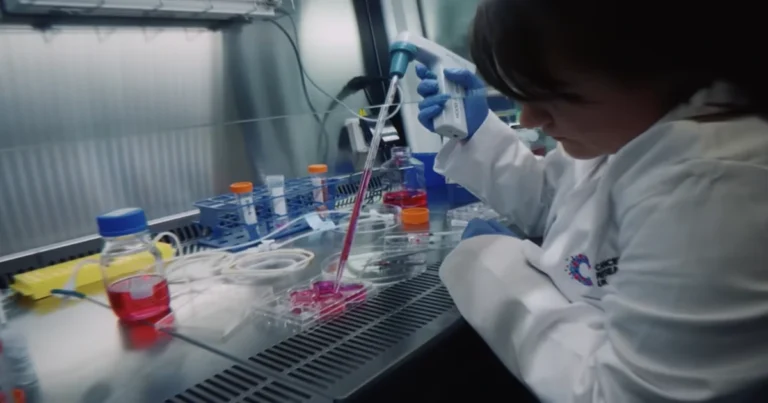
“I have always been a dinosaur kid,” Sethapanichsakul told reporters. He explained that describing and naming this species fulfilled a promise he made to himself as a child. His journey took him from the dusty dig sites of Chaiyaphum to the high-tech laboratories of London, where 3D scanning allowed the team to study the bones with unprecedented precision without needing to transport the fragile fossils across oceans.
The name itself, Nagatitan, pays homage to the local culture. It combines “Titan,” the giants of Greek mythology, with the “Naga,” a mythological serpent-like deity that holds deep spiritual significance in Southeast Asian folklore and is often associated with the very bodies of water where the fossils were found.
The Future of Thainosaurs
The discovery of Nagatitan marks the 14th unique dinosaur species named in Thailand since the first discovery in 1986. For Dr. Sita Manitkoon and her colleagues at Mahasarakham University, this “surge” in Thai palaeontology is only the beginning.
Despite being a relatively small country, Thailand has shown a remarkably high diversity of fossil life, possibly ranking as the third most abundant in Asia.
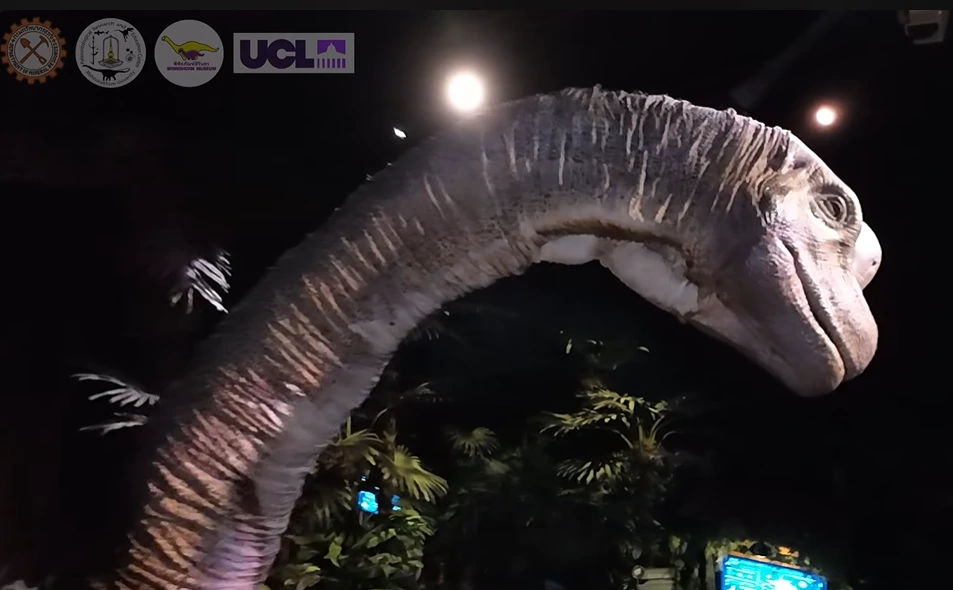
Today, a life size reconstruction of Nagatitan is on display at the Thainosaur Museum in Bangkok, standing as a silent sentry and a reminder of a time when giants ruled the east.
It serves as a bridge between a prehistoric past and a future generation of Thai scientists who are now looking at the rocks of their home provinces with a newfound sense of wonder.