Three hikers, including two Singaporean nationals, were killed when Mount Dukono erupted in Indonesia on May 8, 2026
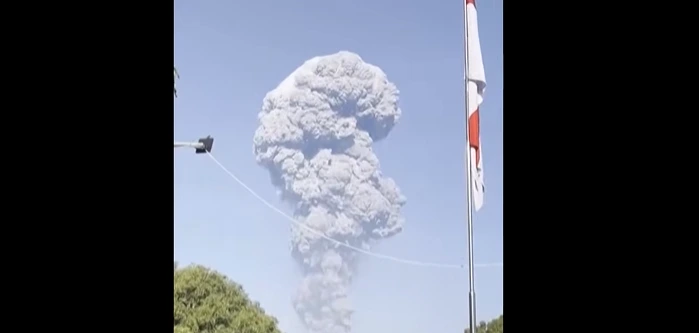
The tranquil morning air over the island of Halmahera was shattered on Friday when Mount Dukono, one of Indonesia’s most active and unpredictable volcanoes, roared to life in a violent eruption.
What began as a challenging trek for a group of international hikers ended in a profound tragedy, as local authorities confirmed that at least three people, including two Singaporean nationals, perished in the sudden blast of heat and ash.
The eruption, which occurred at approximately 7:41 a.m. local time, sent a massive column of volcanic debris nearly 10 kilometers into the atmosphere. For those on the slopes of the mountain, the “booming sound” described by witnesses was the start of a desperate race for survival against an environment that had instantly become lethal.
The Human Toll on the Slopes
The victims were part of a larger group of approximately 20 hikers who had ventured into the North Maluku highlands. Among the dead are two Singaporean nationals and a local resident from Ternate, according to North Halmahera Police Chief Erlichson Pasaribu.
The tragedy is compounded by the fact that the area had been declared strictly off-limits to visitors since April, following a sustained increase in volcanic tremors. Despite the warnings, the allure of the rugged peak drew hikers into the “red zone”, where they were caught completely exposed when the summit crater vented its fury.
While three lives were cut short, a further 10 individuals were initially reported missing in the chaotic aftermath. As of Friday afternoon, search and rescue teams have successfully evacuated 17 people from the lower slopes, many of whom are suffering from respiratory distress and minor injuries sustained during their frantic descent through the ash rain.
A Race Against the Rumbling Earth
The recovery and rescue operation, led by Indonesia’s national search and rescue agency, Basarnas, has been described as a “harrowing feat of endurance.” Iwan Ramdani, the head of the local rescue agency, noted that the terrain is only partially accessible by vehicle, forcing rescuers to navigate dense, ash-slicked forests on foot.
“The rumbling from the crater hasn’t stopped,” Chief Pasaribu told local media, describing the visceral fear that permeates the rescue site. “The victims have to be carried down on stretchers through rough terrain while we keep one eye on the sky. The ash distribution is leaning northward, threatening nearby Tobelo City and making every breath a struggle for our teams.”
The grit of the rescuers, comprising police, military personnel, and local villagers, stands as a testament to the human spirit in the face of nature’s overwhelming power. Their mission is currently hampered by the threat of volcanic mudflows (lahars), which could be triggered by any rainfall on the freshly deposited ash.
Living on the Ring of Fire
Mount Dukono has been on a Level 2 alert status since late March, serving as a constant reminder of Indonesia’s precarious position on the Pacific “Ring of Fire.” For the residents of Halmahera, the volcano is a familiar, albeit dangerous, neighbor. For the families of the hikers from Singapore and Ternate, however, it has become a site of sudden, inexplicable loss.
As Tobelo City prepares for potential ash fall and health officials warn of respiratory risks, the focus remains on the mountain. The search for any remaining survivors continues under a grey, suffocating sky, with the hopes of families in two different nations hanging in the balance.