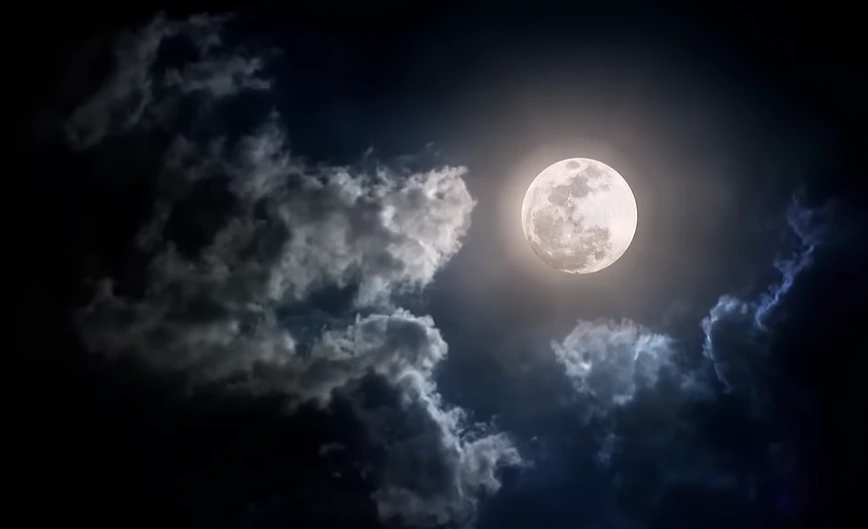
Friday, May 1, featured the peak of the 2026 Flower Moon. Learn about this “micromoon”, its connection to May Day, and why May 2026 will feature a rare second “Blue Moon” at the end of the month.
The night sky offered a celestial encore to May Day celebrations as the Full Flower Moon reached its peak on Friday night, May 1, 2026. As the first of two full moons scheduled for this month, Friday’s display served as a brilliant reminder of the changing seasons, washing the landscape in lunar light just as spring blooms reach their vibrant peak across the Northern Hemisphere.
While the technical moment of peak illumination occurred during the daylight hours for much of North America, the “Friday Night” experience remained the main event for backyard astronomers who watched the moon rise low in the southeast shortly after sunset.
Lunar Logistics: The Friday Night Breakdown
Though it appeared quite large to the naked eye near the horizon, Friday’s moon was technically a “micromoon,” occurring while the moon was near its farthest point from Earth in its elliptical orbit.
- Peak Illumination: Friday, May 1, at 1:23 p.m. EDT (17:23 UTC).
- Moonrise (NYC): Approximately 8:12 p.m. EDT on Friday evening.
- Celestial Companions: Observers were also treated to a clear view of Venus and Jupiter leading the evening sky, with Venus shining brightly near the star Aldebaran in the constellation Taurus.
- The “Micro” Factor: As a micromoon, it appeared roughly 6–7% smaller and 30% dimmer than a supermoon, providing a softer glow that was less likely to completely wash out nearby stars.
Why the “Flower Moon”?
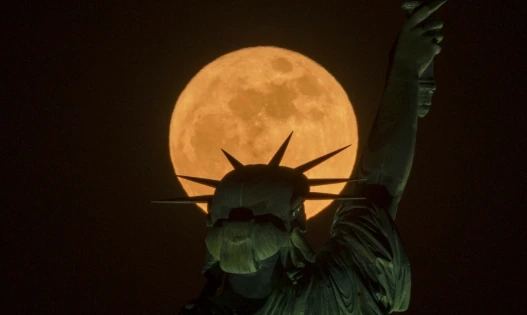
The name “Flower Moon” is deeply rooted in the agricultural and seasonal traditions of North America. Attributed largely to the Algonquin peoples, the name signifies the abundance of wildflowers, such as anemone, bluebells, and violets that erupt into bloom during the month of May.
Historically, this lunar phase signaled the final end of the winter frost, serving as a vital marker for early tribes and colonial settlers to begin their spring planting in earnest. Other traditional names for this moon include the Planting Moon, the Budding Moon, and the Milk Moon.
A Rare “Blue Moon” Month
For those who missed the peak on Friday night, May 2026 offers a rare second chance. Because the first full moon arrived so early in the month, a second one will appear on Sunday, May 31.
In modern astronomy, the second full moon in a single calendar month is known as a Blue Moon. This upcoming event will also be a “micro blue moon“, as it occurs even closer to the moon’s apogee (its farthest point) than Friday’s moon did. This makes May 2026 a particularly unique month for skywatchers, bookended by two distinct “mini” moons.
Since this month ends with a rare “Blue Moon,” do you plan to compare its size and brightness to Friday night’s Flower Moon, or are you more interested in the upcoming Eta Aquarid meteor shower peaking next week?