How the US-Israel war on Iran and Hormuz Strait closure threaten Europe’s energy security: $126 oil, LNG shortages, industrial crisis, and the end of energy complacency.
The joint US-Israel military campaign against Iran Operation Epic Fury, launched February 28, 2026—has precipitated what energy analysts are calling the most severe supply disruption in global oil market history. The subsequent closure of the Strait of Hormuz, through which approximately 20 million barrels of oil and substantial liquefied natural gas (LNG) transit daily, has exposed the persistent vulnerability of European energy security despite years of diversification efforts following Russia’s 2022 invasion of Ukraine. With Brent crude surging past $126 per barrel and European natural gas benchmarks nearly doubling to over €60/MWh, the crisis reveals an uncomfortable truth: Europe remains structurally exposed to Middle Eastern supply disruptions, and the transition to renewable energy has not proceeded rapidly enough to insulate the continent from fossil fuel volatility .
This analysis examines the immediate impacts of the Hormuz closure, the strategic calculations behind the US-Israel strikes, the cascading effects on European industrial competitiveness, and the long-term structural shifts this crisis will likely impose on global energy markets.
The Strikes: Strategic Context and Immediate Aftermath
Operation Epic Fury: Unprecedented Military Action
The US-Israeli military campaign against Iran represents the most significant direct Western assault on Iranian territory since the 1988 Operation Praying Mantis. The operation commenced with Israeli strikes on June 13, 2025, targeting Iran’s nuclear infrastructure, ballistic missile sites, and energy facilities, followed by American intervention under Operation Midnight Hammer on June 22, 2025 . However, the conflict escalated dramatically in February 2026, when joint operations resulted in the killing of Iranian Supreme Leader Ayatollah Ali Khamenei on February 28—an act that transformed a limited military campaign into a existential struggle for the Islamic Republic .
The February 2026 strikes employed B-2 Spirit stealth bombers delivering GBU-57A/B Massive Ordnance Penetrator (MOP) “bunker buster” bombs against deeply buried facilities at Fordow and Natanz, complemented by Tomahawk cruise missiles launched from submarines . According to satellite imagery analysis by the Institute for Science and International Security, these attacks effectively destroyed Iran’s centrifuge enrichment program and severely damaged infrastructure for weaponization, setting back Tehran’s nuclear ambitions by an estimated two years .
Yet the military success carried profound unintended consequences. Iran’s response—retaliatory missile strikes against US military bases, Israeli territory, and crucially, Gulf state energy infrastructure—immediately threatened the global energy architecture’s most critical chokepoint.
The Strait of Hormuz: A Geopolitical Weapon
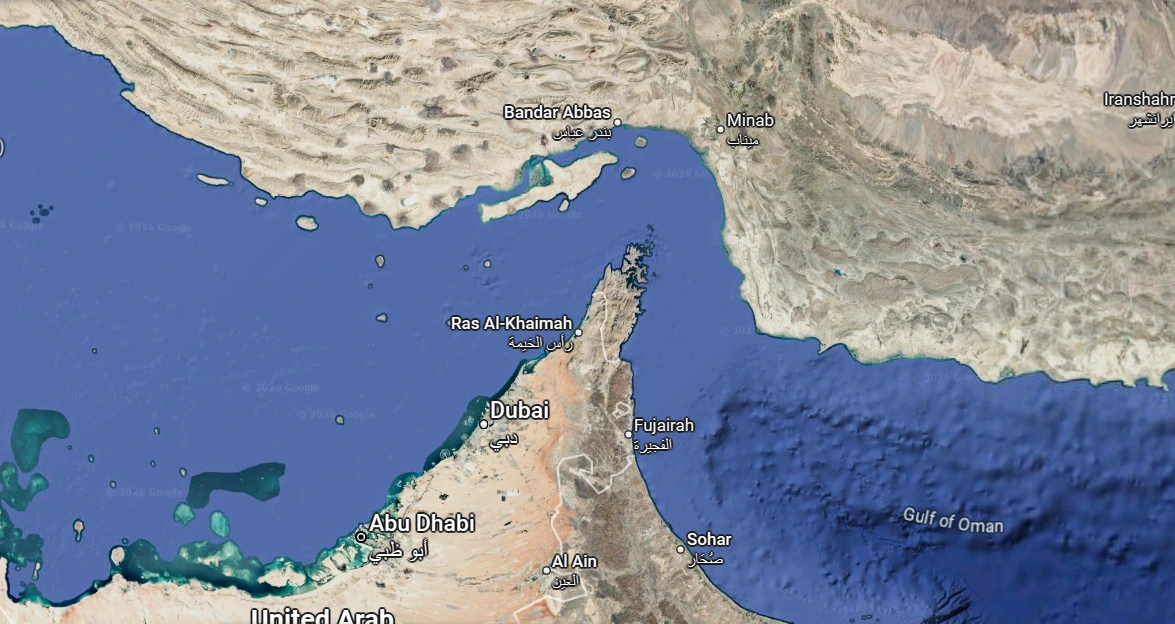
Within hours of Khamenei’s assassination, Iran’s Islamic Revolutionary Guard Corps (IRGC) began transmitting warnings via VHF radio to vessels in the Strait of Hormuz, effectively announcing that no ships would be permitted to pass . By March 2, 2026, a senior IRGC official confirmed the strait’s closure, threatening any vessel attempting transit. Though Iran maintained the strait remained “open” to vessels not linked to the US or Israel, the practical effect was immediate: tanker traffic plummeted by approximately 70% initially, then effectively dropped to zero as war-risk insurance coverage was withdrawn .
The strategic significance cannot be overstated. The Strait of Hormuz, merely 21 miles wide at its narrowest point, facilitates transit of roughly 20% of global seaborne oil trade and all LNG exports from Qatar and the United Arab Emirates—representing approximately 20% of global LNG commerce . In 2024, an estimated 84% of crude oil shipments through the strait were destined for Asian markets, with China receiving one-third of its oil via this route . However, Europe’s dependence, while smaller in percentage terms, proved no less consequential given the continent’s already strained energy position following the 2022-2023 crisis.
The European Energy Shock: From Crisis to Structural Threat
Immediate Price Volatility and Market Contagion
The European energy market’s response to the Hormuz closure was swift and severe. Dutch TTF natural gas benchmarks, the continent’s pricing reference, nearly doubled to over €60/MWh by mid-March 2026 . This spike occurred despite Europe entering 2026 with historically low gas storage levels—estimated at just 30% capacity following an unusually harsh 2025-2026 winter, compared to 46 billion cubic meters in February 2026 versus 60 bcm in 2025 and 77 bcm in 2024 .
Oil markets exhibited similar trauma. Brent crude, the international benchmark, surged from approximately $75 per barrel pre-conflict to over $126 at peak, exceeding $100 for the first time in four years . According to analysis by the Center for Strategic and International Studies (CSIS), this represented a 28% increase from pre-war levels within days, with volatility continuing as markets priced in prolonged disruption .
The speed of this price escalation exceeded that of the 1973 Arab oil embargo. Rapidan Energy Group characterized the disruption as three times larger than that historic crisis, while the International Energy Agency (IEA) authorized the release of 400 million barrels from emergency stockpiles, more than double the previous record release following Russia’s 2022 Ukraine invasion .
Europe’s LNG Vulnerability: The Qatar Factor
While European oil dependence on Gulf supplies has diminished since the 1970s, the continent’s LNG import structure has created a new vulnerability. Qatar supplies 12-14% of European LNG imports, all of which transit the Strait of Hormuz . When Iranian drones targeted Qatari gas facilities on March 2, 2026, QatarEnergy immediately halted all production, sending shockwaves through global gas markets .
This disruption proved particularly damaging because European gas storage refill operations, typically commencing in spring to prepare for the following winter, faced immediate jeopardy. The European Commission’s March 26 advisory urging member states to fill storages early acknowledged the existential risk of entering the 2026-2027 heating season with depleted reserves .
The crisis exposed a structural weakness in Europe’s post-2022 energy security architecture. Despite successful diversification away from Russian pipeline gas, the continent had replaced one dependency with another: reliance on global LNG spot markets. When Qatari supplies were interrupted, Europe found itself competing with Asian buyers for flexible cargoes, recreating the price dynamics that devastated industrial competitiveness during the 2021-2023 energy crisis .
Industrial Competitiveness Under Siege
The economic implications extend far beyond household energy bills. European industry, already struggling with structural energy cost disadvantages relative to American and Asian competitors, faces renewed margin compression. According to Bruegel, the Brussels-based economic think tank, higher gas prices feed directly into power prices and industrial margins, particularly for gas-intensive sectors such as chemicals, fertilizers, steel, and aluminum .
Oxford Economics modeling suggests that sustained oil prices at $140 per barrel for two months would push the Eurozone into mild contraction, with world CPI inflation peaking at 5.8% . Even at $100 per barrel, global GDP growth would suffer measurable deceleration. These projections, made in early March 2026, assumed temporary disruption; the prolonged closure through April suggests more severe outcomes.
The fertilizer sector illustrates the cascading industrial impacts. The Persian Gulf region accounts for 30-35% of global urea exports and 20-30% of ammonia exports, with up to 30% of internationally traded fertilizers normally transiting the Strait of Hormuz . Disruption to these flows threatens agricultural productivity globally, with particular impact on European farming sectors already stressed by climate transition requirements and input cost inflation.
Strategic Analysis: Why Europe Was Caught Unprepared
The Diversification Paradox
Europe’s energy policy since 2022 has focused intensively on diversifying supply sources, successfully reducing Russian gas imports from 40% of total consumption to negligible levels by 2025. Yet this diversification strategy prioritized source substitution over structural resilience. LNG terminals constructed with remarkable speed in Germany, the Netherlands, and elsewhere enabled import flexibility but created dependence on global spot markets inherently vulnerable to supply shocks .
The Hormuz crisis reveals the limitations of this approach. While Europe reduced direct exposure to Russian supply coercion, it increased exposure to maritime chokepoint risks and Middle Eastern geopolitical instability. The continent’s energy security, rather than being genuinely enhanced, was merely transformed trading one vulnerability for another.
The Renewable Transition Gap
European policymakers have consistently emphasized accelerated renewable energy deployment as the ultimate solution to energy security concerns. However, as of early 2026, fossil fuels still account for approximately 70% of primary energy consumption across the EU. The renewable transition, while progressing, has not reached the scale necessary to buffer against supply shocks of this magnitude.
Wind and solar generation, now comprising roughly 35% of EU electricity production, cannot readily substitute for natural gas in industrial heating, fertilizer production, or petrochemical feedstocks. The European green hydrogen economy, envisioned as a long-term replacement for Russian gas, remains in pilot phase with negligible commercial production. Consequently, when LNG supplies face disruption, Europe lacks alternative energy vectors to maintain industrial operations.
Storage Strategy Shortcomings
The chronically low gas storage levels entering the 2025-2026 winter—46 bcm versus 77 bcm in 2024—reflect both weather patterns and policy choices. The European Commission’s 2024-2025 winter passed without severe supply disruption, potentially fostering complacency regarding storage requirements. The subsequent harsh winter depleted reserves faster than anticipated, leaving Europe exposed precisely when the Hormuz crisis materialized .
This storage vulnerability represents a strategic planning failure. EU regulations mandate 90% storage fill by November 1, but the March 2026 crisis demonstrated that spring refill operations are equally critical for security of supply. The Commission’s belated March 26 advisory to accelerate storage filling—after prices had already surged—illustrates reactive rather than preventive crisis management .
Global Market Restructuring: The New Energy Geography
Asian Demand Destruction and European Competition
The Hormuz closure’s impacts extend far beyond immediate price spikes. China, which receives approximately one-third of its oil via the Strait of Hormuz and maintains strategic reserves of roughly one billion barrels, faces difficult consumption choices . Beijing’s foreign ministry has explicitly blamed US and Israeli military operations as the “root cause” of navigation interruptions, signaling potential diplomatic alignment shifts .
For Europe, Asian demand destruction—whether through strategic reserve releases or economic slowdown—offers limited relief. The LNG market’s global nature means European and Asian buyers compete directly for available supplies. When Qatari production halted, Asian buyers immediately diverted alternative cargoes, tightening global availability and forcing European utilities to bid premium prices for spot deliveries.
The Return of Coal and Demand Destruction
Should oil and gas prices remain elevated through 2026, European energy markets face unpalatable choices. Substitution effects—switching from gas to coal for power generation—would undermine climate commitments while potentially stabilizing prices. Alternatively, sustained high prices will force industrial demand destruction, with energy-intensive manufacturers curtailing production or relocating operations to jurisdictions with lower energy costs, primarily the United States.
This dynamic, observed during the 2022-2023 crisis, threatens permanent deindustrialization in sectors such as aluminum smelting, ammonia production, and specialty chemicals. The European Commission’s competitiveness agenda, focused on reducing industrial energy costs, faces direct contradiction from the Hormuz crisis outcomes .
Long-Term Supply Reconfiguration
The crisis will likely accelerate structural shifts in global energy trade patterns. Saudi Arabia and the UAE, observing Iran’s ability to paralyze Gulf exports, may accelerate pipeline infrastructure investments bypassing the Strait of Hormuz—most notably the Saudi East-West Pipeline expansion and potential UAE-Oman overland routes. However, these projects require years for completion, offering no immediate relief.
For Europe, the crisis reinforces arguments for maximizing indigenous energy production, including controversial considerations of North Sea oil and gas field extensions, nuclear power expansion, and accelerated renewable deployment. The UK’s renewed political debate over North Sea production taxation and investment signals shifting priorities, though analysts note that additional North Sea drilling would not significantly reduce British energy bills given global market pricing mechanisms .
Policy Implications: Rethinking European Energy Security
From Diversification to Resilience
The Hormuz crisis demands a fundamental reconceptualization of European energy security. The post-2022 diversification strategy focused on supply source multiplicity; the new imperative must be supply resilience—ensuring continuity regardless of geopolitical disruptions.
This requires several structural adjustments:
First, storage policy must evolve beyond seasonal filling mandates to require minimum inventory buffers maintained year-round, with strategic reserves physically separated from commercial stocks to prevent market-driven depletion during price spikes.
Second, European LNG import infrastructure, while impressive in aggregate capacity, requires enhanced connectivity to ensure distribution flexibility during supply disruptions. The 2022-2023 crisis revealed bottlenecks between northwest European terminals and central European demand centers; these persist and require resolution.
Third, demand-side management capabilities must be institutionalized. The IEA’s 400 million barrel coordinated release demonstrated the value of stockpile coordination, but Europe lacks equivalent mechanisms for gas demand reduction during supply emergencies. Mandatory curtailment protocols for industrial consumers, while economically painful, may prove necessary to maintain residential heating and critical infrastructure during prolonged disruptions.
The Nuclear Question
The crisis revisits Europe’s nuclear energy trajectory. France’s maintained nuclear fleet provides substantial insulation from gas price volatility, while German decommissioning decisions appear increasingly questionable from a security perspective. The European Commission’s taxonomy recognizing nuclear as sustainable energy offers policy foundation for renewed investment, though financing and construction timelines—typically a decade for new reactors—limit near-term contributions.
Accelerated Decarbonization
Paradoxically, the fossil fuel crisis may ultimately accelerate decarbonization by rendering renewable energy economically competitive even without subsidy. Solar and wind, with zero fuel costs, become increasingly attractive as gas and oil prices surge. However, the intermittency challenge—requiring storage or backup generation—means that full renewable substitution for fossil fuels in industrial applications remains years distant.
The Geopolitical Horizon: Scenarios and Implications
Scenario One: Rapid De-escalation and Strait Reopening
Should diplomatic initiatives—reportedly including indirect US-Iran negotiations and European mediation efforts—achieve a ceasefire and Hormuz reopening within weeks, energy markets would likely stabilize rapidly. Brent crude could retreat toward $80-90 per barrel, and European gas prices might halve from crisis peaks. However, the “risk premium” for Middle Eastern supply would persist, potentially adding $10-15 per barrel to long-term oil pricing as markets price in recurrence risk.
Scenario Two: Prolonged Conflict and Structural Market Adjustment
If the conflict extends through summer 2026, with the Strait of Hormuz remaining effectively closed, global energy markets face fundamental restructuring. Asian demand destruction would deepen, potentially triggering global recession. European industrial output would contract significantly, with unemployment rising and political pressure for price intervention intensifying. The IEA’s emergency release would exhaust strategic reserves, leaving no buffer for subsequent disruptions.
Scenario Three: Military Resolution and Forced Strait Opening
President Trump’s stated intention to “take over” the Strait of Hormuz, followed by deployment of the 31st Marine Expeditionary Unit for maritime security operations, suggests potential for military enforcement of shipping access . French President Emmanuel Macron’s announcement of a “purely defensive” escort mission under Operation Aspides, joined by British, German, and Italian support, indicates European recognition that commercial shipping requires naval protection .
However, military escort operations against Iranian anti-ship missile and drone capabilities carry substantial risks. Iranian threats to lay mines throughout the Persian Gulf, and confirmed attacks on 21 merchant vessels as of March 12, 2026, demonstrate Tehran’s capacity for sustained maritime disruption . A full-scale naval confrontation could extend and intensify the supply disruption rather than resolve it.
The End of Energy Complacency
The US-Israel war on Iran and the subsequent Hormuz closure represent more than a temporary supply disruption—they constitute a structural inflection point for European energy security policy. The crisis exposes the inadequacy of diversification strategies that substitute one external dependency for another without addressing fundamental vulnerabilities to global market volatility.
For European policymakers, the imperative is clear: energy security must be reconceptualized not as supply chain management but as strategic resilience. This requires accepting higher near-term costs—in storage infrastructure, in demand management capabilities, in accelerated decarbonization investments—to prevent recurrence of the industrial and economic damage now unfolding.
The continent’s competitiveness agenda, already challenged by American industrial policy and Chinese manufacturing dominance, cannot sustain repeated energy shocks of this magnitude. Without decisive action to structurally insulate European energy systems from global fossil fuel volatility, the Hormuz crisis of 2026 will be remembered not as an anomaly but as the beginning of a chronic era of energy insecurity that erodes Europe’s economic foundation and geopolitical influence.
The alternative—genuine energy autonomy through maximized indigenous production, comprehensive efficiency improvements, and accelerated renewable transition—demands political courage and substantial investment. But as the $126 Brent crude price and €60/MWh gas benchmarks demonstrate, the cost of inaction far exceeds the cost of transformation.
Source: This analysis draws upon satellite imagery assessments from the Institute for Science and International Security, market data from the Center for Strategic and International Studies, economic modeling by Oxford Economics and Bruegel, and official statements from the International Energy Agency, European Commission, and national governments. All price data and production statistics reflect information available through early April 2026.
- #HormuzStrait
- #IranWar
- #OilPriceSpike
- #EuropeEnergyCrisis
- #USEpicFury
- #IsraelIranConflict