
Amidst global upheaval, Vladimir Putin’s visit solidifies the bedrock of Russia-India strategic trust. This analysis explores how crucial energy deals (shadow fleet oil, S-400 modernization, and joint manufacturing) reinforce New Delhi’s strategic autonomy against Western pressure, positioning their alliance as a vital shock absorber in the new world order.
In a changing world order, trust becomes a rare but frequently critical resource, whether for developing durable alliances or resolving international crises. Although trust typically plays a modest part in the understanding of international relations, it serves as a quiet stabilising factor: it decreases the work necessary for diplomatic coordination, promotes collaboration, and generates predictability even in the face of tremendous uncertainty.
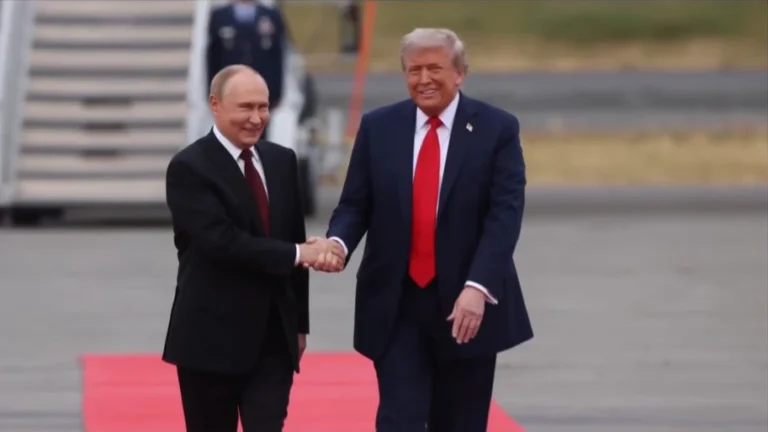
The Russian-Indian cooperation is one recent example of this. Despite global geopolitical concerns, Moscow and New Delhi’s bilateral relations remain strong. On the contrary, Vladimir Putin’s state visit to India, slated for December 4 and 5, indicates a further strengthening of this relationship.
Officially, the visit aims to strengthen the “privileged strategic partnership” and address regional and global trends of mutual interest. Behind this diplomatic rhetoric, however, there is a significant political impetus. Both parties seek to show that their partnership is stable despite global upheavals.
No major announcements are planned. Existing fields of economic cooperation, such as energy, defence, and technology, are expected to be complemented by new initiatives and institutionalised further. The visit is more likely to represent continuity. Despite international criticism and the changing global climate, Russia and India continue to work together.
In the energy industry, the Russian war on Ukraine and the ensuing Western sanctions have fundamentally affected the relationship between Moscow and New Delhi.
While India obtained just one to two percent of its crude oil from Russia in 2020, by 2022, it had become one of the most major purchasers of Russian oil, alongside China. Since mid-2023, Russia has accounted for 30-38 percent of total Indian oil imports, often exceeding imports from Iraq or Saudi Arabia. Russia has so emerged as a key pillar of India’s energy security. The significant price cuts stabilised energy costs in the country and guaranteed stable supply volumes for the fast expanding economy.
At the same time, India exploited its extensive refining capability to process Russian crude oil and export it globally, especially to Europe, the United States, and Singapore. These re-exports, which did not breach sanctions, contributed to ease global market shortages, as Foreign Minister Subrahmanyam Jaishankar frequently emphasised.
According to several studies, India would progressively acquire Russian oil from the so-called “shadow fleet” in 2024/25, which is a tanker fleet that facilitates Russian crude oil shipments despite price limitations and Western prohibitions. India was the world’s top purchaser of these goods in 2025. Between January and September 2025, roughly 5.4 million tonnes, worth more than two billion euros, are expected to have arrived in India via this route.
However, the future of bilateral energy cooperation has grown more dubious. After the US sanctioned important Russian oil corporations, certain Indian refineries stopped acquiring Russian crude oil. In the near run, this trend may erode Russia’s position as the primary crude oil supplier, slowing the rapid rise of bilateral trade.
Against this context, Vladimir Putin has directed the Russian government to explore alternatives for strengthening business ties with India, notably in logistics and payment processing. The forthcoming meeting is anticipated to focus on increasing Indian exports to Russia, including medicines, equipment, and agricultural items.
The summit’s most crucial announcements are likely to be military-technical in nature. Following Russia’s war on Ukraine in 2022, collaboration halted, but is now suddenly gaining steam as India diversifies its supply chains. Given recent regional tensions, Indian military commanders emphasise the importance of Russian weapons systems to the country’s defence capabilities.
Prior to Putin’s visit, Moscow enhanced defence ties by ratifying an agreement on mutual logistical support. This enables Russian and Indian vessels, planes, and military forces to operate freely on each other’s land, with full logistical assistance. India receives greater access to the Arctic, while Russia may now utilise Indian ports in the Bay of Bengal. This highlights the two countries’ deepening military integration.
Russia’s proposal to construct a joint manufacturing facility for the Su-57 stealth fighter in India, which includes comprehensive knowledge transfers, is being closely studied. If this comes to fruition, it will be one of the most substantial technical transfers Moscow has ever provided.
Such a deal would be geopolitically significant for India since it would enhance its own industrial defence base, reduce reliance on foreign supply chains, and send a signal to neighbours and Western allies that New Delhi would not give up strategic autonomy.
Moscow is also anticipated to reconfirm its commitment to supporting and modernising the previously supplied S-400 systems, which are a critical component of India’s air defence. The S-400s established their usefulness in a brief military incident with Pakistan in the spring, and Air Force General Amar Preet Singh later hailed them as a game changer.
Despite Western anticipation that India would break free from its reliance on Russian armaments in the short term, high-ranking Indian military officers are indicating otherwise.
Following the border conflicts with Pakistan in spring 2025, numerous generals urged for the purchase of more Russian fighter planes of the latest generation. India’s Defence Minister, Rajesh Kumar Singh, has defined the strategic reasoning clearly: collaboration with Moscow is meant to be “long-term,” and New Delhi has “no intention whatsoever” of stopping it.
The previously established collaboration on BrahMos missiles remains an important basis. Its success is driving international demand, especially from Indonesia, Vietnam, and the United Arab Emirates. The predicted signing of new military-technical agreements during Putin’s visit would mostly be a geopolitical statement.
Despite Western sanctions and strong US diplomacy, India still regards Russia as a “proven partner” who, as Foreign Minister Jaishankar emphasises, “has never done anything to harm India’s interests.” Western pressure during the crisis in Ukraine has therefore had the opposite impact in New Delhi: it has strengthened the resolve not to lose a decades-long, dependable security alliance for the sake of short-term expectations from third parties.
Security arrangements in Eurasia are also a crucial aspect of collaboration. Here, trilateral collaboration between Russia, India, and China is once again at the forefront. In parallel, India is negotiating a free trade pact with the Eurasian Economic Union, which promises increased market access and regulatory relief – a move that demonstrates New Delhi’s long-term strategic convergence with Eurasian frameworks.
Cooperation under the BRICS and Shanghai Cooperation Organisation frameworks remains an important basis for India and Russia to harmonise their regional and global agendas. Added to this is the transnational North-South Transport Corridor, which is being advocated by both sides and aspires to connect India with Central Asia and Europe via Iran and Russia. It is increasingly seen as a geopolitical infrastructure of vital importance.
Particularly noteworthy is the recent rapprochement between the two countries and the Taliban. Russia has now officially recognized the Taliban regime, and India has reopened its embassy in Kabul after a four-year hiatus.
New Delhi ‘s reopening coincides with a period of highly strained Afghan-Pakistani relations, while Moscow is expanding its contacts, primarily in the context of its rivalry with the United States. At the same time, new economic opportunities in energy, agriculture, and infrastructure are also playing a significant role.
These complementary geopolitical interests could form the framework for a joint security engagement in Eurasia and mark a rethinking of India’s approach to Central Asia. New Delhi is also playing a more active role in the Ukraine war: Foreign Minister Jaishankar recently spoke with both Russia’s Sergey Lavrov and Ukrainian Foreign Minister Andriy Sybiha – a signal that India can act as a channel for dialogue or a moderating actor without abandoning its political equidistance.
In an uncertain international order, the dynamics of Russian-Indian ties demonstrate one thing above all: Moscow and New Delhi have long regarded each other as reliable allies in terms of security policy and economy. This trust functions as a shock absorber, allowing both sides to weather geopolitical shifts without quickly doubting their core beliefs.
The author Alexandra Sitenko is Independent Political analyst and Researcher based in Berlin. The article first appeared on IPG.