
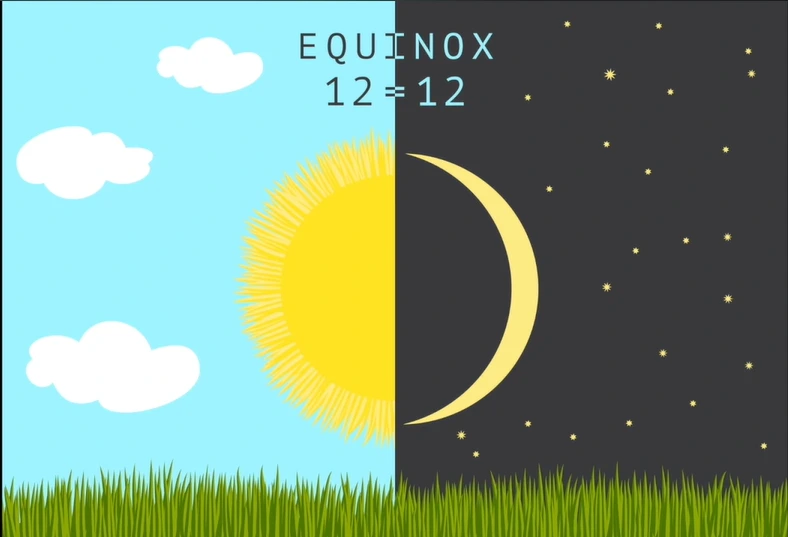
Discover when fall officially begins and what the autumnal equinox is.
The autumn equinox, a precise astronomical event that marks the official start of fall in the Northern Hemisphere, arrived today, Monday, September 22, 2025. This celestial moment signifies more than just a change in temperature; it’s a cosmic marker that has been celebrated by cultures for centuries.
While the exact time of the equinox varies, this year it occurred at 2:19 p.m. EDT, making it the moment when the sun’s path crosses the Earth’s equator. This unique alignment means that for a brief period, day and night are nearly equal in length across the globe.
Understanding the Autumnal Equinox
The word “equinox” comes from the Latin words aequi (equal) and nox (night), a nod to the balanced hours of daylight and darkness. The seasons on Earth are not caused by our distance from the sun but by the Earth’s axial tilt of about 23.5 degrees.
Throughout the year, this tilt causes one hemisphere to receive more direct sunlight than the other. The autumnal equinox is the point in Earth’s orbit when its axis is tilted neither toward nor away from the sun, resulting in an almost perfect balance of light.
For meteorologists, autumn began on September 1, as they define seasons by temperature cycles for statistical purposes. However, the equinox is the official astronomical start of the season. 🍂
A Global Celebration of Harvest and Balance
The autumn equinox has a deep cultural and spiritual significance, transcending its scientific definition. In many ancient civilisations, it was a time of harvest festivals and a moment to give thanks for the summer’s bounty.
- Mabon: A modern Pagan festival that honours the second harvest, a time for reflection and balance.
- Higan: In Japan, this Buddhist holiday is celebrated during both the spring and autumn equinoxes as a time to remember deceased relatives and the passing of the seasons.
- The Mayan Serpent: At the Chichen Itza pyramid in Mexico, the equinox creates a spectacular visual effect. Sunlight and shadow align to create the illusion of a serpent—Kukulkan, the feathered serpent deity—slithering down the side of the pyramid’s staircase.
The astronomical phenomenon of the equinox also affects the aurora borealis, or Northern Lights. NASA reports that geomagnetic activity is nearly doubled around the equinoxes, making them a prime time for viewing the celestial light show.
So, while the leaves may not have fully turned just yet, the official start of autumn is here, ushering in a season of change, shorter days, and a renewed appreciation for the natural rhythms of our planet.
What is the autumnal equinox?
The autumnal equinox, which marks the official start of fall, occurs when the sun crosses the Earth’s equator, resulting in nearly equal hours of daylight and darkness.
This year, the autumn equinox in the Northern Hemisphere was on Monday, September 22, 2025. It signifies a transition to shorter days and cooler temperatures and holds cultural significance in many traditions around the world.
The Astronomical and Cultural Significance of Fall
The autumn equinox is a precise astronomical event that occurs as the Earth’s axis is tilted neither toward nor away from the sun. This unique alignment creates a brief period of near-perfect balance between day and night.
For centuries, this event has been celebrated globally with various harvest festivals and rituals, such as the Japanese Buddhist holiday Higan and the Pagan festival of Mabon.
The equinox is also a prime time for viewing the Aurora Borealis, as geomagnetic activity is heightened around this time. This year’s equinox serves as a reminder of the planet’s natural rhythms and the seasonal changes that are about to unfold.
Follow Europeans24 for more interesting facts!