
Mahatma Gandhi’s goat was stolen during his visit to Noakhali, currently Bangladesh – a legend that has been going on for ages. Did this advocate of peace, harmony and non-violent politics really lose his goat while visiting Noakhali? What actually happened during Mahatma Gandhi’s visit 79 years ago?
A legend still exists about the relationship between Mohandas Karamchand Gandhi, the advocate of peace, harmony and non-violent politics, and the goat of Mahatma Gandhi, aka Noakhali in East Bengal at that time.
The legend is that Gandhi lost his goat while on a peace tour during the communal riots in Noakhali in 1946. The so-called ‘Qasim Fauj’ people stole his goat and cooked the meat and sent it to the vegetarian Gandhi. Various illustrated accounts of that tour, 79 years ago, are available in various newspapers of that time. However, no mention of the goat theft has been found. Even Mahatma Gandhi’s autobiography ‘The Story of My Experience with Truth’ does not mention it.
Bangladeshi prominent newspaper Prothom Alo has analyzed various data to find out. In addition to analyzing the documents of the Gandhi Ashram Trust in Sonaimuri, Noakhali, he spoke to the current officials. Surprising information has come out.
Gandhi and goat’s milk
Gandhi was against drinking cow or buffalo milk by depriving the calf. He had a strong commitment in this regard. But around 1919, he fell seriously ill. His doctor said that he had to drink milk to recover. Then Gandhi said that he had refrained himself from drinking cow and buffalo milk.
However, his wife Kasturba advised Gandhi to drink goat’s milk without breaking the dowry. Kasturba’s argument was that he had promised not to drink buffalo and cow’s milk. So drinking goat’s milk would not break that promise.
Gandhi reluctantly agreed to this proposal. Although he understood that he was violating the spirit of his promise. In his autobiography, ‘The Story of My Experience with Truth’, he also criticized this contradiction of his own. He also called on knowledgeable people to let him know if anyone knew of a nutritious vegetable alternative to goat’s milk.
But more than a hundred years ago, such an alternative had not yet reached India. So Gandhi had to drink goat’s milk. When he visited London in 1931, he had a goat named ‘Nirmala’ with him. This information can be confirmed from the reports and photographs of Time magazine at that time.
Unrest in Noakhali
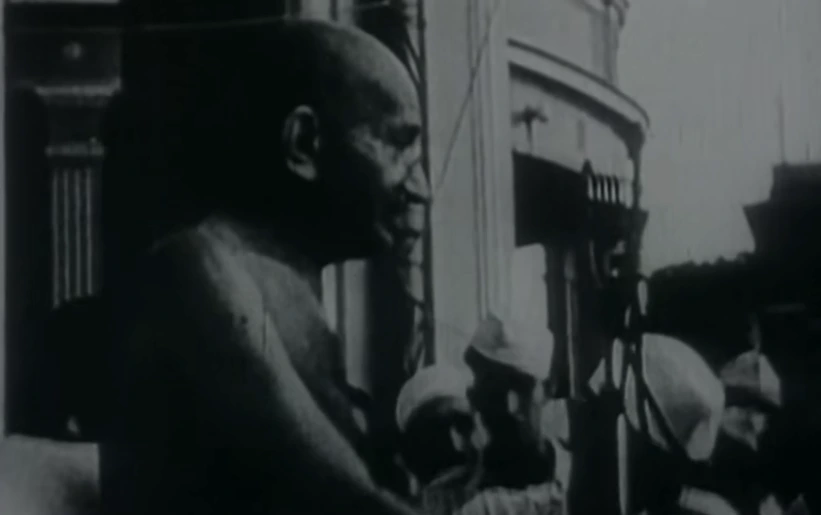
In mid-August 1946, the impact of the Hindu-Muslim riots in Calcutta also affected Noakhali. Communal violence also began in Noakhali district. The real picture of the violence in Noakhali was not available at that time. It was almost impossible to convey the full picture of the communal violence from the remote rural areas to the media.
However, on May 1, 1947, some information about the riots was revealed in the question and answer session of the Bengali Administrative Council, the provincial legislature. In response to a question from Dhirendranath Dutta, deputy leader of the Congress party in the council, Parliamentary Secretary to the Home Secretary K. Nasrullah said that a total of 285 people died in the riots in Noakhali and Tripura districts. Of these, 67 died in military and police firing. 178 people died in Noakhali and 40 people in Tripura in the riots.
Apart from this, there were allegations of arson, torture, and religious conversion in numerous houses. It was against this backdrop that Gandhi decided to visit Noakhali.
A lot of information about Gandhi’s visit to Noakhali is available in Sukumar Roy’s book ‘Mahatma in Noakhali’ published by Orient Book Publications of India on August 15, 1947.
In addition, there is information related to this in the Gandhi Trust in Noakhali. Various news from newspapers of that time have also been found by searching the internet. All in all, it can be said with certainty that Gandhi came to Noakhali on November 7, 1946. He stayed in Noakhali for four months and visited villages. Until March 2, he walked 116 miles and visited 47 villages in total. He set up a total of 47 peace camps, one each day.
During this time, in addition to conducting regular prayer meetings, he tried to restore the trust of Hindus by holding meetings with local Muslims. Leaders like Pandit Jawaharlal Nehru, Maulana Abul Kalam Azad, Hossain Shaheed Suhrawardy, and Mohammad Ali Jinnah also participated in the peace march led by him at various stages.
Sukumar Roy also mentions in his book that Gandhi’s visit to Noakhali was his own decision and not due to political pressure. He writes, ‘Gandhiji was in Delhi during the Noakhali riots. At a religious meeting there, Gandhiji said, “From the day I heard the news of Noakhali, I have been thinking about my duty. God will show me the way. People love me.”
Mahatma Gandhi accumulated various experiences during his long journey. Just as he visited the homes of the oppressed Hindu community and consoled them, he also stayed at the homes of poor Muslim farmers. He got close to them. Gandhi also wrote about these experiences in his autobiography. But he did not write about the incident of goat theft anywhere. No news related to this was published in any newspaper of that time.
A search of newspapers reveals that at that time a retired judge named Edward Skinner Simpson submitted an investigation report on the Noakhali riots. However, the government did not publish it. A summary of it was published in The Statesman newspaper published on November 13, 1946. There was no mention of goat theft in that report either.
An article by Andrew Whitehead
On 8 May 2010, British author Andrew Whitehead hosted a radio podcast series on the BBC about India’s role in the Noakhali riots. In it, he described the Noakhali riots. The main source of his report was word of mouth from local people.
Whitehead wrote that the death toll in Noakhali may have been lower than in Kolkata or Bihar. But the effects of ethnic hatred, rape, property theft and forced conversions spread throughout India.
Citing the experience of Abdul Rauf, a resident of Joyag village in Noakhali, Whitehead claimed that many people welcomed Gandhi in Noakhali. But some also disliked him. Goats were provided for him to meet his milk needs. But local Muslims stole and ate the goats!
Not only in Whitehead’s article, but also in reports published at various times in several media outlets in this country, the incident of Gandhi stealing goats has been mentioned. However, those reports did not mention any sources.
Gandhi’s Noakhali Visit
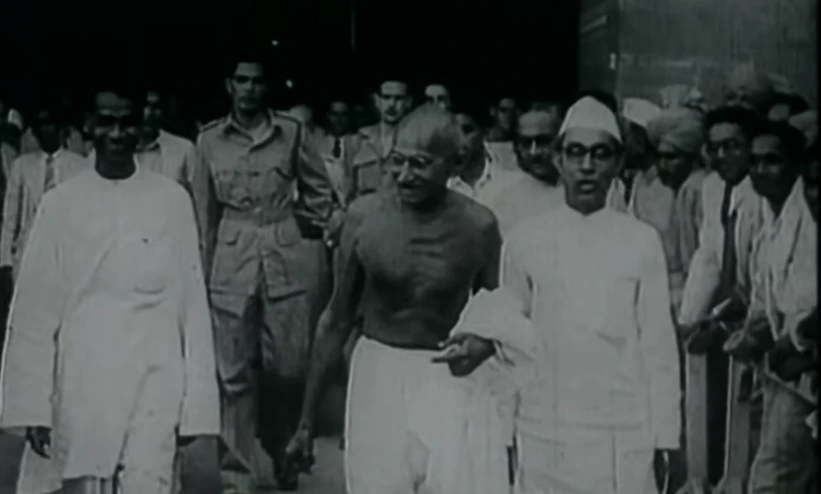
From November 7, 1946 to March 2, 1947, Gandhi stayed in Noakhali for four months. Then he left Noakhali to stop the riots in Bihar. How was Gandhi’s Noakhali visit?
Researchers and historians have mentioned in their writings that Gandhi not only worked to remove mistrust between the Hindu and Muslim communities but also gave various suggestions on healthcare, economy, and education to the villagers. Sometimes he went to Muslim homes and arranged for the treatment of family members suffering from Kala Azar. Sometimes he visited mosques and listened to the Holy Quran being recited there.
Sukumar Roy writes in his book Mahatma in Noakhali, ‘Gandhiji freely mixed with everyone in every village he visited. The number of invitations he received from Muslim homes was gradually increasing. He never turned anyone away, but rather he eagerly accepted everyone’s invitations.
He went to their homes and inquired about their happiness and sorrows. He talked to them like a close relative. He joked with the children and boys and girls of the house, making the solemn atmosphere light, cheerful and joyful from time to time. The Muslims living in the villages were gradually attracted to Gandhiji after getting to know his compassionate heart. Muslims were joining the prayer meetings in large numbers.
Gandhi listened to the complaints of Hindu villagers as well as Muslims. He visited the homes of those who were victims of communal attacks to offer them shelter. People from both communities attended his peace rallies. All religious scriptures were read there. The situation in Noakhali was gradually calming down.
Just before Gandhi’s visit to Raipur, houses of Hindus were set on fire and a Pakistan Club signboard was also put up there. But soon after Gandhi’s visit, the situation started to change. Sukumar Roy writes, ‘With his arrival in Raipura village, the situation became completely different. The presence of a liberal personality can be clearly understood as the reason for this change.
Many Muslim residents of Raipura were seen standing in front of Gandhi and on the side roads for long hours. The residents would bring their goats from their houses and immediately milk them and give them to Gandhiji to drink.’Sukumar Roy did not mention any incident of goat theft in his book. Rather, there is a description of the hospitality that Gandhi received in Muslim homes.
Sukumar’s book mentions, ‘On his way to Panchgaon, Gandhiji visited two Muslim homes. During his evening walk in Palla, he visited the homes of two men named Nadu Molla and Badu Molla. Nadu Molla and Badu Molla are two brothers. Their homes are next to each other. When Gandhiji arrived at their outhouse, the two brothers were very concerned about how to welcome Gandhiji.
One of them brought a broken chair and let Gandhiji sit on it. A table was also brought. There were oranges in the house. There were also canes on the tree. Immediately, they arranged for people to put canes on the house and welcomed their distinguished guest with oranges and canes. They told Gandhiji that they were very poor. They had nothing. Gandhiji replied, “He is good, I am also poor.”
30 kilometers from the district town is Joyag village in Sonaimuri upazila. Gandhi Ashram Trust is located on the northeast side of Joyag Bazar on the Sonaimuri-Chatkhil and Ramganj regional highway. The dense green trees planted by the forest department on both sides of the road stand like a long arch. The entrance to Gandhi Ashram is through Joyag Bazar.
As you go forward through the main gate, you will see various signboards with the words of Mahatma Gandhi. From a distance, you will see a huge sculpture of Mahatma Gandhi installed in front of the Gandhi Memorial Museum. In the museum behind the sculpture, you will see various images associated with the memories of Gandhi in the Noakhali region.Legend has it that Gandhi lost his goat in this Joyag village.
On Wednesday, January 29, 1946, Gandhi came to Joyag village. Here he stayed at the house of Hemant Kumar Ghosh, the village landlord and the first barrister of Noakhali district. Later, several charitable institutions, including the Gandhi Trust, were established in Gandhi’s memory on the land donated by Hemant Kumar. Gandhi also met Muslim representatives in the village of Jayag. He also opposed the widespread arrest of Muslims after the riots.
Researchers to the Gandhi Ashram Trust to find out about this rumor about goat theft. When asked about this by the secretary of the trust, Raha Nabakumar, he told Prothom Alo that he had been hearing about Gandhi’s goat being stolen even before joining the trust. To confirm the matter, he read the writings of Mahatma Gandhi’s entourage in Noakhali. There was no information about goat theft in those writings. All of Gandhi’s entourage wrote in the form of diaries of Mahatma Gandhi’s daily activities. If such an incident had happened, it would definitely have been in the diaries. That is why he thinks the whole matter is a rumor spread by the people.
Follow Europeans24 for more updates!