
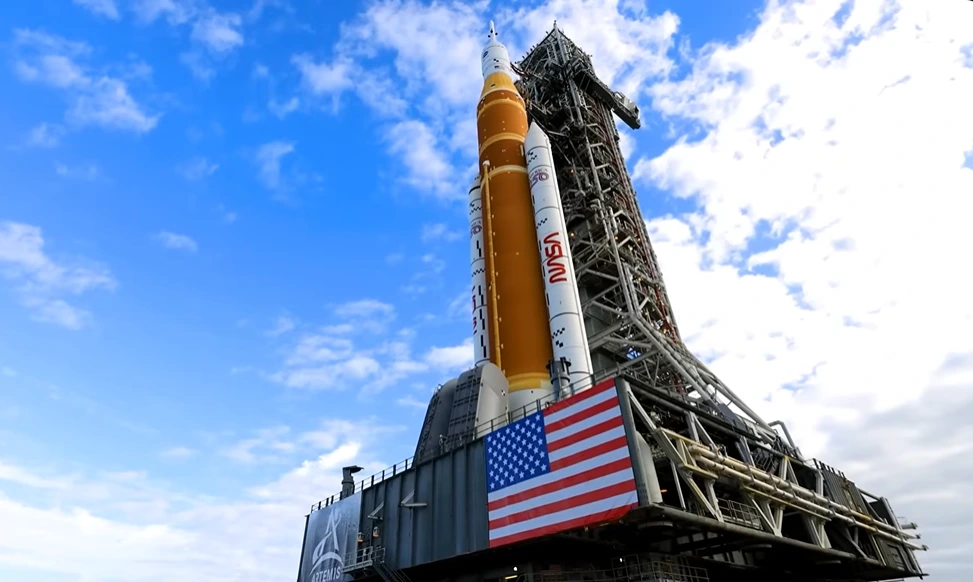
NASA’s historic return to the Moon begins today, April 1. Get the live launch time, meet the four-person crew (Wiseman, Glover, Koch, Hansen), and explore the 10-day lunar flyby mission profile of Artemis II.
KENNEDY SPACE CENTER, FL, USA
Fifty-four years after the dust settled on the final footprints of Apollo 17, humanity is ready to return to the lunar frontier. At 6:24 PM EDT today, NASA’s Space Launch System (SLS)—the most powerful rocket ever built—is scheduled to roar into the Florida sky, carrying the four-person crew of Artemis II on a journey that will redefine our place in the cosmos.
With a weather forecast of 80% “Go,” flight controllers at Launch Complex 39B have begun the final “wake-up” sequences for the Orion spacecraft. This 10-day mission is not just a test flight; it is a declaration that the “Artemis Generation” has arrived.
The Crew: Four Pioneers, One Mission
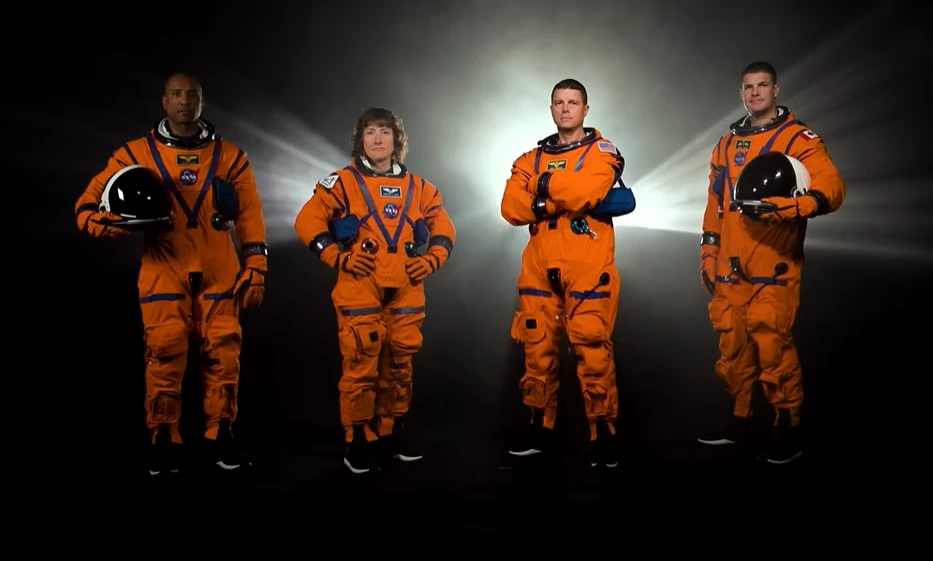
The Artemis II crew represents a deliberate shift toward diversity and international cooperation, marking several “firsts” for deep-space exploration:
- Commander Reid Wiseman (NASA): A veteran of the International Space Station, Wiseman leads the first crewed lunar flight of the 21st century.
- Pilot Victor Glover (NASA): Glover will become the first person of colour to travel to the lunar vicinity.
- Mission Specialist Christina Koch (NASA): Holding the record for the longest single spaceflight by a woman, Koch will now be the first woman to reach the Moon.
- Mission Specialist Jeremy Hansen (CSA): Representing the Canadian Space Agency, Hansen becomes the first non-American to leave Earth’s orbit.
Mission Profile: The “Free-Return” Journey
Unlike the Apollo missions of the 1960s, Artemis II will not land on the lunar surface. Instead, it serves as a high-stakes stress test for the Orion life-support systems.
- High Earth Orbit (First 24 Hours): After liftoff, the crew will spend a full day in a high elliptical orbit to test the spacecraft’s manoeuvring capabilities and life-support performance while still close enough to Earth to abort if necessary.
- The Translunar Injection: Once cleared, the upper stage will fire, sending Orion on a “free-return” trajectory toward the Moon.
- Lunar Flyby: The crew will swing around the far side of the Moon, reaching a distance of roughly 4,700 miles (7,600 km) beyond the lunar surface. At its peak, Orion will be approximately 248,655 miles from Earth, breaking the distance record for a crewed spacecraft set by Apollo 13.
- Splashdown: The mission concludes around April 10, 2026, with a high-velocity re-entry into Earth’s atmosphere and a splashdown in the Pacific Ocean.
Technical Hurdles and Space Weather
The road to today’s launch has not been without challenges. In late March, a powerful X1.4-class solar flare triggered a radio blackout, forcing NASA technicians to closely monitor the SLS’s sensitive electronics. However, as of this morning, all systems remain “green”.
This mission also follows a rigorous “Wet Dress Rehearsal” completed on February 2, which corrected minor valve issues in the SLS core stage. The success of Artemis II is the final “green light” needed for Artemis III (currently targeted for 2027), which will see astronauts conduct docking tests in Earth orbit before the first lunar landing mission in 2028.
“We aren’t just going back to the Moon,” NASA Administrator Jared Isaacman noted in a final pre-launch briefing. “We are going there to stay, to learn, and to prepare for the long trek to Mars. Today, the world watches us take that first step.”