
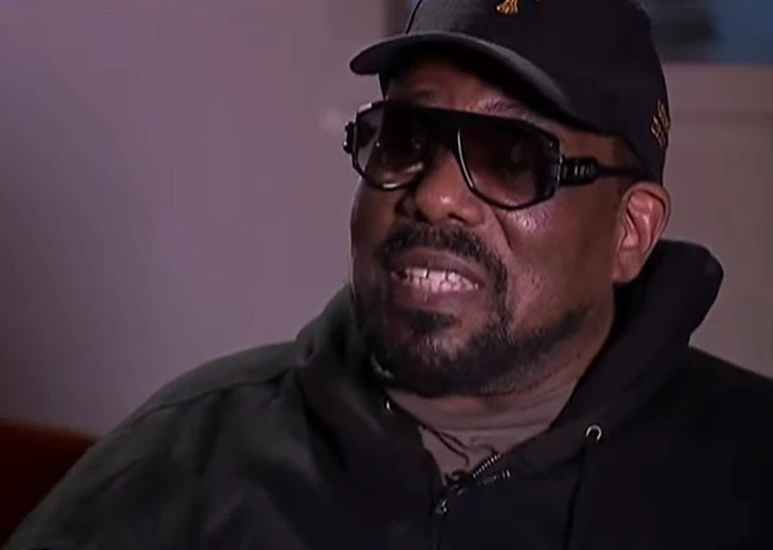
Hip hop pioneer Afrika Bambaataa (Lance Taylor) has died at 68 from cancer complications.
The history of hip hop has always been a tapestry of light and shadow, and perhaps no figure embodied that duality more than Lance Taylor. Known to the world as Afrika Bambaataa, the man widely credited as one of the three grandfathers of hip hop died early Thursday morning in a Pennsylvania hospital.
He was 68 years old. His passing, confirmed by legal representatives and long-time associates, marks the end of a life that fundamentally reshaped global culture while leaving behind a legacy that remains deeply fractured.
Bambaataa died at approximately 3:00 a.m. following a prolonged battle with complications from prostate cancer. For several months, rumours had circulated within the Bronx community that his health was failing, and his recent absence from the public eye was a quiet departure for a man once known as the “Amen Ra” of the movement.
The Sonic Revolutionary of the South Bronx
To understand the weight of his death, one must look back to the mid 1970s in the South Bronx. Born to Jamaican and Barbadian parents, Lance Taylor grew up in the Bronx River Projects during an era of systemic neglect and rising gang violence. As a high-ranking member of the Black Spades, he was a warlord by title but a visionary by nature.
After a life-changing trip to Africa, he returned with a new name and a radical idea: he wanted to replace the violence of the streets with the competitive energy of the arts. He founded the Universal Zulu Nation in 1973, an organisation built on the four pillars of peace, unity, love, and having fun. This was the birth of hip hop as a philosophy, moving it from a localised block party phenomenon to a global awareness movement.
His musical contributions were equally transformative. In 1982, he released “Planet Rock”, a track that fused the mechanical precision of German electronic music with the soulful breakbeats of New York. It was a cultural explosion that paved the way for electro, techno, and the future of house music.
A Legacy Under the Microscope
The music world reflects on his technical brilliance, but severe controversy overshadowed the later years of his life. For decades, whispers of misconduct haunted his leadership, and in 2016, those whispers became a roar.
Multiple men came forward with harrowing accounts of sexual abuse dating back to the 1980s, alleging that Bambaataa had used his position of power within the Zulu Nation to exploit vulnerable youth.
These allegations created a permanent schism in his reputation. While he consistently denied the claims, the weight of the testimonies led to his departure from the Zulu Nation leadership.
Just last year, in 2025, a judge issued a default judgement against him in a sex trafficking lawsuit after he failed to appear in court, resulting in a significant settlement.
This tension was evident in the tributes that began appearing on Friday morning. The Hip Hop Alliance, led by Kurtis Blow, acknowledged him as a foundational architect while simultaneously recognising that his legacy was complex and had been the subject of serious, necessary conversations regarding truth and healing.
The Final Silence
In his final months, those who visited him described a man who had become increasingly frail but remained deeply concerned with the state of the culture he helped build. He spent his last days in Pennsylvania, away from the bustling Bronx streets where he first mastered the turntable.
His death not only marks the end of a musical pioneer, but also compels the hip hop community to confront the reality that their heroes are often flawed, sometimes profoundly so.
As news of his passing spreads, the airwaves are filled with the synthesised beats of “Planet Rock,” a sound that will forever echo through time, even as the man behind it leaves behind a history that is as difficult as it is significant.