
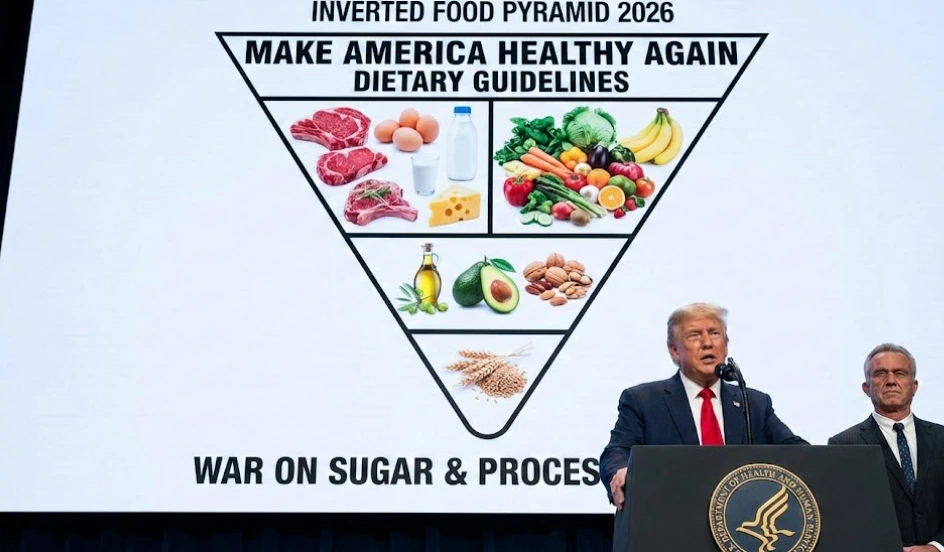
NEW FOOD PYRAMID 2026: The Trump administration and RFK Jr unveil the 2025-2030 Dietary Guidelines. Discover the “Inverted Pyramid” focusing on protein, full-fat dairy, and whole foods while declaring war on added sugar and ultra-processed ingredients.
WASHINGTON, D.C. – In what officials are calling the most significant reset of federal nutrition policy in over three decades, the Trump administration yesterday released the Dietary Guidelines for Americans 2025–2030.
The new 10-page document, spearheaded by Health and Human Services (HHS) Secretary Robert F. Kennedy Jr. and Agriculture Secretary Brooke Rollins, officially retires the “MyPlate” icon in favor of a new, controversial Inverted Food Pyramid.
The “Make America Healthy Again” (MAHA) agenda has officially reached the dinner table, shifting the government’s focus from low-fat, grain-heavy diets to a framework that prioritizes “real food,” high-quality protein, and a total war on added sugars and ultra-processed ingredients.
The “Inverted” Design: Flipping the Script
The most striking change is the visual representation of the guidelines. While the 1992 pyramid placed bread and grains at the broad base, the 2026 version flips the triangle on its head to emphasize nutrient density over caloric bulk.
- The Top (Widest Section): Prioritizes high-quality proteins (including red meat, eggs, poultry, and seafood), full-fat dairy (whole milk, butter, and cheese), and vegetables and fruits.
- The Middle: Includes healthy fats like olive oil, avocado, and beef tallow, alongside nuts and seeds.
- The Bottom (Narrowest Section): Whole grains now occupy a significantly smaller portion of the recommended diet, with a directive to “sharply reduce” refined carbohydrates like white bread and flour tortillas.
Key Mandates: No Sugar, More Protein
The 2025–2030 guidelines introduce several hard-line shifts that differentiate them from any previous federal health advice:
- The War on Added Sugar: For the first time, the government states that “no amount of added sugars or non-nutritive sweeteners is considered part of a healthy diet.” The guidelines set a strict limit of 10 grams of added sugar per meal.
- Protein Boost: The recommended daily protein intake has been increased to 1.2 to 1.6 grams per kilogram of body weight, up from the long-standing 0.8-gram standard.
- The End of “Low-Fat”: The administration has officially “ended the war on saturated fats,” encouraging whole milk and full-fat yogurt—a move designed to support both metabolic health and American dairy farmers.
- Ultra-Processed Warning: The guidelines explicitly advise Americans to “avoid highly processed packaged, prepared, or ready-to-eat foods” that are laden with chemical additives and seed oils.
Expert Reactions: A Divided Medical Community
The radical shift has drawn both high praise and fierce criticism from the nation’s top nutritionists.
| Perspective | Key Argument | Notable Voice |
| Supporters | Applaud the focus on “food as medicine” and the crackdown on the “ultra-processed food epidemic.” | Dr. David Kessler, Former FDA Commissioner |
| Skeptics | Warn that emphasizing red meat and butter ignores decades of evidence linking saturated fats to heart disease. | Marion Nestle, NYU Nutrition Professor |
| Industry | Food giants like Nestlé and Coca-Cola face new scrutiny, while cattle and dairy associations are celebrating. | National Cattlemen’s Beef Association |
Impact on School Lunches and SNAP
The new guidelines aren’t just suggestions—they are the legal blueprint for the National School Lunch Program, which feeds 30 million children daily. Secretary Rollins announced that the USDA will immediately begin the process of removing sugary chocolate milk and highly processed “lunchables” from schools, replacing them with whole-food options.
Additionally, new waivers have been signed to allow states to restrict the purchase of “unhealthy foods” (like soda and candy) via SNAP (Supplemental Nutrition Assistance Program) benefits.