ZELENSKYY DRONE WARNING 2026: Russia reaches a production capacity of 500 Iranian-designed Shahed drones per day. Read about the Alabuga factory surge, the $20,000-per-drone economics of attrition, and Ukraine’s plan to deploy 1,000 interceptors daily to counter the threat.
As the winter of 2026 tightens its grip on Eastern Europe, President Volodymyr Zelenskyy has issued a stark warning regarding Russia’s industrial evolution.
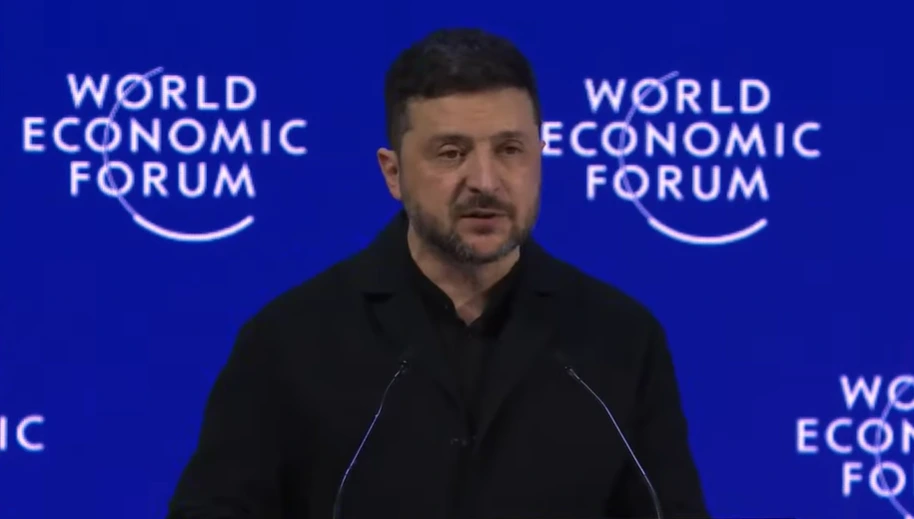
Speaking from the capital on Tuesday, January 20, 2026, Zelenskyy revealed that Russian manufacturing bolstered by Iranian designs and localized production hubs has reached a capacity of roughly 500 Shahed-type drones per day, with plans to double that figure by year’s end.
The revelation underscores a shift in the conflict’s mechanics: Russia is moving away from the “occasional” mass missile strike toward a “saturation strategy” designed to overwhelm Ukrainian air defenses with a constant, 24/7 barrage of low-cost aerial suicide drones.
The “Alabuga” Engine: From Assembly to Autonomy
The heart of this production surge lies in the Alabuga Special Economic Zone in Tatarstan, roughly 1,000 kilometers from the Ukrainian border. While the drones were once imported directly from Iran, intelligence reports now confirm that the vast majority are “Geran-2” models—Russian-produced versions of the Shahed-136.
- Production Volume: According to Ukrainian Commander-in-Chief Oleksandr Syrskyi, Russia currently averages 404 units daily, but specific factory spikes have now hit the 500 mark.
- Labor Force: Reports indicate that Russia has recruited thousands of workers, including specialized students and workers from African nations, to keep assembly lines running 24 hours a day.
- Technological Upgrades: Recent wreckage reveals that these drones are no longer just “dumb” loitering munitions. New versions feature fiber-optic controls (making them immune to radio-jamming) and AI-driven guidance that allows them to maneuver around mobile fire teams.
The Economics of Attrition
The primary threat is not the individual lethality of a single Shahed, but the “math of war.” Zelenskyy highlighted the extreme cost disparity between the attackers and the defenders.
| Drone Type | Est. Production Cost | Interceptor Cost (Avg.) | Key Feature |
| Shahed-136 (Geran-2) | $20,000 – $50,000 | $1M (Patriot/NASAMS) | Long-range, 50kg warhead |
| Gerbera (Decoy) | < $10,000 | $150,000 (Gepard shell) | No warhead; clutters radar |
| Geran-3 (Jet) | $150,000 | $2M+ | High speed, harder to track |
“The enemy wants to reach 1,000 drones a day,” Zelenskyy told journalists. “We must be ready for the worst-case scenario. This means we need at least two interceptors for every one Shahed.”
Ukraine’s Response: The “Interceptor” Counter-Offensive
To combat the 500-a-day threat, Ukraine has rapidly scaled its own domestic production. In a rare bit of positive news, Zelenskyy confirmed that Ukraine is now matching that volume by producing 1,000 interceptor drones daily.
However, the President noted a critical bottleneck: Human Resources.
“We produce the drones, but we are catching up on the number of operators. We need more mobile groups, more trained pilots who can use these interceptors to physically collide with the ‘Shaheds’ before they reach our cities.”
The “Saturation” Strategy: What It Means for 2026
Military analysts suggest that Russia’s goal is to force Ukraine to expend its finite stockpile of Western-supplied missiles on cheap drones. Once the air defense “umbrella” is depleted, Russia can then launch its more expensive, precision-guided cruise missiles against high-value energy and military targets with higher success rates.
The Federal Government of Ukraine has officially declared an Energy Emergency this week as cities like Kharkiv and Dnipro face rolling blackouts caused by the sheer volume of these nightly “Shahed swarms.”