The crackdown on Tanzania’s October 29 election protests, leading to hundreds of reported deaths, shatters the country’s “island of stability” image. With the UN citing extrajudicial killings and 16 European embassies demanding action, this article analyzes how President Hassan’s authoritarian turn risks foreign aid (€156M EU aid threatened) and reflects the ruling CCM’s struggle against a vast, unemployed Generation Z
Tanzanians would have joyfully commemorated the start of their independence in 1961 on December 9th, as they do every year. As usual, the people would have praised their East African nation as an “island of stability”.
However, this self-image has been severely damaged since the violent suppression of protests during the October 29th presidential election, which resulted in hundreds, if not more than a thousand, deaths. The administration has now cancelled all festivities and put security personnel on high alert days in advance due to fears of further turmoil. Young activists are simultaneously utilizing social media to advocate for fresh, nonviolent demonstrations on December 9.
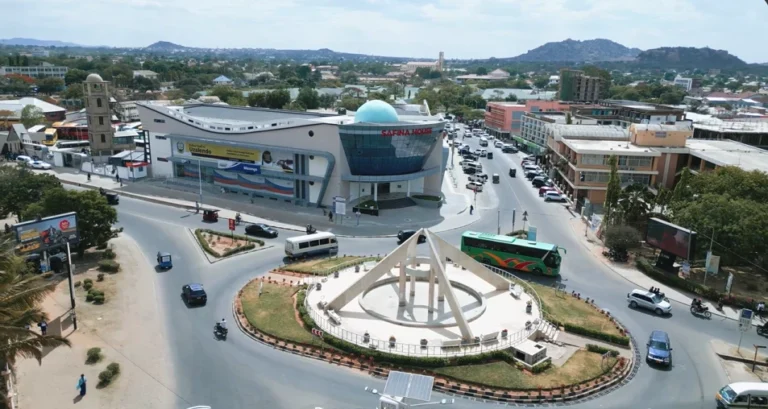
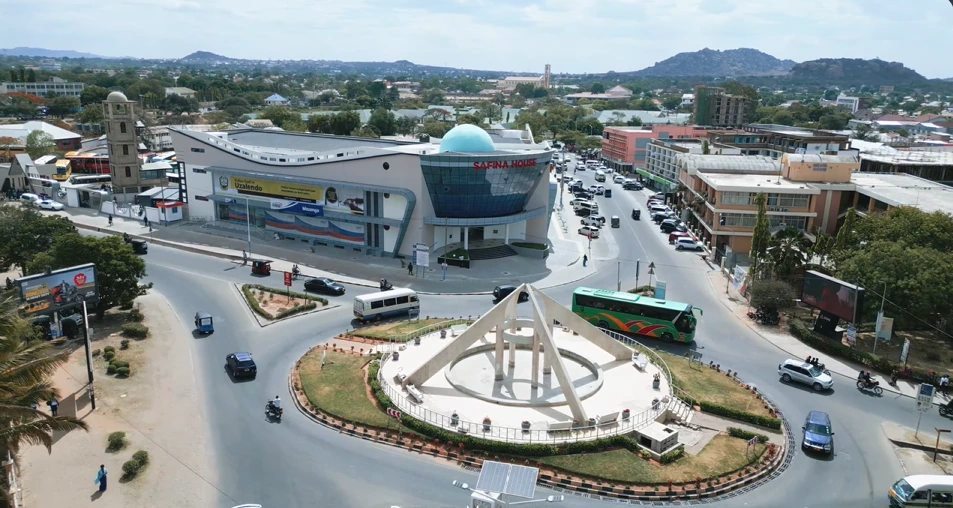
What had transpired in the social harmony model state of East Africa? On October 29, the morning of the election, when most Tanzanians stayed at home and members of the ruling CCM (Chama Cha Mapinduzi) party started filling out the voter lists themselves, unplanned, occasionally violent protests broke out in Dar es Salaam and other cities, mostly by young people. The security forces reacted violently when some protesters stormed police and voting places.
Eyewitnesses reported targeted shootings in the street, as well as executions during subsequent searches of buildings. Hospitals and mortuaries reported receiving the injured and the dead. There were also reports of mass graves. Some demonstrators and representatives of civil society were so desperate in the face of the brutality of the police and special forces that they appealed to the army to assume power.
After the internet was shut down for five days, President Samia Suluhu Hassan declared herself the winner of the election, claiming 98 percent of the vote with an alleged voter turnout of 87 percent . She vehemently denied all accusations against the government and police. Subsequently, the government threatened anyone who disseminated information about the victims of state violence via WhatsApp and Instagram with severe penalties.
Although unusual, Tanzania’s quick eruption of violence was not totally predicted. After her predecessor, John Pombe Magufuli, passed away unexpectedly in 2021, President Hassan, who is now confirmed in office, promised and started reforms to the rigid political system. However, when it became apparent that the opposition could soon pose a serious threat to the CCM’s more than 60-year rule, these reform efforts were reversed and replaced with repressive measures.
Tundu Lissu, the leader of the opposition Chadema party, was detained and accused of treason in April after advocating for a boycott of the election; another presidential candidate was disqualified.
From the beginning, Samia Suluhu Hassan, the first female president and a native of the semi-autonomous island of Zanzibar, had little support inside the CCM machinery. She had to prove herself to the established, sexist leadership of the CCM, which was full of intelligence operatives, according to some analysts who explain her turn into an authoritarian leader.
Tanzania’s security force, which was educated by the Stasi under the well respected founding president Julius Nyerere in the 1970s, has always been crucial in determining the course of the nation and has, when needed, threatened, tortured, or vanished political opponents of the governing party. A United Nations expert committee assessed that over 200 people had “disappeared” since 2019 in June of this year, calling the government’s actions “unacceptable.”
Tanzania’s Catholic Church, foreign media, African election monitors, and the nation’s development partners have all strongly condemned the violent suppression of the protesters. The British journal The Economist wrote, “A party that claims to govern one of the most peaceful countries in Africa has had its Tiananmen Square moment,” in response to the brutal suppression of protesters.
The typically circumspect observation missions of the African Union expressed unusually severe criticism of the elections and their conditions. Additionally, the European Commission was requested by the European Parliament to halt €156 million in development assistance. Some analysts even believed that the offshore gas drilling and the anticipated big projects of the East African Crude Oil Pipeline to Uganda were in jeopardy.
However, it took about a month for foreign diplomacy to take decisive action in response to the activists’ claims, which were later confirmed by an investigation conducted by the US channel CNN. 16 European embassies in Tanzania urged the release of all political detainees on December 4, citing “credible reports from domestic and international organisations with evidence of extrajudicial killings, abductions, arbitrary arrests, and the disposal of bodies” in a unified statement. The US State Department declared a “fundamental review” of ties with Tanzania that same day, citing “recent actions by the government raise questions about the direction of bilateral relations.”
The US State Department appears to have realised that Tanzania’s eventual drift into the autocracy-friendly camp of major investor China could be harmful to America after some regimes saw the void left by Donald Trump’s America First-oriented Africa policy as a license for repressive governance.
Samia Suluhu Hassan has so far reacted to the charges with a combination of severity and conciliation, denial and regret. 139 inmates were freed after 240 protesters were accused of high treason. She first denied all charges against the police before announcing the formation of an eight-person committee of investigation.
She has now urged the opposition to participate in communication and reconciliation in order to placate the stunned Tanzanians and her angry foreign allies. However, no sincere opposition figure is likely to accept such offers following the total loss of trust in the administration.
Additionally, it appears that Hassan wants to shut rather than open ranks within the CCM based on the nomination of her cabinet.
The majority of Tanzanians had accepted the absolute dominance of a de facto single party up to that point, despite the introduction of a multi-party system in 1992. The security forces were only sometimes allowed to use force as a warning.
nation”,Every Tanzanian was aware of who was serving as an intelligence agency informant at their place of employment. Under the “father of the nation,” Julius Nyerere, the United Republic of Tanzania was spared the ethnic divides so common in its neighbouring nations, but this social network of mutual observation was the dark side of the otherwise successful nation-building.
However, an increasing number of individuals are calling for better living circumstances and political involvement; in a nation with over 62 million people, 70% are under 35, over 70% labour in the unorganised sector, and many young people are unemployed. This “Generation Z” in Tanzania, like many other African nations, faces a long-corrupted leadership made up of former liberation movement fighters and an elite working within family networks, whose affluent lifestyles are in stark contrast to the young people’s precarious everyday lives.
The long-ruling CCM party seems to have unquestionably undergone an authoritarian transition in light of the flagrant election fraud and the violent repression of protestors. It seems that open repression is the only way the “one-party state disguised as a democracy” can counteract its declining credibility.
It’s unclear if the demonstrations will go on on Independence Day, which has been officially cancelled. However, it is unlikely that Samia Suluhu Hassan would take the promised political system change seriously.
The author, Rolf Paasch, is a renowned German journalist who has been covering African news for decades.