
On July 26, 1908, while in command of the United States Department of Justice, a Baltimore lawyer whose forebears included the French emperor established the Bureau of Investigation (BOI) to battle crime across the country, with a staff of just 34 agents. Thus was founded the organisation that would become the FBI in 1934.
In late 1906, US President Theodore Roosevelt appointed his friend Charles Joseph Bonaparte as Attorney General, the head of the Department of Justice and the federal government’s top law enforcement official. Bonaparte was 55 years old and had recently served as Secretary of the Navy, which had been controversial.
He was accused of doing little or no work, spending little more than an hour a day in his office, and being unqualified for the post. The country faced challenging times, with escalating internal disputes, the emergence of organised crime, and widespread political and business corruption.
No one believed Bonaparte was the right man for such a task, but Teddy—as the president was familiarly known—trusted him. They had known each other since 1892, when they met at a Republican Party meeting in Baltimore, and their first contact had been inauspicious.
At the meeting, Roosevelt boasted that, thanks to his insistence, marksmanship tests had just been imposed on applicants to the Border Patrol in order to secure the best men.
In turn, Bonaparte responded ironically: “I should have made the men shoot each other and given the jobs to the survivors,” he replied, insisting that what the police force needed were men who knew how to investigate.
Despite that initial clash, the two men became friends, and Bonaparte played a key role as the elector of the state of Maryland in helping Roosevelt become president. Teddy knew of the loyalty of the short, stocky Harvard lawyer , whose hair was receding, suggesting a future baldness, and that’s why he had chosen him to serve with him in his administration, despite the press’s negative opinion of him.
Charles Bonaparte’s origins were also a source of contention in the public eye. Coming from a French family with high titles was not an ideal introduction for the democratic spirit of the American people and politics. Charles was the younger brother of Emperor Napoleon and grandson of Jérôme Bonaparte, King of Westphalia.
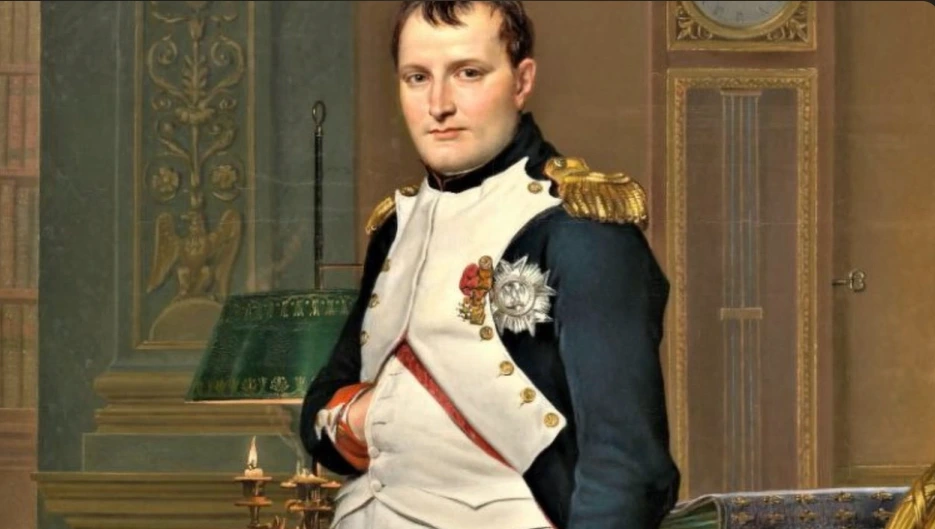
His father, Jérôme (“Bo”) Napoleon Bonaparte, was the offspring of the Emperor’s brother’s first marriage to Isabella of Baltimore, a connection that enraged Napoleon, who insisted that the pair divorce before Jérôme could be named King of Westphalia.
To separate, Isabel demanded a lifetime pension of 60,000 francs a year—a veritable fortune—and moved with her son to the United States. Years later, “Bo” married Susan May Williams and had two sons: Jerome, who decided to become a soldier, and Charles, who chose to study law at Harvard.
Although members of the “American” branch of the Bonapartes never used their noble titles or considered themselves part of the Napoleonic dynasty, this background worked against Charles.
No one seemed to take into account the undeniable evidence of a democratic vocation that Charles had shown throughout his political career. In 1885, he was one of the founders of the Baltimore Reform League , a group of progressive Republicans who took over the municipal government in the 1895 elections and put an end to decades of government corruption. He served on the Board of Indian Commissioners from 1902 to 1904, as president of the National Civil Service Reform League in 1904, and as a trustee of the Catholic University of America in Washington.
In the 1904 presidential election, Bonaparte was one of eight Republican presidential elector candidates. At the time, Maryland chose electors individually in a general election, and in an uncommon result, Charles won the most votes of any candidate, barely defeating the eight Democratic candidates, who had a modest edge over the seven Republicans.
As a result, Bonaparte was Maryland’s sole Republican elector, earning him a very good reputation within Roosevelt’s party. This was another reason why the president appointed him to lead the Justice Department.

Once he became Attorney General, Charles Bonaparte quickly realised that his hands were tied in dealing with the rising wave of crime and corruption sweeping the country. The Department of Justice didn’t have its own investigative team, save for one or two special agents—a tiny force to meet the challenge. It did, however, have some accounting experts to review financial transactions and some specialists investigating civil rights issues, but it lacked men capable of doing real police investigative work.
Therefore, when Bonaparte wanted a case investigated, he had to “borrow” agents from the Secret Service, which caused more than one inconvenience, because when it came time to report the results of their work, these men reported to the head of the Service before the Attorney General.
In his first report to Congress, Bonaparte denounced this situation: “The attention of Congress must be called to the anomaly that the Department of Justice does not have an executive body, and more specifically, a permanent detective force under its immediate control,” he told lawmakers.
He didn’t receive the response he expected. Lawmakers asked him why he was “renting” Secret Service investigators for his investigations if there was no law authorising it. They ultimately accused him of exceeding his authority and banned the loan of Secret Service agents not only to the Department of Justice but to any other agency of the executive branch.
Bonaparte argued that if the attorney general “had under his immediate command a small, carefully selected, and experienced force, the necessity of having these officers suddenly appointed as special deputies, possibly in considerable numbers, could sometimes be avoided, with greater likelihood of economy and a better guarantee of satisfactory results.” In other words, he advocated for the establishment of a corps of investigators who would solely work for the Department of Justice.
The Creation of BOI
Bonaparte’s move against Congress had actually been a carefully planned move . It was the brainchild of the Attorney General’s deputy, David D. Caldwell, a young lawyer, who had suggested that the men the Justice Department was “borrowing” from the Secret Service and other agencies be permanently integrated into the Attorney General’s office and placed under the command of a chief investigator appointed by Bonaparte.
The next step was for Roosevelt to authorize Bonaparte to use funds allocated for the Attorney General’s expenses to hire a team of his own investigators. With that approval, on July 26, 1908, the Attorney General created the Bureau of Investigation (BOI), the agency that in 1934 became known as the Federal Bureau of Investigation (FBI).
The first team consisted of 34 agents, who were placed under the command of the Justice Department’s chief investigator, Stanley Finch, who is today considered the first director of the FBI. Nine of them were former Secret Service agents who had already worked on loan for the attorney general’s office, and the other 25 were carefully selected by Finch and Bonaparte himself. “On Bonaparte’s orders, Finch gathered around him about 25 men: the original FBI agents. Together, Finch and the attorney general reviewed the list of men available for this special investigative task.
First, a set of criteria was developed that largely conformed to current qualifications; the men, of course, had to be physically fit; they had to have a good educational background, preferably college graduates and members of the bar; they had to be of a good appearance so they could blend in unnoticed in a crowd; and, if possible, they had to have language skills. This first group of appointees included half a dozen men previously dismissed from the Secret Service. They taught the others the techniques of tracking and surveillance. One of them, Finch recalls, was a linguist from the Immigration Service; some came from the Treasury and the accounting divisions of other departments. All were competent criminal investigators of one kind or another,” recounts journalist Don Bloch in an article published in August 1935 by the Washington Star, where he reviews the history of the FBI based on the testimonies of its protagonists.
In actuality, although David Finch was ostensibly the director of the new government investigation agency, Charles Bonaparte directly supervised the BOI until his departure from the Department of Justice in 1909, coinciding with the end of Theodore Roosevelt’s presidency.
Napoleon Bonaparte’s great-nephew died in 1921 at the age of 70, so he never saw how the agency he founded became an astonishing weapon of power in the hands of its most renowned director, J. Edgar Hoover, who dominated it with an iron fist for 48 years without any president daring to remove him.
Follow Europeans24 for more on History.