
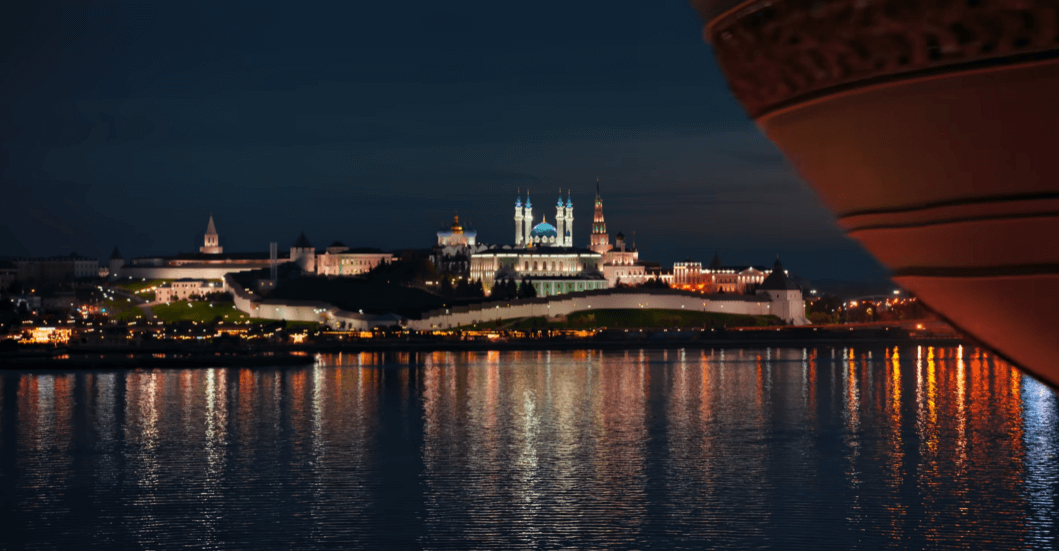
Nestled on the banks of the Volga River, Kazan is more than just a regional capital—it is a testament to the layered histories of Russia, the Tatar people, and the broader Eurasian landscape.
“Kazan is the place where Europe and Asia shake hands.” This quote, often attributed to local historians, captures the essence of a city shaped by centuries of cultural fusion, conquest, and resilience.
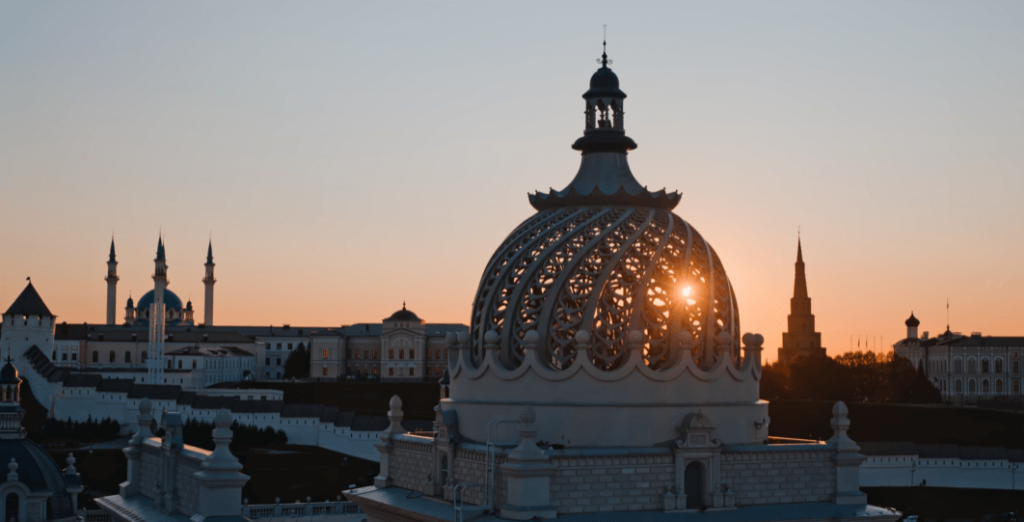
The Birth of Kazan: A Strategic Crossroad
Founded in the late 10th or early 11th century, Kazan started as a fortress of the Volga Bulgars. Its position on key trade routes made it an essential hub, attracting merchants from Persia, China, and Scandinavia. By the 15th century, it had become the capital of the Khanate of Kazan, a powerful Tatar state that rivaled the Grand Duchy of Moscow.
Ivan the Terrible and the Fall of the Khanate
One of the most defining moments in Kazan’s history occurred in 1552. Ivan the Terrible, the first Tsar of Russia, laid siege to the city in what became a brutal and decisive battle. After weeks of intense fighting, Russian forces breached the city’s defenses, ending the independence of the Khanate of Kazan. This conquest reshaped the region. The Russian state encouraged Orthodox Christian settlement, while many Tatars resisted conversion and held on to their Islamic traditions.
Who Was Ivan the Terrible?
- Ivan IV Vasilyevich, known as Ivan the Terrible, was the first ruler to be crowned Tsar of All Russia in 1547.
- His reign marked the transformation of Russia from a medieval state into a centralized empire.
- The title “Terrible” (from the Russian Grozny) means “formidable” or “awe-inspiring,” not necessarily cruel—though he was certainly that too.
What Was the Khanate of Kazan?
- The Khanate of Kazan was a successor state of the Mongol Golden Horde, established in 1438.
- Located on the Volga River, Kazan was a wealthy, strategically vital Muslim state that frequently raided Russian territories for slaves and loot.
- It was a thorn in Moscow’s side, controlling key trade routes and access to the Urals and Siberia.
The Siege and Fall of Kazan (1552)
- After several failed attempts, Ivan launched a massive military campaign in August 1552, leading an army of around 150,000 troops.
- He built a fortress at Sviyazhsk near Kazan as a staging ground, reportedly prefabricated and floated down the Volga.
- The siege lasted from September 2 to October 13, 1552.
Key Tactics and Events:
- Heavy artillery and foreign engineers (including an Englishman named Butler) were used to breach Kazan’s formidable walls.
- Sappers dug tunnels and planted mines to destroy the city’s defenses and water supply.
- After weeks of bombardment and brutal fighting, Russian forces stormed the city on October 2.
- The Tatar defenders were overwhelmed, and the city was sacked. Thousands were killed or captured.
Aftermath and Legacy
- The Khanate of Kazan was officially annexed into the Tsardom of Russia.
- Ivan expelled much of the Muslim population and began a campaign of Christianization and Russification.
- The victory was celebrated as a “holy war”, and Ivan returned to Moscow a hero—just in time to learn his wife had given birth to a son (though the child died young).
- The conquest paved the way for further expansion into Siberia and Central Asia, setting the stage for Russia’s emergence as a Eurasian empire.
This moment wasn’t just about military conquest—it was about identity, religion, and empire-building. Ivan’s victory at Kazan became a symbol of divine favor and imperial destiny. Want to explore how this shaped Russia’s later expansion into Siberia or its relationship with the Islamic world?
A City Rebuilt: The Kremlin and Cultural Revival
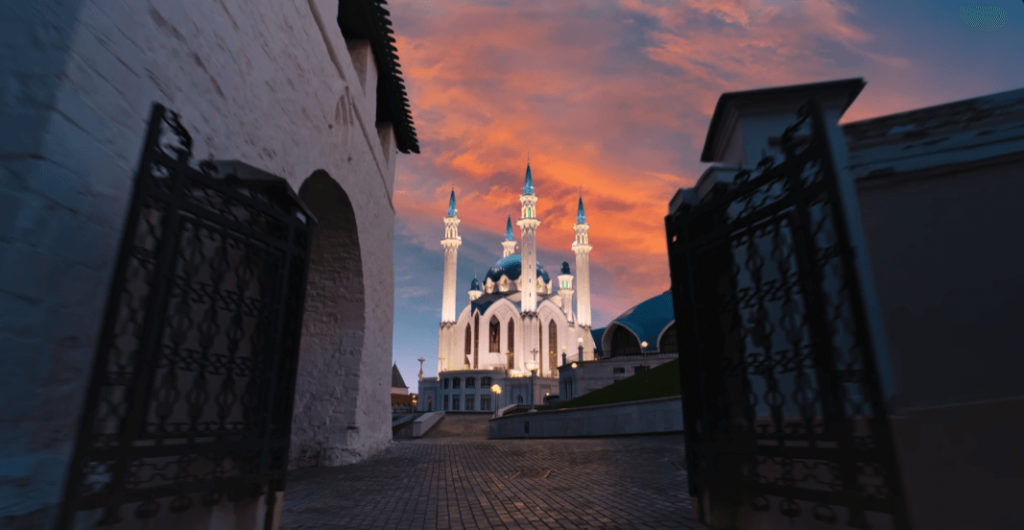
Despite its violent conquest, Kazan did not fade into obscurity. Instead, it evolved. Ivan the Terrible ordered the construction of the Kazan Kremlin, now a UNESCO World Heritage Site. This fortress houses the Annunciation Cathedral, a symbol of Russian Orthodoxy, and the Qol Sharif Mosque, a stunning reconstruction of a Tatar religious landmark destroyed in the 16th century. The juxtaposition of minarets and onion domes in Kazan’s skyline is a striking visual representation of the city’s dual heritage.
Rebuilding the Kazan Kremlin: From Ruins to Symbol
- After Ivan the Terrible’s conquest, the original Tatar fortress was razed, and in its place, a new Kremlin was ordered—built in stone to assert Russian dominance.
- The Kremlin became a symbol of imperial power, blending Russian Orthodox architecture with local Tatar elements.
- Architects like Postnik Yakovlev (who also worked on St. Basil’s Cathedral in Moscow) were brought in to design the Annunciation Cathedral (1554–1562), the oldest surviving building in the Kremlin.
- Over time, the Kremlin evolved into a multi-faith, multi-ethnic complex, reflecting Kazan’s unique identity at the crossroads of Europe and Asia.
Cultural Revival: The Return of Tatar Identity
- Despite early efforts to suppress Tatar culture, Kazan remained a center of Islamic scholarship and Tatar resilience.
- In the 18th and 19th centuries, Kazan became a hub for Tatar printing presses, literature, and education, fostering a cultural renaissance.
- The Söyembikä Tower, a leaning structure within the Kremlin, became a symbol of Tatar pride. Legend ties it to the last queen of Kazan, who allegedly leapt from the tower rather than marry Ivan IV.
Kul Sharif Mosque: A Modern Symbol of Rebirth
- In 2005, the Kul Sharif Mosque was rebuilt inside the Kremlin walls, named after a Tatar imam who died defending Kazan in 1552.
- Its reconstruction was a powerful gesture of reconciliation, blending Islamic architecture with modern design.
- Today, it stands alongside Orthodox cathedrals, representing religious coexistence and Kazan’s dual heritage.
Kazan Today: A Cultural Bridge
- Kazan is now the capital of Tatarstan, a semi-autonomous republic within Russia.
- The city is celebrated for its ethnic harmony, bilingualism (Russian and Tatar), and architectural diversity.
- The Kazan Kremlin was declared a UNESCO World Heritage Site in 2000, recognizing its historical and cultural significance.
The Soviet Era and Tatar Identity

During the Soviet period, Kazan became an industrial powerhouse but at the cost of cultural suppression. Mosques and churches were repurposed or destroyed, and Tatar identity was often sidelined in favor of Soviet ideology. However, the collapse of the Soviet Union in 1991 sparked a revival. The Republic of Tatarstan, with Kazan as its capital, gained a high degree of autonomy, leading to a resurgence of Tatar language, culture, and Islamic traditions.
Political Shift: Becoming the Capital of the Tatar ASSR
- In 1920, Kazan was designated the capital of the Tatar Autonomous Soviet Socialist Republic (Tatar ASSR) within the Russian SFSR.
- This move was part of the Soviet policy of “korenizatsiya” (indigenization), which initially promoted local languages and cultures to gain support from non-Russian ethnic groups.
- However, this autonomy was tightly controlled by Moscow, and over time, Russification policies intensified, especially under Stalin.
Industrialization and Wartime Role
- Kazan became a major industrial hub, especially during World War II, when factories were relocated from western USSR to protect them from the Nazi advance.
- The city produced tanks, aircraft, and munitions, contributing significantly to the Soviet war effort.
- Post-war, Kazan continued to grow as a center for chemical, aviation, and electronics industries, with sprawling Soviet-style housing blocks built to accommodate workers.
Education and Lenin’s Legacy
- Kazan holds a special place in Soviet lore as the city where Vladimir Lenin briefly studied before being expelled in 1887 for participating in a student protest.
- His former residence was preserved as a museum-shrine, filled with personal items and revolutionary memorabilia, reinforcing Kazan’s symbolic role in Soviet revolutionary history.
Cultural Suppression and Survival
- The Soviet regime closed mosques, banned religious education, and repressed Islamic institutions, aiming to secularize Tatar society.
- Despite this, Kazan remained a cultural stronghold for the Tatar people, with underground efforts to preserve language, literature, and traditions.
- In later Soviet decades, especially under Gorbachev’s glasnost, there was a revival of Tatar cultural expression and calls for greater autonomy.
Urban Landscape and Soviet Architecture
- Much of Kazan’s city center was stripped of overt Soviet symbolism in the post-Soviet era, but remnants remain—Lenin statues, Soviet-era housing, and industrial zones still dot the landscape.
- The city’s architecture reflects a blend of imperial, Soviet, and Tatar influences, making it visually and historically layered.
Kazan in the Soviet era was a city of paradoxes: a symbol of ethnic autonomy under a regime that often suppressed it, a bastion of industry and ideology, and a quiet cradle of cultural resilience.
Kazan Today: A City of Innovation and Heritage
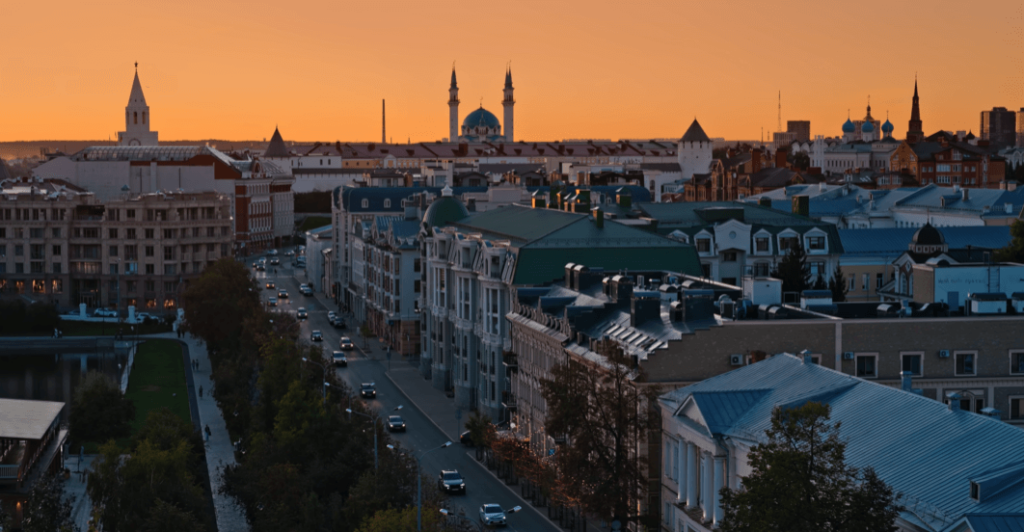
Modern Kazan is an economic and cultural powerhouse, often ranked among Russia’s most livable cities. The city is home to Kazan Federal University, one of Russia’s oldest educational institutions, and hosts international events such as the 2013 Summer Universiade and the 2018 FIFA World Cup. The Kazan Metro, with its beautifully designed stations, reflects the city’s investment in modern infrastructure. Yet, history remains at its core.
Visitors can walk along Bauman Street, a lively pedestrian thoroughfare that has been the city’s commercial heart for centuries. They can also visit the Temple of All Religions, an architectural project that symbolizes interfaith harmony—a fitting representation of a city that has always stood at the crossroads of civilizations.
Why Kazan Matters
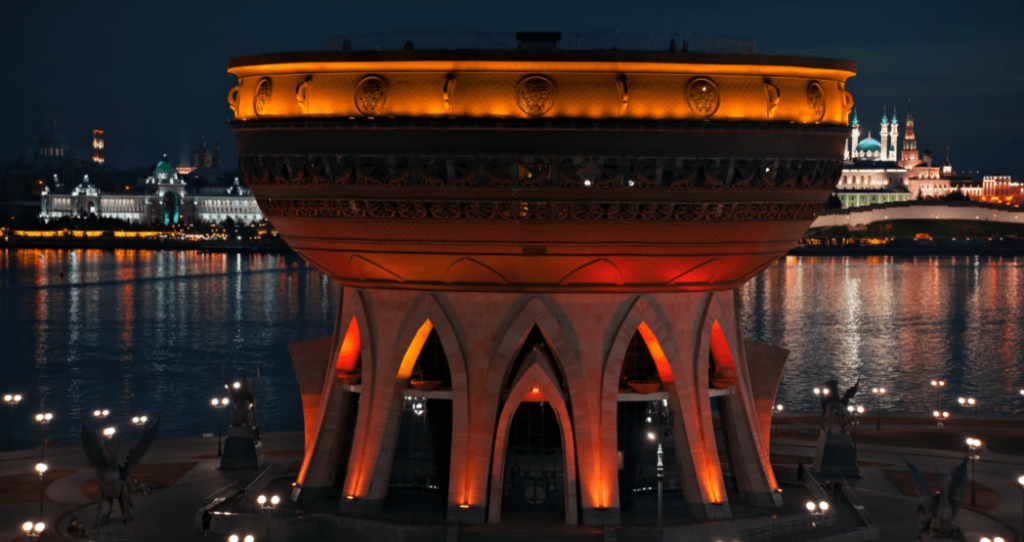
Kazan is not just another Russian city. It is a place where histories intertwine, where cultures coexist, and where the past is never truly left behind. Whether you are a history enthusiast, a traveler, or a researcher, Kazan offers a nuanced perspective on the complexities of cultural identity and geopolitical shifts.
Understanding Kazan is understanding the broader story of Europe and Asia—one of conquest, adaptation, and coexistence. If you have not yet explored this city, it might be time to add it to your list.
Follow Europeans24.com for more!




+ There are no comments
Add yours